





By using this site, you agree to the Privacy Policy and Terms of Use.
Accept
Gulf PressGulf Press
  • Home
  • Gulf News
  • World
  • Business
  • Technology
  • Sports
  • Lifestyle
Search
Countries
More Topics
  • Health
  • Entertainment
Site Links
  • Customize Interests
  • Bookmarks
  • Newsletter
  • Terms
  • Press Release
  • Advertise
  • Contact
© 2023 Gulf Press. All Rights Reserved.
Reading: Men and young people most prone to loneliness in Europe
Share
Notification Show More
Latest News
RBI likely to hold rate at 5.5% in policy announcement on Friday; inflation forecast may be revised lower: Report
Business
Winter is Here: Prepare for Your Ultimate Desert Camping Getaway
Gulf
PAHW issues tenders to complete asphalt paving in Mutlaa City
Gulf
Medical checkups for new students at PHCC available throughout academic year
Gulf
Glory Of The Stars shines again with Lusail Cup win
Sports
Aa
Gulf PressGulf Press
Aa
  • Gulf News
  • World
  • Business
  • Entertainment
  • Lifestyle
  • Sports
Search
  • Home
  • Gulf
  • Business
  • More News
    • World
    • Technology
    • Lifestyle
    • Entertainment
    • Sports
Have an existing account? Sign In
Follow US
  • Terms
  • Press Release
  • Advertise
  • Contact
© 2023 Gulf Press. All Rights Reserved.
Gulf Press > World > Men and young people most prone to loneliness in Europe
World

Men and young people most prone to loneliness in Europe

News Room
Last updated: 2025/11/12 at 2:59 AM
News Room
Share
4 Min Read
SHARE

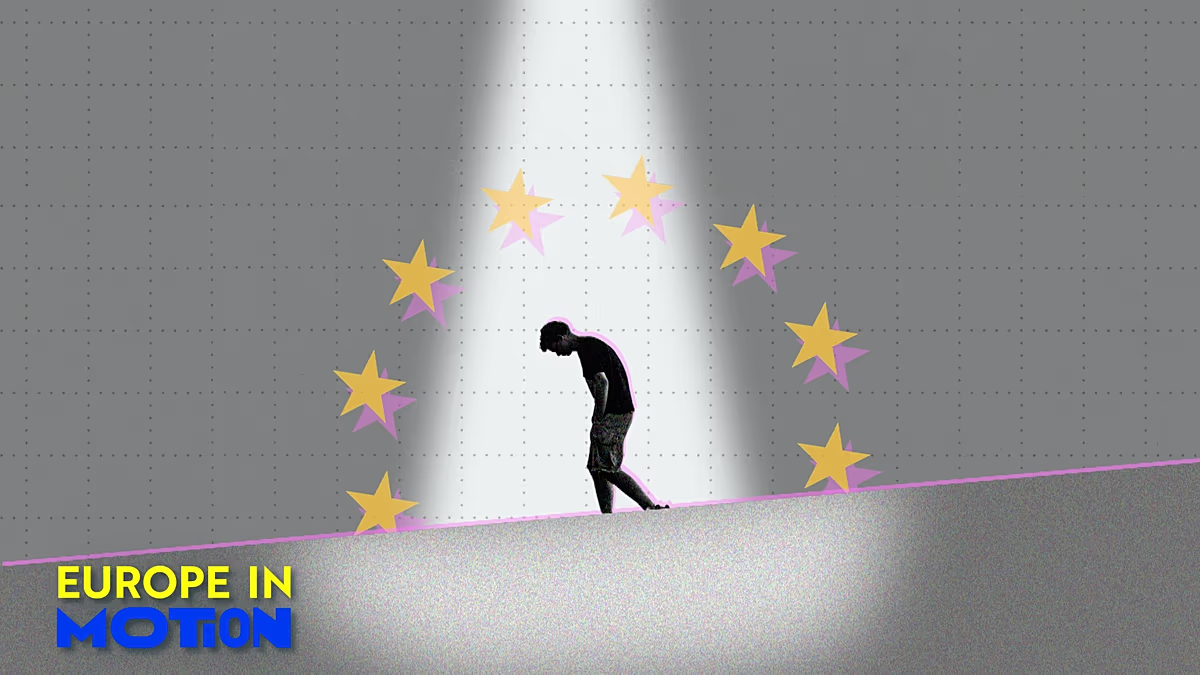
Loneliness is increasingly becoming a pressing issue in Europe, particularly among young people and men, according to the OECD’s latest Social Connections and Loneliness report. The report highlights that unemployed individuals and those with low incomes are also more likely to experience loneliness.

In 21 European OECD countries, daily face-to-face interactions with friends and family have consistently declined between 2006 and 2022, while remote contact has increased following the COVID pandemic. This trend is concerning, as spending little time interacting with others and feeling lonely are associated with significant health risks, including up to 871,000 global deaths annually.

The Loneliness Epidemic: Understanding the Causes

The OECD report indicates that the decline in face-to-face interactions is a major contributor to the rise in loneliness. In 2022, the share of people reporting that they felt lonely “most of the time” or “all of the time” over the past four weeks was highest in France and Lithuania, at 11% and 9%, respectively. The report also notes that young men are particularly affected, with worsening social connections outcomes not yet well understood.

Research suggests that the impact of digital technology on feelings of loneliness and disconnection is complex. While some studies have found mixed results, there is consensus that how digital tools are used, as well as the types of online behaviors, matter. For instance, excessive mobile phone use can harm social interactions, particularly among young people.

Tackling Loneliness: European Initiatives

In response to the growing concern around loneliness, several European countries have introduced national strategies to target the issue. For example, Finland’s National Youth Work and Youth Policy Programme includes initiatives to help young people find jobs, financial counseling, and art therapy, sports, and community service. Other countries, such as Belgium, Finland, France, Greece, and Hungary, have limited or banned phones in schools to encourage offline connections rather than online contact among young people.

The European Commission and the World Health Organization’s Commission on Social Connection have also identified social isolation and loneliness as public health priorities. In May 2025, the World Health Assembly approved a resolution identifying social connection as an essential issue for the global health agenda. For more information on the global health implications of loneliness, visit the World Health Organization’s fact sheet on social isolation and loneliness.

Addressing the Root Causes

To effectively address loneliness, it is essential to understand its root causes. The OECD report highlights that low income and unemployment are significant risk factors for loneliness. Additionally, the decline in face-to-face interactions and the rise of remote contact have contributed to the issue.

As Europe continues to grapple with the loneliness epidemic, it is crucial that policymakers and stakeholders work together to develop effective solutions. By understanding the causes of loneliness and implementing targeted initiatives, it is possible to mitigate its effects and promote healthier social connections. For further reading on the topic, the OECD’s report on Social Connections and Loneliness provides in-depth analysis and recommendations.

As the issue of loneliness continues to unfold, it is essential to monitor the effectiveness of current initiatives and be prepared to adapt strategies as needed. By working together, European countries can develop a comprehensive approach to addressing loneliness and promoting social connection.

Sign Up For Daily Newsletter

Be keep up! Get the latest breaking news delivered straight to your inbox.
I have read and agree to the terms & conditions
By signing up, you agree to our Terms of Use and acknowledge the data practices in our Privacy Policy. You may unsubscribe at any time.
News Room November 12, 2025
Share this Article
Facebook Twitter Copy Link Print
Previous Article Von der Leyen offers minor concessions on EU budget to placate MEPs
Next Article COP30: EU backs global carbon market alliance to cut CO2 emissions
Leave a comment Leave a comment

Leave a Reply Cancel reply

Your email address will not be published. Required fields are marked *

Stay Connected

235.3k Followers Like
69.1k Followers Follow
56.4k Followers Follow
136k Subscribers Subscribe
- Advertisement -
Ad imageAd image

Latest News

RBI likely to hold rate at 5.5% in policy announcement on Friday; inflation forecast may be revised lower: Report
Business December 5, 2025
Winter is Here: Prepare for Your Ultimate Desert Camping Getaway
Gulf December 5, 2025
PAHW issues tenders to complete asphalt paving in Mutlaa City
Gulf December 5, 2025
Medical checkups for new students at PHCC available throughout academic year
Gulf December 5, 2025

You Might also Like

World

EU Commissioner for Energy explains phase-out of Russian gas imports

December 5, 2025
World

EU lawmakers backed end of Russian gas imports by 2027

December 5, 2025
World

Europe Today: NATO meeting, European job quality, Macron in China and Eurovision Song Contest

December 5, 2025
World

Social agenda is ‘existential’ for the EU, says Commissioner Mînzatu

December 4, 2025
World

European Investment Bank Group backs Commission’s AI gigafactory plan

December 4, 2025
World

Two-thirds of Europeans say their country isn’t ready to fight Russia

December 4, 2025
World

EU focuses on cutting-edge technologies to beat drug trafffickers

December 4, 2025
World

Trust in EU ‘needs to be defended’ amid Mogherini fraud probe: Mînzatu

December 4, 2025
//

Gulf Press is your one-stop website for the latest news and updates about Arabian Gulf and the world, follow us now to get the news that matters to you.

Quick Link

  • Privacy Policy
  • Terms of ue
  • Advertise
  • Contact

How Topics

  • Gulf News
  • International
  • Business
  • Lifestyle

Sign Up for Our Newsletter

Subscribe to our newsletter to get our latest news instantly!

I have read and agree to the terms & conditions
Gulf PressGulf Press
Follow US

© 2023 Gulf Press. All Rights Reserved.

Join Us!

Subscribe to our newsletter and never miss our latest news, podcasts etc..

I have read and agree to the terms & conditions
Zero spam, Unsubscribe at any time.

Removed from reading list

Undo
Welcome Back!

Sign in to your account

Lost your password?