
Qatar is accelerating its digital transformation, with the Ministry of Communications and Information Technology (MCIT) designating 2025 as a critical year for progress. Recent achievements include expanded partnerships with both government entities and global technology leaders, alongside significant advancements in government service delivery and the attainment of key international certifications. These efforts align with Qatar National Vision 2030 and the country’s broader digital agenda.
The MCIT reported sustained momentum throughout 2025 in bolstering national digital readiness and developing innovative digital services. According to the ministry, these initiatives are designed to support economic diversification and improve the quality of life for residents. Qatar’s commitment to technology is also reflected in its increasing role on the international stage, participating in major global forums and contributing to international standards.
Advancing Qatar’s Digital Transformation Agenda
A core focus of the MCIT’s strategy has been collaboration. The ministry has forged partnerships with various government bodies to launch impactful digital initiatives. These include the National AI-Powered Learning Platform, developed with the Ministry of Education and Higher Education, and programs promoting digital literacy and family well-being in conjunction with the Ministry of Social Development and Family.
Additionally, the MCIT has supported the development of specialized digital platforms for key sectors. The launch of the Customs Auction Platform, in partnership with the General Authority of Customs, and the Hazardous Materials Management Platform, with the Ministry of Environment and Climate Change, demonstrate this commitment. Support for AI-driven decision-making within the National Planning Council further illustrates the integration of advanced technologies into government processes.
Key Infrastructure and Service Improvements
The MCIT also led the development of digital transformation roadmaps for the tourism, transport, and logistics sectors, working closely with the Ministry of Transport and Qatar Tourism. These roadmaps aim to streamline operations, enhance efficiency, and improve the overall customer experience within these vital industries. The government’s digital infrastructure is a key component of this strategy.
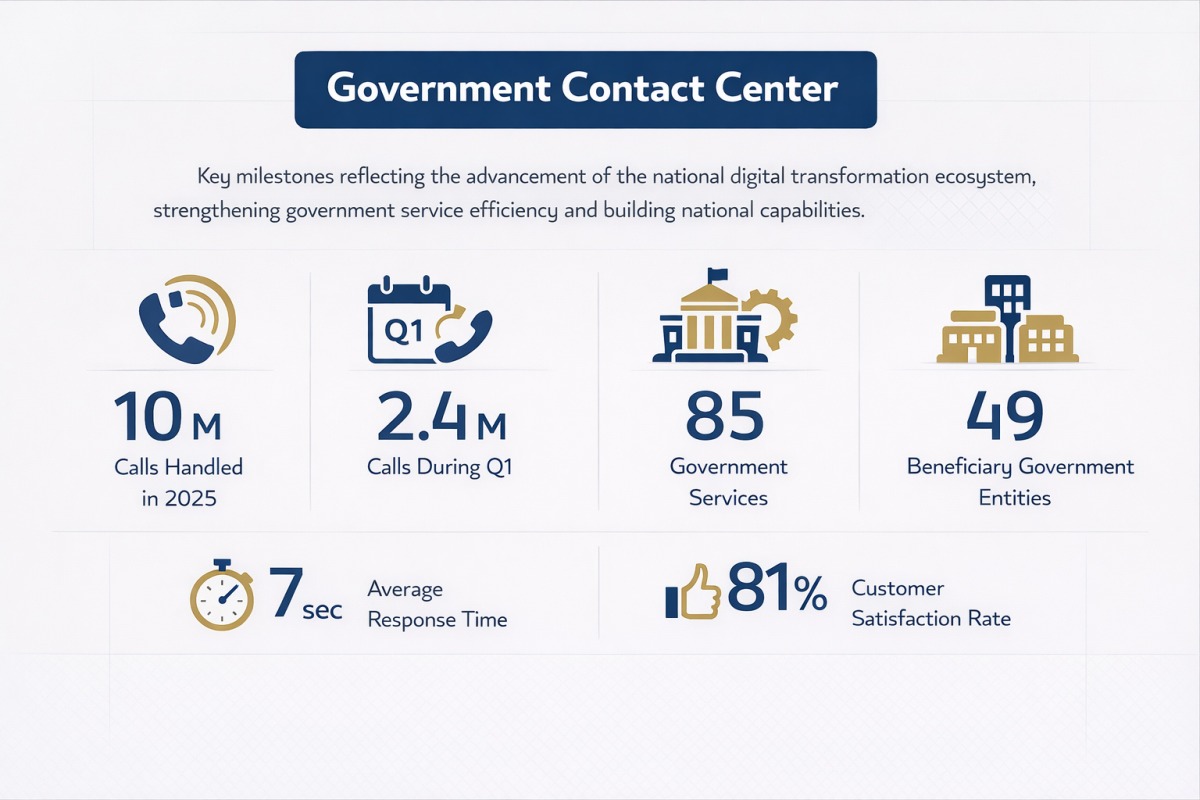
Significant improvements were also made to government service delivery. The Government Contact Center, a central pillar of Qatar’s digital government, handled over 10 million calls in 2025, including 2.4 million in the first quarter alone. The center currently supports 85 government services across 49 entities, achieving an average response time of seven seconds and a customer satisfaction rate of 81 percent.
Strategic Partnerships and Workforce Development
To underpin its digital ambitions, Qatar has entered into over 15 strategic agreements with leading technology companies. Collaborations with Microsoft, Huawei, and Google Cloud, among others, are reinforcing the nation’s digital infrastructure through access to Azure, Copilot, and advanced cloud solutions. These partnerships are intended to foster innovation and accelerate the adoption of cutting-edge technologies.
Recognizing the importance of a skilled workforce, the MCIT launched more than 20 training programs in 2025. The ALIF Programme, a flagship initiative, is specifically designed to build artificial intelligence capabilities within government entities, ensuring public sector employees can effectively utilize modern tools. Investing in IT skills is crucial for long-term success.
Qatar’s commitment to digital government extends to the international arena. The country actively participated in over 10 major global events and forums, including the AI Action Summit in Paris and Web Summit Qatar 2025, where it contributed to discussions on digital policy and entrepreneurship. Qatar also played a role in shaping international standards through its contributions to the United Nations E-Government Survey and the hosting of the MENA E-Government Workshop.
The MCIT is also fostering specialized innovation through 12 new initiatives and publications, including the launch of AI and XR sandboxes at the TASMU Innovation Lab. These sandboxes provide a testing ground for emerging technologies, encouraging experimentation and accelerating the development of new solutions.
Looking ahead, the MCIT is expected to continue focusing on the implementation of its digital transformation roadmaps and the expansion of its partnerships. The success of these initiatives will depend on continued investment in infrastructure, workforce development, and international collaboration. Further details regarding the next phase of the Digital Agenda 2030 are anticipated in the first quarter of 2026, and stakeholders will be watching for updates on the progress of the AI and XR sandbox initiatives.