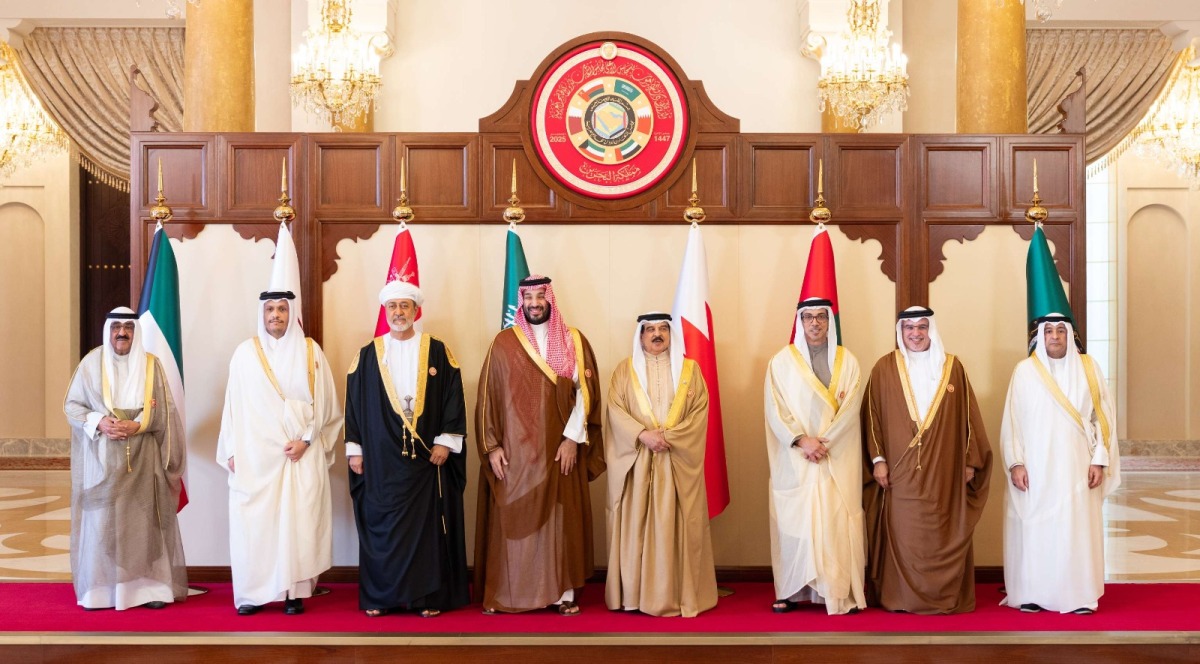

The Gulf Cooperation Council (GCC) has lauded Qatar’s diplomatic efforts in mediating several regional conflicts, including the ongoing situation in Gaza, during its 46th Supreme Council meeting held in Manama, Bahrain. The council specifically commended Qatar’s role in securing a ceasefire agreement and facilitating the release of hostages, highlighting the nation’s pivotal position in international negotiations. This recognition underscores Qatar’s growing influence as a key mediator in the Middle East.
The summit, which concluded on Wednesday, saw leaders from GCC member states reaffirm their commitment to regional stability and collective security. According to the final statement released by the council, Qatar’s contributions extend beyond Gaza to include peace initiatives in the Democratic Republic of Congo and efforts to de-escalate tensions between Pakistan and Afghanistan. The GCC also voiced strong support for Qatar’s bid to host the 2036 Olympic and Paralympic Games.
Qatar’s Mediation Role in Regional Conflicts
The GCC statement specifically praised Qatar’s involvement in brokering the Doha Framework Agreement for Peace between the Democratic Republic of Congo and the M23 Movement, signed in November. This agreement aims to address the root causes of the conflict through dialogue and reconciliation, a process facilitated by Qatar’s diplomatic initiatives. The council affirmed the importance of structured dialogue and respect for human rights in achieving lasting peace in the region.
Gaza Ceasefire and Humanitarian Aid
A significant portion of the summit’s discussion focused on the situation in Gaza. The GCC expressed full support for the Palestinian people and called for an immediate end to the blockade of the territory. Leaders demanded the opening of all crossings to allow for the sustained flow of humanitarian aid and the protection of civilians, emphasizing full compliance with international law. The council warned against any attempts to forcibly displace residents of Gaza and reiterated support for an independent Palestinian state.
Additionally, the GCC commended Qatar’s successful mediation in reuniting Ukrainian and Russian children with their families, demonstrating a commitment to humanitarian principles. This effort, alongside the mediation of prisoner exchanges between the two countries, highlights Qatar’s dedication to peaceful resolutions even amidst complex geopolitical challenges.
Economic and Security Cooperation within the GCC
Beyond conflict resolution, the GCC summit addressed internal economic and security matters. The council approved the gradual implementation of a customs data exchange platform, scheduled for the second half of 2026, aiming to enhance economic integration among member states. Furthermore, the approval of the establishment of the GCC Civil Aviation Authority and the General Agreement for Linking the GCC States to the Railway Project signifies a commitment to infrastructure development and regional connectivity.
The GCC also reiterated its stance on regional security, emphasizing that the security of its member states is indivisible. This commitment was reinforced by references to previous statements issued regarding the situation in Gaza and the broader regional landscape. The council reaffirmed its rejection of any threats to its member states and its commitment to collective defense.
Meanwhile, the council addressed concerns regarding Iran, stressing the need for constructive cooperation with the International Atomic Energy Agency and condemning actions that threaten regional stability. The UAE’s sovereignty over disputed islands currently controlled by Iran was also reaffirmed. The GCC also voiced support for Iraq’s stability and Yemen’s Presidential Leadership Council.
Looking ahead, the GCC will focus on finalizing the requirements for a Customs Union and establishing mechanisms for monitoring cross-border trade in services. The success of these initiatives will be crucial for deepening economic integration within the bloc. The evolving geopolitical landscape and ongoing conflicts in the region will continue to demand Qatar’s, and the GCC’s, diplomatic engagement and mediation efforts, making continued monitoring of these developments essential.