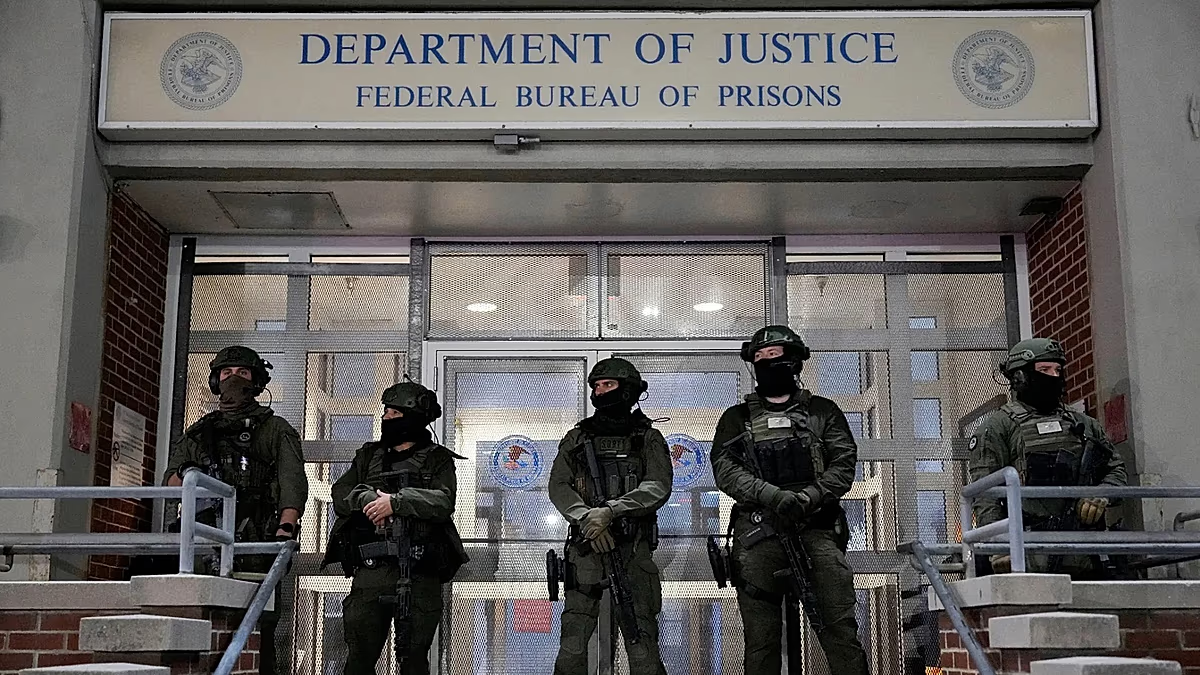

Nicolás Maduro, the former President of Venezuela, is in U.S. custody following a swift and unexpected military operation carried out on Saturday. Maduro was taken into custody after landing at a small airport near New York City, and is currently held at the Metropolitan Detention Centre in Brooklyn. His detention marks a dramatic escalation in U.S. efforts to address issues of drug trafficking and alleged corruption linked to his regime.
Footage released by U.S. authorities depicts Maduro, clad in casual sportswear, being escorted off an aircraft and through a hallway in handcuffs. The operation, dubbed “Absolute Resolve” by the Trump administration, involved a coordinated assault on Maduro’s residence in Caracas. Initial reports suggest a relatively quick execution, with at least seven explosions heard near the presidential compound.
The Capture of Nicolás Maduro and International Implications
The U.S. government has long accused Maduro’s administration of widespread corruption and involvement in international drug trafficking. This culminated in federal indictments announced earlier this year, alleging significant financial crimes and narcotics-related offenses. The timing of the capture, coming just days into the new year, underscores the administration’s commitment to pursuing these charges.
The operation reportedly took Maduro by surprise. CNN reported that Maduro and his wife were asleep when U.S. military forces entered their residence. While details remain emerging, videos show Maduro appearing somewhat injured as he was removed from a vehicle, prompting speculation about a possible confrontation during the apprehension.
Details of Operation ‘Absolute Resolve’
According to U.S. officials, the operation was meticulously planned. Air Force General Caine, Chairman of the Joint Chiefs of Staff, stated that the mission involved over 150 aircraft, highlighting the scale of the undertaking. He described the apprehension force as moving with “speed, precision, and discipline.”
President Trump, speaking after the capture, characterized Maduro’s safe house as a heavily fortified “fortress” in Caracas, suggesting the operation required overcoming significant security measures. He claimed the forces were prepared for resistance and were able to “break into places that were not really able to be broken into”.
Interestingly, footage released by U.S. authorities shows Maduro, while seemingly stunned, uttering “Good night and Happy New Year” as he was being led away. Venezuela’s political crisis has been ongoing for several years, with the U.S. recognizing opposition leader Juan Guaidó as the legitimate president.
News of Maduro’s capture has elicited varied reactions internationally. Some governments have expressed support for the U.S. action, citing concerns over corruption and human rights abuses in Venezuela. Others have cautioned against unilateral intervention and called for a diplomatic solution. The United Nations has yet to issue a formal statement, but is reportedly monitoring the situation closely.
The legal proceedings against Maduro are expected to be complex and protracted. Extradition from Venezuela was not required, as he was taken directly into U.S. custody. The charges against him are substantial, potentially carrying decades in prison if convicted. He will likely challenge the basis of his arrest and the legitimacy of the U.S. indictments.
The capture of Nicolás Maduro represents a significant development in U.S. policy towards Venezuela and the fight against international crime. The coming weeks will be crucial as the legal process unfolds and the international community assesses the long-term implications of this bold move. Stay informed about the evolving situation and its impact on regional stability and international law enforcement.