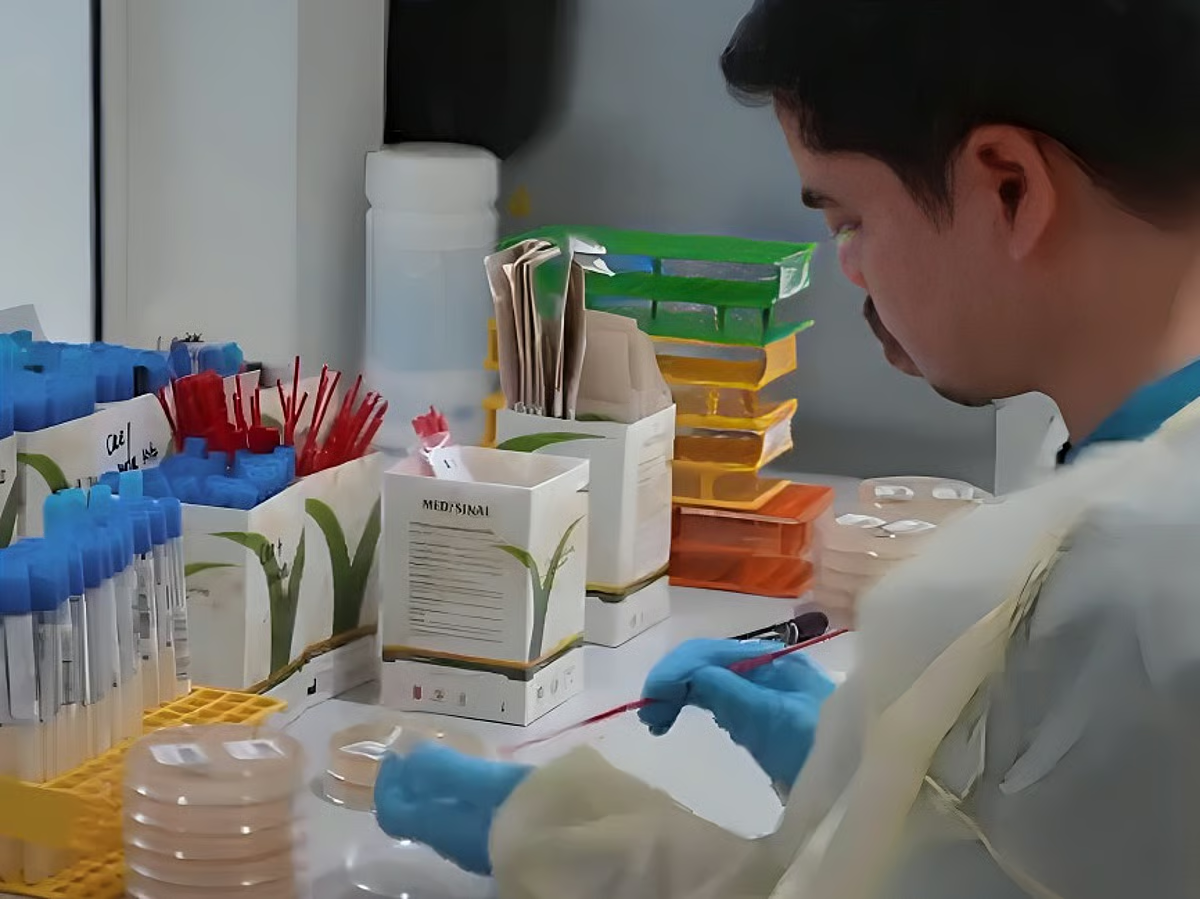

The United Arab Emirates has launched a state-of-the-art clinical diagnostics laboratory, operating continuously and integrating advanced technologies like artificial intelligence and robotics. This new facility, located within the UAE, aims to significantly enhance the nation’s healthcare capabilities by offering a vast range of over 1,800 clinical diagnostics test parameters. The lab is staffed by 1,300 expert consultants and represents a substantial investment in the country’s medical infrastructure.
The laboratory provides services spanning multiple disciplines, including anatomic pathology, molecular genetics, infectious disease detection, histocompatibility for transplant procedures, hematopathology, and environmental testing. According to reports, the facility incorporates the UAE’s most advanced sample-transport and automation systems, promising faster and more accurate results. This development is expected to reduce reliance on sending samples abroad for specialized testing.
Advancing Healthcare Through Comprehensive Clinical Diagnostics
The establishment of this advanced laboratory underscores the UAE’s commitment to becoming a regional leader in healthcare innovation. Historically, many complex medical tests were outsourced to international facilities, leading to delays and increased costs. This new hub centralizes these capabilities within the country, improving accessibility and turnaround times for patients.
The integration of AI and robotics is a key component of the lab’s efficiency. These technologies automate repetitive tasks, minimize human error, and accelerate the analysis of samples. This allows the expert consultants to focus on more complex cases and interpretation of results, ultimately leading to better patient care.
Expanding Test Capabilities
The breadth of testing offered – over 1,800 parameters – is particularly noteworthy. This comprehensive approach allows for a more holistic understanding of patient health and facilitates earlier, more accurate diagnoses. The inclusion of specialized areas like histocompatibility testing is crucial for the success of organ and bone marrow transplant programs.
Molecular genetics testing, a rapidly evolving field, is also a significant offering. This type of testing can identify genetic predispositions to disease, personalize treatment plans, and improve outcomes for patients with inherited conditions. The lab’s capacity in this area positions the UAE to participate in and benefit from advancements in genomic medicine.
Infrastructure and Sustainability
Beyond the advanced technology, the laboratory is designed with energy efficiency in mind. The UAE has been increasingly focused on sustainable development, and this facility reflects that commitment. Details regarding specific energy-saving measures have not been widely released, but the emphasis on efficient infrastructure suggests a reduced environmental footprint.
The sophisticated sample-transport system is also a critical element. Maintaining the integrity of samples during transport is essential for accurate testing. Automated systems minimize handling and ensure that samples are delivered to the appropriate testing area quickly and efficiently. This is particularly important for time-sensitive tests, such as those related to infectious diseases.
The availability of 1,300 expert consultants is a major asset. These specialists provide the necessary expertise to interpret complex test results and guide clinical decision-making. Their presence ensures that the lab operates at the highest standards of quality and accuracy. The Ministry of Health and Prevention has indicated that these consultants represent a diverse range of specialties, covering all areas of diagnostic medicine.
The impact of this new facility extends beyond direct patient care. It is expected to stimulate research and development in the field of laboratory medicine, attracting both local and international talent. Furthermore, the improved diagnostic capabilities will contribute to better public health surveillance and response to emerging health threats. The ability to rapidly detect and identify infectious diseases, for example, is crucial for controlling outbreaks.
The launch of this lab aligns with broader trends in the healthcare industry, including the increasing use of automation, AI, and data analytics. These technologies are transforming the way diseases are diagnosed and treated, leading to more personalized and effective care. The UAE’s investment in this area demonstrates its forward-thinking approach to healthcare. Medical testing is becoming increasingly complex, requiring specialized equipment and expertise.
However, challenges remain. Ensuring equitable access to these advanced diagnostic services across the UAE’s diverse population will be crucial. Additionally, maintaining the high level of quality and accuracy over time will require ongoing investment in training, quality control, and technology upgrades. The long-term cost-effectiveness of the lab will also need to be carefully monitored.
Looking ahead, the Ministry of Health and Prevention is expected to announce plans for integrating the lab’s data with national health information systems. This will allow for a more comprehensive view of patient health and facilitate data-driven decision-making. The success of this integration, and the lab’s overall performance, will be key indicators of the UAE’s progress towards its healthcare goals. Further details regarding accreditation and international collaborations are anticipated within the next quarter.