

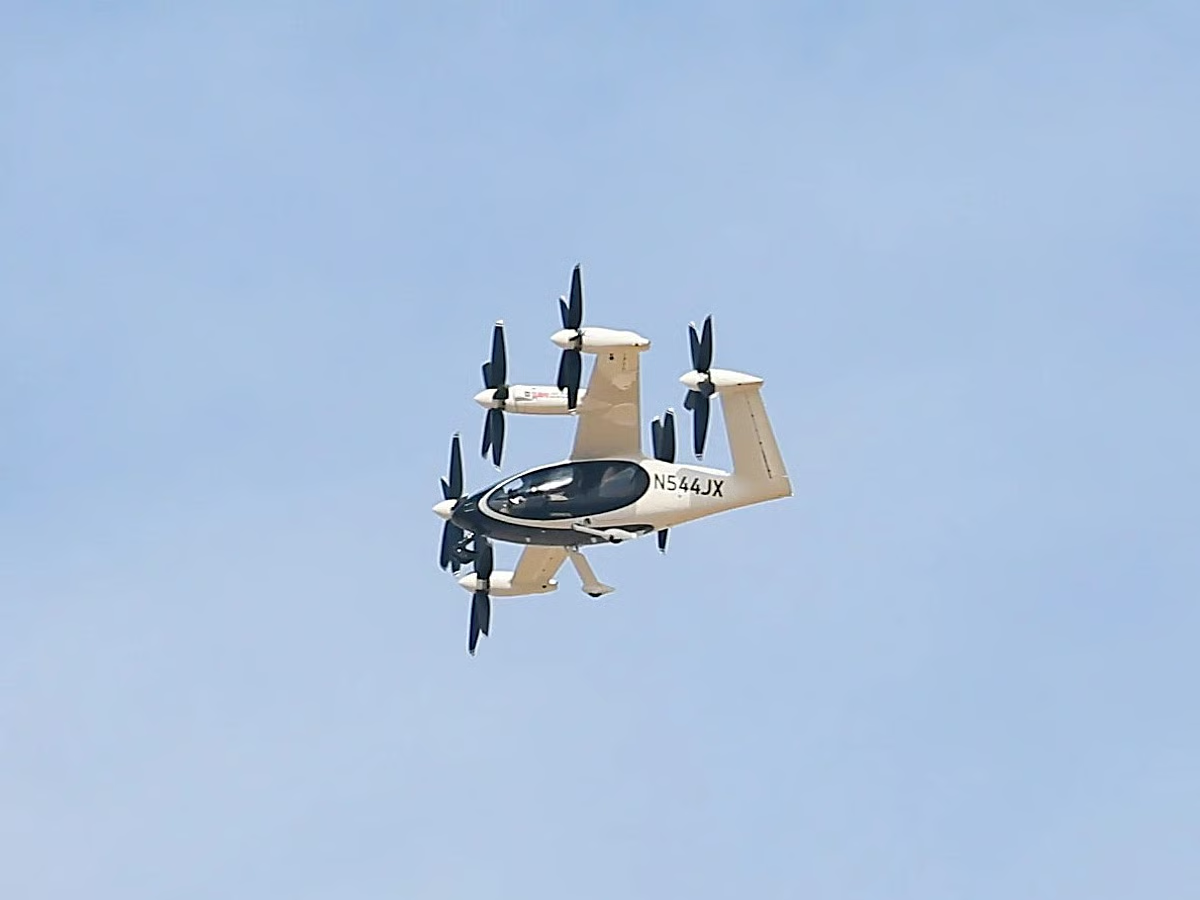

Dubai is planning a city-wide network of air taxi services, aiming to integrate them into the public transportation system. Initial operations, slated to begin soon, will involve four designated landing sites – known as vertiports – and a limited number of electric vertical takeoff and landing (eVTOL) aircraft. The long-term vision, according to officials, is to expand this network to resemble a comprehensive bus system, offering accessible and affordable aerial transport across the city.
The announcement comes as Dubai continues to position itself as a global hub for innovation and futuristic technologies. While a specific launch date hasn’t been confirmed, the project represents a significant investment in advanced air mobility (AAM) infrastructure. The initiative is being spearheaded by the Roads and Transport Authority (RTA) in collaboration with various technology partners.
The Vision for Dubai’s Air Taxi Network
The ambition is to move beyond initial demonstration projects and establish a fully functional, commercially viable air taxi service. This isn’t simply about offering a luxury transport option; the goal is to integrate aerial transport into the daily commute for residents and tourists alike. The RTA envisions a network with “tens of stations” strategically located throughout Dubai.
Initial Phase and Expansion Plans
The first four vertiports will serve as a testing ground for operational procedures, safety protocols, and public acceptance. These locations have not been publicly disclosed, but are expected to be in key areas to maximize accessibility. The initial fleet size will be small, focusing on demonstrating the feasibility and reliability of the technology.
Expansion will be phased, with the RTA carefully monitoring demand and refining the network based on real-world data. This includes assessing optimal vertiport locations, flight routes, and pricing strategies. The ultimate aim is to create a network that is both convenient and cost-effective, comparable to existing public transport options.
Addressing Challenges in Urban Air Mobility
Implementing a widespread air taxi network presents numerous challenges. These include air traffic management, noise pollution, regulatory hurdles, and public perception. Dubai is actively working to address these concerns through collaboration with aviation authorities and technology developers.
According to industry analysts, a key component of success will be developing a robust and automated air traffic control system specifically designed for low-altitude eVTOL operations. This system will need to ensure safe and efficient flight paths, while minimizing disruption to existing air traffic. Furthermore, managing noise levels will be crucial for gaining community acceptance.
The development of appropriate regulations is also paramount. The General Civil Aviation Authority (GCAA) is currently working on establishing a regulatory framework for AAM, covering areas such as aircraft certification, pilot licensing, and operational safety standards. This framework will need to balance innovation with safety and security.
Impact on Dubai’s Transportation Landscape
The introduction of air taxi services could significantly alleviate traffic congestion in Dubai, a city known for its busy roads. By offering an alternative mode of transport, particularly for longer distances, the network has the potential to reduce reliance on private vehicles and improve overall commute times. This aligns with Dubai’s broader sustainability goals, aiming to reduce carbon emissions and promote eco-friendly transportation options.
However, the cost of air taxi rides is likely to be a significant factor in determining their widespread adoption. Initially, fares are expected to be higher than traditional taxis or public transport. The RTA will need to find ways to make the service more affordable to attract a broader customer base. Subsidies or tiered pricing models could be considered.
Additionally, the success of the network will depend on seamless integration with existing transportation systems. This includes convenient connections to metro stations, bus stops, and other modes of transport. A user-friendly booking platform and integrated payment system will also be essential.
The development of vertiports also presents urban planning considerations. These facilities require dedicated space and careful design to minimize noise and visual impact on surrounding communities. Integrating vertiports into existing infrastructure, such as rooftops or transportation hubs, could be a viable solution. The broader field of urban air mobility is still evolving, and Dubai’s approach will be closely watched by other cities considering similar initiatives.
Meanwhile, the development of battery technology and eVTOL aircraft performance is crucial. Longer flight ranges and faster charging times will be essential for expanding the network and making it more practical for everyday use. Ongoing advancements in these areas are expected to further enhance the viability of air taxi services.
The RTA has not provided a firm timeline for the full rollout of the network. However, officials have indicated that they are aiming for a phased expansion over the next several years. The next key step will be the commencement of commercial operations at the initial four vertiports, allowing for real-world testing and data collection. Monitoring public response and addressing any operational challenges will be critical in shaping the future of air transport in Dubai.