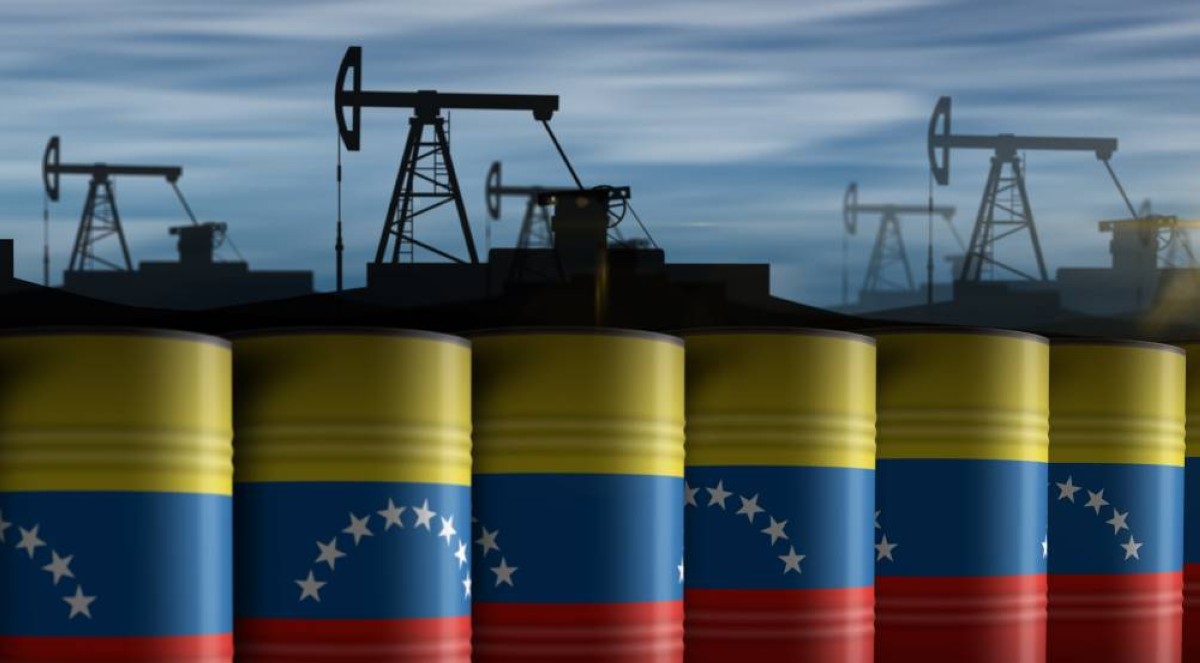

The recent political upheaval in Venezuela, culminating in the arrest of President Nicolas Maduro by the United States, has sent ripples through the global energy landscape. While the immediate impact on oil markets appears limited, the situation underscores the inherent volatility linked to geopolitical events in major oil-producing nations. Despite years of decline, Venezuela possesses some of the largest proven oil reserves in the world, making any change in its leadership and political structure a focal point for industry analysts and governments alike. This article will delve into the potential consequences of these developments, particularly as viewed from the perspective of Kuwait and other key players in the OPEC+ alliance.
Understanding Venezuela’s Role in Global Oil Supply
Venezuela’s significance isn’t necessarily tied to its current production levels, but rather to its vast potential. The country boasts over 300 billion barrels of proven oil reserves, exceeding those of Saudi Arabia. However, a combination of factors – including US sanctions, mismanagement, underinvestment, and aging infrastructure – has crippled its oil industry. Current production hovers around one million barrels per day, representing a small fraction of global output.
This limited supply, while not causing immediate disruption, is enough to warrant attention. The arrest of Maduro, and the subsequent promise of a “smooth and fair transition of power” by the US, raised questions about potential shifts in Venezuelan oil policy and the possibility of increased production. However, experts caution against expecting a quick turnaround.
The Psychological Impact on Oil Prices
Initial reactions to the news saw a modest increase in oil prices. Brent crude rose to $61.76 per barrel, and US West Texas Intermediate (WTI) reached $58.32, both up approximately one dollar. Kuwaiti oil and energy experts, speaking to KUNA, largely attributed this increase to psychological factors rather than concrete changes in supply. The uncertainty surrounding Venezuela’s future, even if short-lived, can trigger speculative buying and a temporary price bump.
The prevailing sentiment is that the impact on crude oil prices in the short to medium term will remain contained. The OPEC+ alliance, with its established production quotas and coordinated approach, is seen as a stabilizing force capable of mitigating any potential supply shocks.
Kuwait’s Perspective and Commitment to Market Stability
Kuwait’s Minister of Oil, Tariq Al-Roumi, has consistently reaffirmed the nation’s dedication to supporting global economic recovery and maintaining balance in the energy market. His recent participation in a meeting of the eight countries involved in the voluntary production cut exit agreement within OPEC+ highlights this commitment.
The decision by these nations to continue adhering to production levels through February and March 2026 demonstrates a proactive approach to avoiding oversupply and safeguarding price stability. Kuwait itself has maintained a production level of 2.580 million barrels per day since December, demonstrating adherence to the collective agreement. This collaborative spirit is crucial in navigating the complexities of the global oil landscape, especially when unexpected geopolitical events arise.
Long-Term Possibilities: Investment and Increased Production
While immediate impact is limited, the scenario could evolve significantly in the long term. Dr. Firas Al-Salem, Chairman of the Kuwaiti Business Council in Dubai, suggests that a regime change in Venezuela could unlock substantial US investment in its oil sector. This investment, capable of exceeding $3 million per day in production, has the potential to revitalize the industry and dramatically increase output.
Such an influx of capital could address the critical issues of aging infrastructure and declining production. However, even with significant funding, the process of restoring Venezuela’s oil industry to its former glory will be lengthy and complex. The national oil company, currently burdened by debt and subject to US sanctions, would need to be restructured to attract and effectively utilize foreign investment.
The Challenges of Venezuelan Crude
Beyond infrastructure and investment, the type of oil Venezuela produces presents challenges. Dr. Mubarak Al-Hajri, an energy expert at the College of Technological Studies, points out that Venezuelan crude is particularly “heavy,” with a density between 14 and 18 API. This means it’s thicker and more viscous than lighter, sweeter crudes, requiring specialized processing and transportation.
Heavy oil is more costly to refine and typically commands a lower price. Furthermore, existing refinery infrastructure isn’t always equipped to handle large volumes of Venezuelan crude. The complexities with Venezuelan oil make its immediate impact on the oil industry less pronounced than lighter alternatives. While Canadian heavy crude often draws comparisons, key technical differences exist, complicating direct equivalency.
Future Outlook: Potential Downward Pressure on Prices
Despite the potential long-term benefits of increased Venezuelan production, Dr. Al-Salem cautions that a surge in supply without a corresponding rise in demand could exert downward pressure on global oil prices. A significant portion of this increased output would likely be directed towards US refineries, particularly those in the southern states.
Therefore, the future trajectory of global oil supply and prices will depend on a confluence of factors, including the pace of economic recovery, the effectiveness of the OPEC+ alliance in managing production, and the level of investment ultimately directed towards Venezuela’s oil sector.
In conclusion, while the arrest of Nicolas Maduro injected a degree of uncertainty into the market, the immediate impact on global oil prices appears to be minimal. Kuwait remains steadfast in its commitment to market stability through its participation in OPEC+ and careful monitoring of geopolitical developments. The long-term potential for increased Venezuelan oil production remains a possibility, but it’s contingent on substantial investment and faces inherent technical and logistical challenges. Continuous assessment and proactive collaboration will be paramount in navigating the evolving dynamics of the global oil landscape.