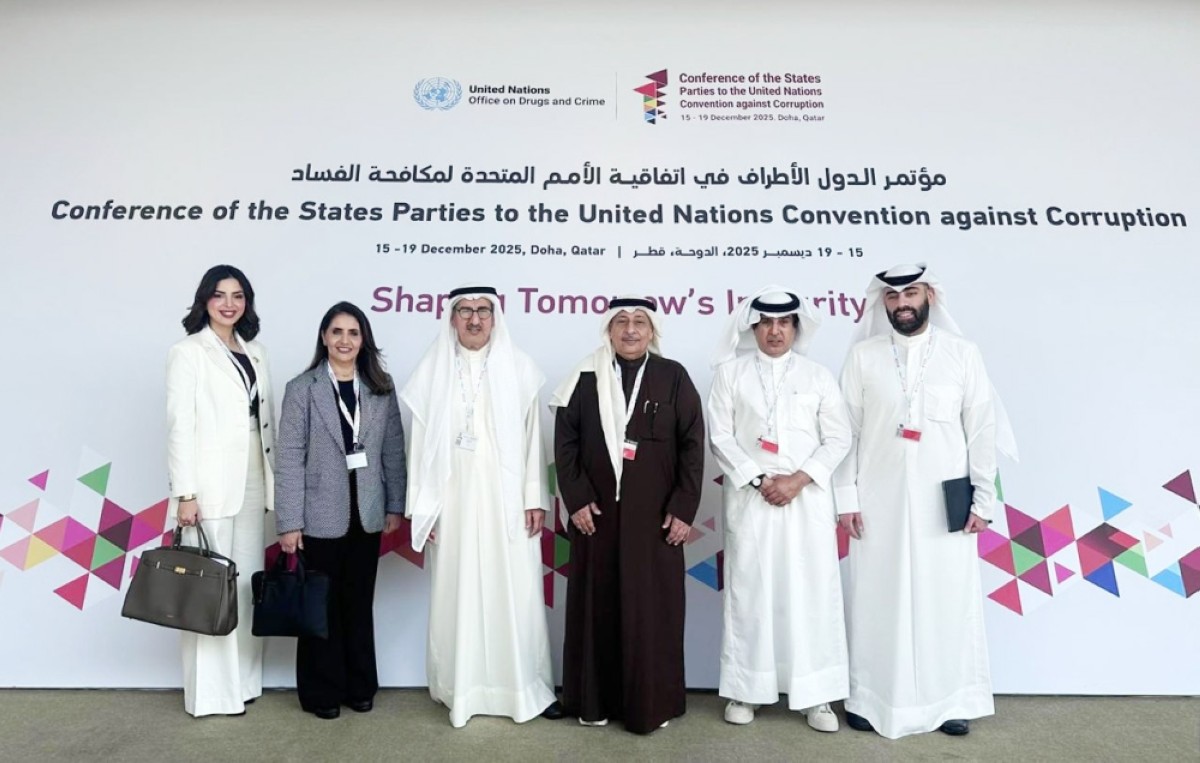

Kuwait is actively strengthening its commitment to global anti-corruption efforts, as demonstrated by the recent participation of the Kuwait Anti-Corruption Authority (Nazaha) in the 11th Conference of the States Parties to the United Nations Convention against Corruption, held in Doha, Qatar. This pivotal conference, bringing together international leaders and experts, offered a crucial platform for Kuwait to showcase its progressive initiatives and collaborate on strategies for tackling this pervasive global challenge. Nazaha’s involvement underscores Kuwait’s dedication to transparency, accountability, and the rule of law, key pillars in building a secure and prosperous future.
Kuwait’s Proactive Role in International Anti-Corruption Initiatives
Nazaha’s participation wasn’t merely observational; the Authority actively contributed to the conference’s discourse by organizing and presenting three specialized workshops. This demonstrates a leadership position in regional and global anti-corruption strategies. These workshops focused on crucial areas of preventative measures, transparency in financial systems, and the practical application of national strategies – all vital components of a robust anti-corruption framework.
The conference itself, convened biennially as mandated by Article 63 of the UN Convention against Corruption, provided an ideal setting for Kuwait to share insights and receive valuable feedback on its ongoing work. Qatar, through the Administrative Control and Transparency Authority, delivered a well-organized and hospitable event, attracting high-level participation from across the globe.
Enhancing Integrity and Accountability in Public Institutions through “Adaa”
One of the key highlights of Nazaha’s contribution was the presentation of the “Adaa” (Performance) project. This initiative, developed in partnership with the Civil Service Bureau, aims to fundamentally improve the work environment and ethical standards within Kuwait’s public sector.
Key Features of the Adaa Project
The “Adaa” project isn’t simply about scrutinizing performance metrics. It’s about institutionalizing ethical principles through a unified and consistent approach. This involves:
- Activating codes of conduct and public service ethics, making them a mandatory element of government service.
- Improving public sector performance by creating a more transparent and accountable system.
- Fostering a culture of integrity, ensuring fair and equitable service delivery.
Assistant Secretary-General for Prevention at Nazaha, Engineer Abrar Al-Hammad, emphasized that ethical conduct is no longer considered a desirable attribute but an absolute necessity for maintaining public trust and ensuring justice within government institutions. This shift in perspective is central to the project’s success.
Strengthening Financial Transparency: The Beneficial Ownership Guide
Another crucial area of focus for Nazaha was enhancing financial transparency, specifically through the disclosure of beneficial ownership in companies and legal entities. They presented a “Beneficial Ownership Guide,” developed in collaboration with the GlobE Network and the GCC Ministerial Committee for Combating Corruption.
This guide provides a practical framework for identifying and disclosing the true owners of companies, a critical step in combating money laundering and terrorist financing. By shining a light on hidden ownership structures, Kuwait is actively working to prevent illicit financial flows and uphold international standards of financial integrity. The emphasis on this area demonstrates Kuwait’s understanding of the complex financial networks used to facilitate corruption.
National Strategy & Future Planning in Combating Corruption
Beyond specific projects, Nazaha provided a comprehensive overview of their current national strategy for promoting integrity and combating corruption. They also shared insights into their ongoing work to develop and update this strategy for the period beyond 2025.
This highlights the Authority’s commitment to long-term, sustainable solutions. The approach emphasizes future-oriented planning, grounded in scientific principles, to effectively address the evolving challenges posed by corruption. Their recent recognition with the Arab Government Excellence Award for Best Arab Initiative for Developing Government Work validates the effectiveness of their current strategy and provides momentum for future endeavors. This continuous improvement cycle is vital in the fight against corruption.
Kuwait’s Commitment to the UN Convention & Collaboration
Nazaha’s active engagement in the Doha conference reflects Kuwait’s firm and enduring commitment to the United Nations Convention against Corruption. As one of the first countries to ratify the convention in 2003, Kuwait has consistently demonstrated its dedication to upholding its principles.
The workshops hosted by Nazaha played a key role in showcasing national efforts, fostering the exchange of best practices, and building collaborative capacity to confront transnational corruption. The high-level delegation, led by Chairman Abdulaziz Al-Ibrahim, actively participated in key sessions, offering valuable contributions to the global conversation on anti-corruption efforts. Engineer Al-Hammad specifically highlighted the need for robust mechanisms to assess corruption risks and analyze trends, linking corruption to other criminal activities.
In conclusion, Kuwait’s presence at the 11th Conference of the States Parties to the United Nations Convention against Corruption was more than symbolic. Through the proactive sharing of innovative initiatives like “Adaa” and the Beneficial Ownership Guide, along with a commitment to long-term strategic planning, Nazaha showcased Kuwait’s position as a dedicated partner in the global fight against corruption. This multi-faceted approach demonstrates a clear understanding that combating corruption requires not only strong national legislation and institutions, but a collaborative international effort built on transparency and accountability. Further information on Nazaha’s initiatives can be found on their official website, contributing to increased awareness and engagement within Kuwait and beyond.