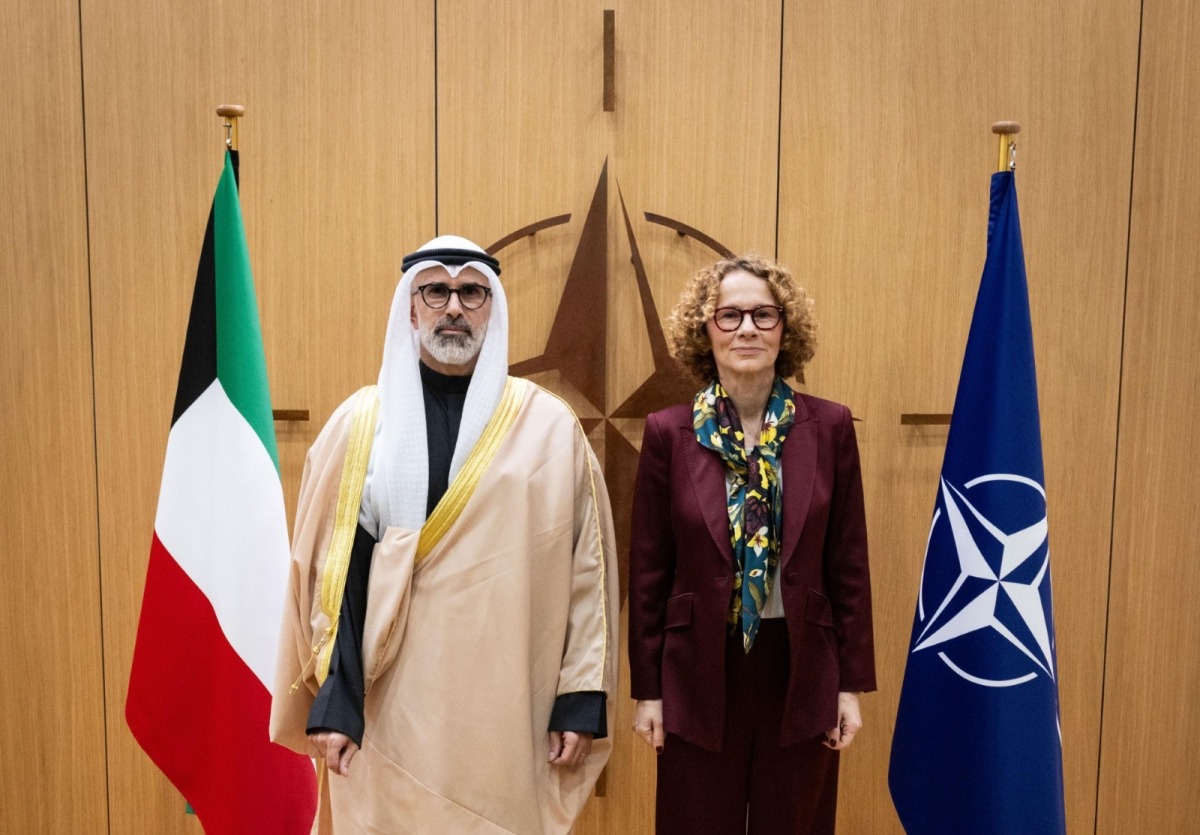

Brussels hosted a significant diplomatic meeting on Wednesday as Kuwait’s Deputy Foreign Minister, Sheikh Jarrah Jaber Al Ahmad Al Sabah, engaged in talks with NATO Deputy Secretary General Radmila Sekerinska. Discussions centered on strengthening bilateral cooperation between Kuwait and the North Atlantic Treaty Organization, as well as addressing pressing regional and international concerns. The meeting underscores Kuwait’s ongoing efforts to foster security partnerships and navigate a complex geopolitical landscape.
The meeting took place at NATO headquarters in Brussels, Belgium. While specific details of the conversation weren’t immediately released, the Kuwaiti Ministry of Foreign Affairs confirmed the focus on enhanced collaboration. This engagement follows a period of increased international attention on stability in the Middle East and the evolving security challenges facing the region.
Strengthening Kuwait-NATO Bilateral Cooperation
The impetus for closer ties between Kuwait and NATO stems from shared interests in counter-terrorism, regional security, and maritime safety. Kuwait has been a consistent partner in international efforts to combat terrorism, and NATO recognizes the country’s strategic importance in maintaining stability in the Persian Gulf. This latest meeting signals a desire to formalize and expand this cooperation.
According to analysts, the discussion likely included potential areas for collaboration such as intelligence sharing, joint training exercises, and capacity building for Kuwaiti security forces. NATO has been increasingly focused on expanding its partnerships beyond its traditional member states, particularly with countries facing similar security threats.
Regional Security Concerns
The meeting’s agenda also encompassed key regional and international issues. These likely included the ongoing conflicts in Yemen and Syria, the situation in Iraq, and broader concerns about Iran’s regional influence. Kuwait has historically played a mediating role in regional disputes, and its insights are valuable to NATO’s understanding of the dynamics at play.
Additionally, the two officials likely discussed the impact of the war in Ukraine on global security. While geographically distant, the conflict has had ripple effects throughout the world, including increased energy prices and heightened geopolitical tensions. Kuwait, as a major oil producer, has a vested interest in maintaining stability in global energy markets.
Expanding Partnerships in the Middle East
NATO’s engagement with Kuwait is part of a broader trend of strengthening relationships with partners in the Middle East and North Africa. The organization has been seeking to enhance its situational awareness and responsiveness to threats emanating from the region. This includes working with countries to improve their defense capabilities and counter-terrorism efforts.
However, these partnerships are not without their complexities. Differing political priorities and sensitivities surrounding regional conflicts can pose challenges to effective cooperation. Maintaining a delicate balance between supporting allies and avoiding actions that could escalate tensions is crucial.
The discussion also likely touched upon cybersecurity cooperation, a growing area of concern for both Kuwait and NATO. Protecting critical infrastructure from cyberattacks is a shared priority, and collaboration in this field is essential to mitigating risks. The increasing sophistication of cyber threats necessitates a coordinated international response.
The meeting represents a continuation of diplomatic efforts between Kuwait and NATO, with previous engagements focusing on similar themes. The two sides have expressed a commitment to maintaining open lines of communication and working together to address common challenges. This latest interaction builds upon that foundation.
Looking ahead, the next step will likely involve follow-up discussions between technical experts from both sides to identify specific areas for cooperation and develop concrete plans for implementation. A formal agreement outlining the terms of the enhanced partnership could be finalized in the coming months, though the timeline remains uncertain. Observers will be watching to see how this collaboration evolves and its impact on regional security dynamics.
Further information on NATO partnerships can be found on the NATO website. Details on Kuwait’s foreign policy are available from the Kuwaiti Ministry of Foreign Affairs. Analysis of international relations in the Middle East can be found through resources like the Carnegie Endowment for International Peace.
The development of these diplomatic ties is also influenced by broader security challenges in the region.