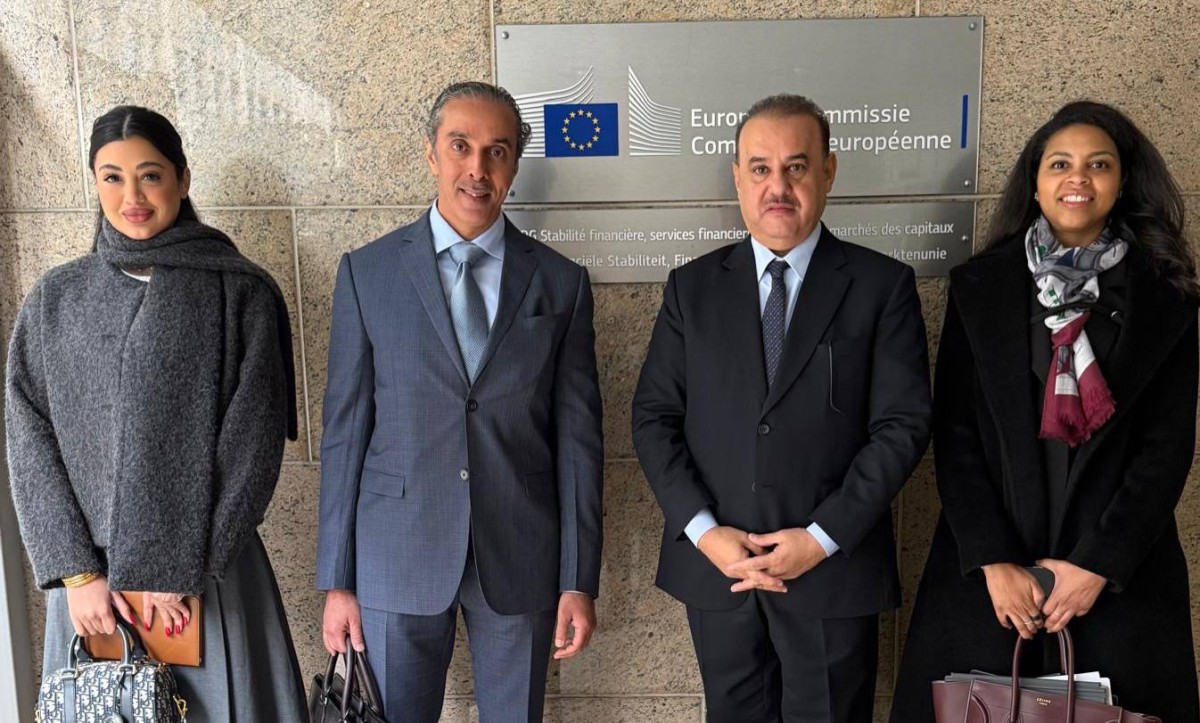

A Kuwaiti delegation, led by Dr. Hamad Al-Mekrad, recently concluded productive talks in Brussels with key European officials, focusing on strengthening international cooperation in the critical area of combating money laundering and terrorism financing. The visit underscores Kuwait’s commitment to global financial security and its proactive approach to addressing evolving threats. This collaborative effort aims to enhance financial oversight and protect the integrity of the international financial system.
Kuwait & EU Strengthen Cooperation Against Financial Crime
The delegation, which also included Ambassador Hamad Al-Mashaan, head of the Committee for Implementing UN Security Council Resolutions and a member of the National Committee, engaged in detailed discussions with John Berrigan, Director General of the European Commission’s Financial Stability, Financial Services and Capital Markets Union. The meetings, held earlier this week, represent a significant step forward in bolstering transatlantic partnerships against illicit financial flows.
The primary objective of the visit was to review existing collaborative initiatives and identify new avenues for enhanced cooperation. Both sides acknowledged the increasing sophistication of financial crime and the necessity for a unified, robust response. This includes addressing emerging challenges related to digital currencies and the use of technology to facilitate illegal activities.
Focusing on FATF Standards and Implementation
A central theme throughout the discussions was the importance of adhering to and strengthening the standards set forth by the Financial Action Task Force (FATF). The FATF is the global standard-setting body for anti-money laundering (AML) and counter-terrorism financing (CTF) measures.
Both Kuwait and the European Union are committed to fully implementing FATF recommendations. This commitment involves strengthening national legislation, enhancing financial intelligence gathering, and improving the effectiveness of financial institutions’ compliance programs. The delegation explored opportunities for exchanging expertise and best practices in these areas.
Deepening Coordination and Information Sharing
Effective combating money laundering and terrorism financing requires seamless information sharing and coordinated action. The talks in Brussels focused on exploring mechanisms to deepen this coordination between Kuwait and the EU. This includes streamlining the process for exchanging financial intelligence and collaborating on investigations related to cross-border financial crimes.
Additionally, discussions touched upon the importance of capacity building. Kuwait expressed interest in leveraging the EU’s expertise in areas such as risk assessment and the implementation of advanced technologies for financial monitoring. This knowledge transfer will be crucial in strengthening Kuwait’s own financial oversight systems.
The Importance of Protecting the Financial Sector
The meeting underscored a shared understanding of the vulnerability of the financial sector to exploitation by criminals and terrorists. Protecting the integrity of financial institutions is paramount to preventing the flow of funds that support illicit activities.
Addressing Emerging Threats – Financial Crime Trends
The discussions acknowledged the evolving landscape of financial crime. New technologies, such as cryptocurrencies, present both opportunities and challenges. While offering potential benefits, they can also be exploited for money laundering and terrorism financing purposes.
Therefore, both sides emphasized the need for ongoing vigilance and adaptation. This includes developing innovative approaches to detect and prevent the misuse of new technologies. Furthermore, the importance of international collaboration in regulating these emerging areas was highlighted. The need for robust financial intelligence was a recurring theme.
Strengthening National Frameworks for AML/CTF
Kuwait and the EU both recognize the importance of strong national frameworks for anti-money laundering and counter-terrorism financing. This involves enacting comprehensive legislation, establishing effective regulatory bodies, and ensuring that financial institutions have robust compliance programs in place.
The delegation discussed Kuwait’s ongoing efforts to strengthen its national AML/CTF regime, including recent legislative reforms and initiatives to enhance the capacity of its financial intelligence unit. The EU offered its support in providing technical assistance and sharing best practices in this regard. This collaborative approach to financial regulation is vital.
Looking Ahead: A Continued Partnership
The talks in Brussels represent a significant step forward in strengthening the partnership between Kuwait and the European Union in the fight against financial crime. The commitment to enhanced cooperation, information sharing, and adherence to FATF standards will contribute to a more secure and stable global financial system.
The delegation’s visit demonstrates Kuwait’s proactive approach to addressing the challenges of combating money laundering and terrorism financing and its dedication to working with international partners to protect the integrity of the financial sector. Continued dialogue and collaboration will be essential to effectively counter evolving threats and safeguard the global economy. This ongoing partnership promises to yield further advancements in the pursuit of financial security for both Kuwait and the EU.