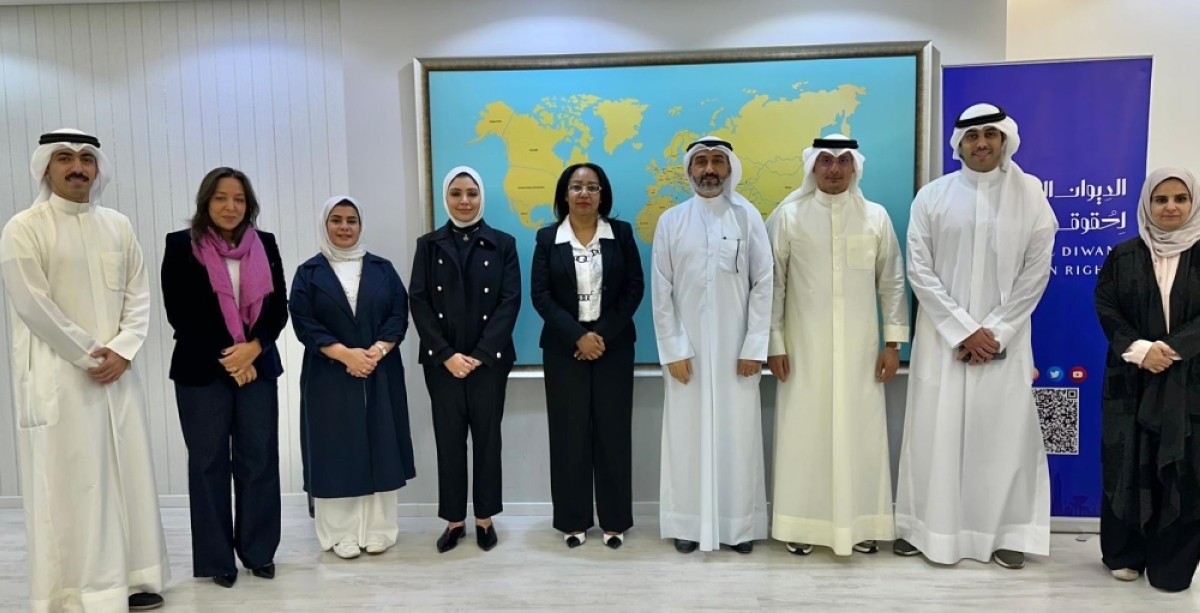

Kuwait is actively strengthening its commitment to human rights through enhanced collaboration with the United Nations. A recent coordination meeting between the National Bureau for Human Rights and UN representatives signals a renewed focus on aligning national efforts with international standards and expanding programs dedicated to the promotion and protection of fundamental freedoms. This partnership aims to bolster Kuwait’s existing initiatives and build a more robust framework for safeguarding human rights within the country and the wider region.
Strengthening Kuwait’s Human Rights Framework
The meeting, held on Tuesday and chaired by Anas Al-Shaheen, Director General of the National Bureau for Human Rights, and UN Coordinator Ghada Al-Taher, represents a significant step in formalizing and deepening the relationship between Kuwait and the UN on crucial human rights matters. The Bureau released a statement to the Kuwait News Agency (KUNA) highlighting the UN’s reaffirmed dedication to supporting Kuwait’s ongoing work. This support isn’t merely symbolic; it encompasses practical assistance in institutional capacity building and collaborative projects designed to advance the human rights agenda.
This commitment is particularly important as Kuwait continues to navigate evolving regional and global challenges related to civil liberties and social justice. A strong, internationally-aligned human rights framework is seen as essential for sustainable development and a stable society.
The Importance of International Standards
A core focus of the discussions was ensuring Kuwait’s national policies and practices are fully aligned with internationally recognized human rights standards. This includes adherence to conventions and treaties ratified by Kuwait, as well as incorporating best practices from around the world. Alignment with these standards isn’t about external pressure, but rather about ensuring the fairness, equity, and effectiveness of Kuwait’s own legal and social systems.
This process involves a thorough review of existing legislation, policies, and procedures to identify areas where improvements can be made. It also necessitates ongoing dialogue and consultation with civil society organizations and other stakeholders.
Collaborative Programs and Future Initiatives
The meeting wasn’t just about broad commitments; it delved into specific areas of cooperation. Executive specialists from the National Bureau for Human Rights presented a detailed overview of their current initiatives, outlining upcoming priorities and pinpointing opportunities for joint ventures with various UN agencies. These initiatives span a wide range of human rights concerns, including labor rights, women’s empowerment, and the rights of vulnerable populations.
Specifically, discussions centered on developing concrete action plans, implementing targeted training programs for government officials and law enforcement personnel, and launching comprehensive awareness campaigns. These campaigns are designed to educate the public about their rights and responsibilities, fostering a culture of respect for human dignity.
Focus on Training and Awareness
The planned training programs are crucial for ensuring that those responsible for upholding human rights are equipped with the knowledge and skills to do so effectively. These programs will likely cover topics such as international humanitarian law, human rights due diligence, and non-discriminatory practices.
The awareness campaigns, meanwhile, will utilize various media platforms to reach a broad audience. They will aim to dispel misconceptions about human rights, promote understanding of key principles, and encourage citizens to report violations. Raising public awareness is a vital component of preventative measures and building a more just and equitable society. This also ties into broader efforts towards social development in Kuwait.
Regional Impact and Ongoing Efforts
Kuwait’s commitment to human rights extends beyond its national borders. The discussions also touched upon the potential for regional cooperation and the sharing of best practices with other countries in the Middle East. By actively promoting human rights within its own sphere of influence, Kuwait can contribute to greater stability and prosperity throughout the region.
The Bureau emphasized that these efforts are not a one-time event, but rather an ongoing process of continuous improvement. Kuwait recognizes that protecting human rights is a dynamic challenge that requires constant vigilance and adaptation. Furthermore, the country is actively working on improving its reporting mechanisms to international bodies, demonstrating transparency and accountability. This proactive approach to international cooperation is a key element of Kuwait’s foreign policy.
In conclusion, the recent coordination meeting between the National Bureau for Human Rights and the United Nations underscores Kuwait’s dedication to strengthening its human rights framework. Through collaborative programs, targeted training, and public awareness campaigns, Kuwait is taking concrete steps to align its national efforts with international standards and promote a culture of respect for human dignity. This partnership is not only beneficial for the people of Kuwait but also has the potential to contribute to positive change throughout the region. We encourage readers to learn more about the National Bureau for Human Rights and the UN’s work in Kuwait to stay informed about these important developments.