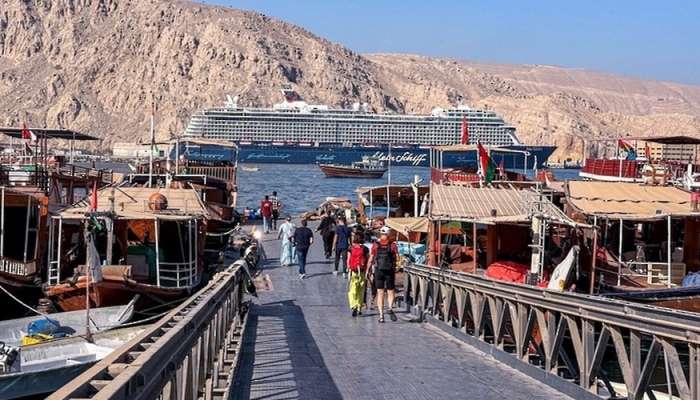

The Port of Khasab in the Musandam Governorate has welcomed a cruise ship carrying 2,472 tourists from around the world, along with 952 crew members. The arrival of the vessel marked a significant event for the region, highlighting its growing appeal as a tourist destination. The tourists were treated to a warm welcome, complete with folklore performances and an exhibition showcasing local handicrafts.
## A Vibrant Welcome Ceremony
The welcoming ceremony for the cruise ship was a lively affair, featuring traditional Omani dances and music. The event also included the opening of an exhibition showcasing handicrafts made by local families and owners of small and medium enterprises (SMEs). The exhibition was designed to support local entrepreneurs and provide them with an opportunity to showcase their products to a global audience. By promoting local handicrafts, the event helped to preserve traditional crafts and provide a platform for local artisans to gain international exposure.
### Supporting Local Entrepreneurs
The exhibition was an important aspect of the welcoming ceremony, as it provided a platform for local entrepreneurs to showcase their products. The event was attended by owners of SMEs, who displayed a range of handicrafts, including traditional clothing, jewelry, and souvenirs. The exhibition was well-received by the tourists, who were eager to learn about local customs and purchase authentic Omani products. This initiative not only supported the local economy but also helped to promote cultural exchange between visitors and the local community.
## Exploring Musandam’s Natural Beauty
The tourists on board the cruise ship were given the opportunity to explore the natural beauty of Musandam Governorate. Sightseeing tours took them to historical sites, where they learned about the region’s rich history and cultural heritage. The tours also included boat rides, which allowed visitors to explore the governorate’s stunning islands and fjords. The Musandam Peninsula, often referred to as the “Norway of Arabia” due to its dramatic landscapes and crystal-clear waters, offered a unique and unforgettable experience for the tourists.
### Discovering Historical Sites
The historical sites visited by the tourists provided a glimpse into the region’s rich history. The tours were led by knowledgeable guides, who shared stories and anecdotes about the sites and their significance. The tourists were fascinated by the history and culture of the region, and the tours provided a valuable insight into the local way of life. By exploring these sites, visitors gained a deeper appreciation for the cultural and historical significance of Musandam Governorate.
## Enhancing Tourism Infrastructure
The arrival of the cruise ship at the Port of Khasab highlights the region’s growing tourism infrastructure. The Musandam Governorate has been investing in its tourism sector, with a focus on developing its infrastructure and promoting its natural beauty. The successful welcoming of the cruise ship demonstrates the region’s ability to accommodate large numbers of tourists and provide them with a memorable experience. As tourism continues to grow in the region, it is likely that the Port of Khasab will play an increasingly important role in the local economy.
The visit of the cruise ship to Khasab is a significant boost for the local tourism industry. The event not only brought in a large number of tourists but also provided a platform for local entrepreneurs to showcase their products. As the region continues to develop its tourism infrastructure, it is likely that the Port of Khasab will remain a key destination for cruise ships and tourists alike. By supporting local businesses and promoting cultural exchange, the tourism industry in Musandam Governorate is poised for continued growth and success. Meanwhile, the local community is expected to benefit from the increased economic activity generated by tourism. Additionally, the promotion of local handicrafts and cultural heritage will help to preserve the region’s unique identity. However, it is crucial for the region to balance tourism development with the need to protect its natural environment and cultural heritage.