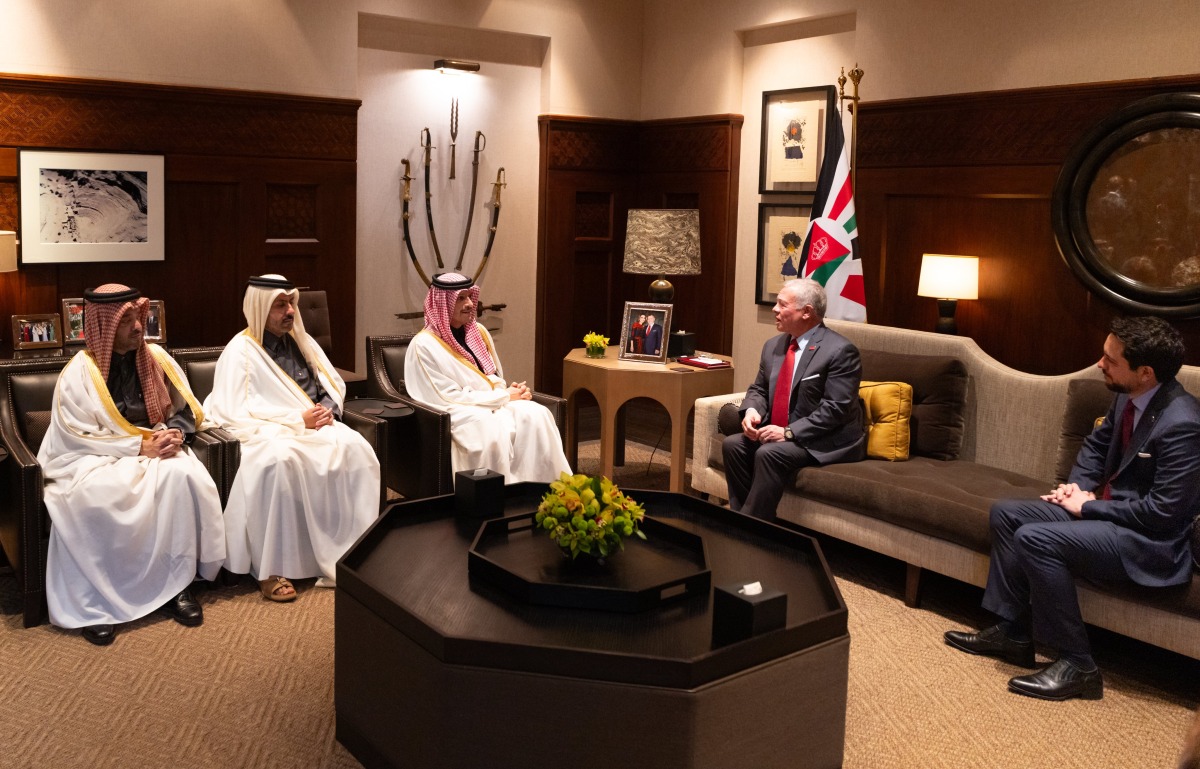

Amman, Jordan – His Majesty King Abdullah II of Jordan met with Qatar’s Prime Minister and Minister of Foreign Affairs, Sheikh Mohammed bin Abdulrahman bin Jassim Al-Thani, in Amman on Sunday to discuss strengthening bilateral relations and regional issues. The meeting focused on enhancing cooperation between the two nations and addressing matters of mutual concern, signaling continued close ties between Qatar and Jordan. This engagement underscores the importance both countries place on stability and collaboration in the Middle East.
The meeting, held at the Royal Hashemite Court, involved an exchange of greetings between the two leaders, with Sheikh Mohammed conveying a message from the Amir of Qatar, Sheikh Tamim bin Hamad Al-Thani, to King Abdullah. The Amir’s message expressed wishes for the King’s health and happiness, and for continued progress and prosperity for the Jordanian people. King Abdullah reciprocated with greetings for Sheikh Tamim and the people of Qatar.
Strengthening Qatar-Jordan Bilateral Relations
The discussions between King Abdullah II and Sheikh Mohammed bin Abdulrahman centered on practical steps to bolster bilateral relations across various sectors. These include potential investments, trade opportunities, and collaborative projects in areas like tourism, infrastructure, and energy, according to sources familiar with the talks. Both sides expressed a commitment to overcoming any obstacles hindering increased economic partnership.
Economic Cooperation as a Key Focus
Qatar has historically been a significant investor in Jordan, and this meeting likely aimed to identify new avenues for expanding that investment. The Jordanian economy has faced challenges in recent years, and increased foreign investment is seen as crucial for sustainable growth. Discussions may have included Qatari support for Jordanian development plans and initiatives.
Beyond economic ties, the meeting also addressed regional security and political developments. The ongoing conflict in Gaza and its wider implications for the Middle East were reportedly a key topic of conversation. Both Qatar and Jordan share concerns about the humanitarian situation in Gaza and the need for a lasting ceasefire.
Qatar plays a prominent role in mediation efforts in the region, and Sheikh Mohammed likely briefed King Abdullah on the latest developments in these initiatives. Jordan, a key US ally, maintains close relationships with various regional actors and can offer valuable insights into the complex dynamics at play. The two leaders likely explored ways to coordinate their diplomatic efforts to promote stability and de-escalation.
Additionally, the meeting touched upon the importance of continued collaboration on counter-terrorism efforts. Both Qatar and Jordan are active members of the international coalition against ISIS and share a commitment to combating extremism in all its forms. The exchange of information and intelligence is considered vital in this regard.
In recent years, Qatar and Jordan have deepened their cooperation in several areas, including military training and defense. This collaboration is seen as contributing to the overall security of the region. The two countries also maintain strong people-to-people ties, with a significant number of Jordanians working in Qatar. This diplomatic engagement is a continuation of regular high-level contacts between the two nations.
While specific details of the discussions were not publicly released, the meeting signals a continued commitment to a strong partnership between Qatar and Jordan. The focus on regional stability and economic cooperation suggests a shared vision for a more prosperous and secure future for the Middle East. Further details regarding potential agreements or initiatives stemming from the meeting are expected in the coming weeks.
Looking ahead, observers will be watching for concrete outcomes from the discussions, such as new investment deals or joint statements on regional issues. The timing of this meeting, amidst ongoing geopolitical tensions, underscores the importance of continued dialogue and collaboration between key regional players. The next steps will likely involve follow-up meetings between officials from both countries to translate the discussed ideas into actionable plans.
Source: The Peninsula Qatar
Qatar Government Website
Royal Hashemite Court