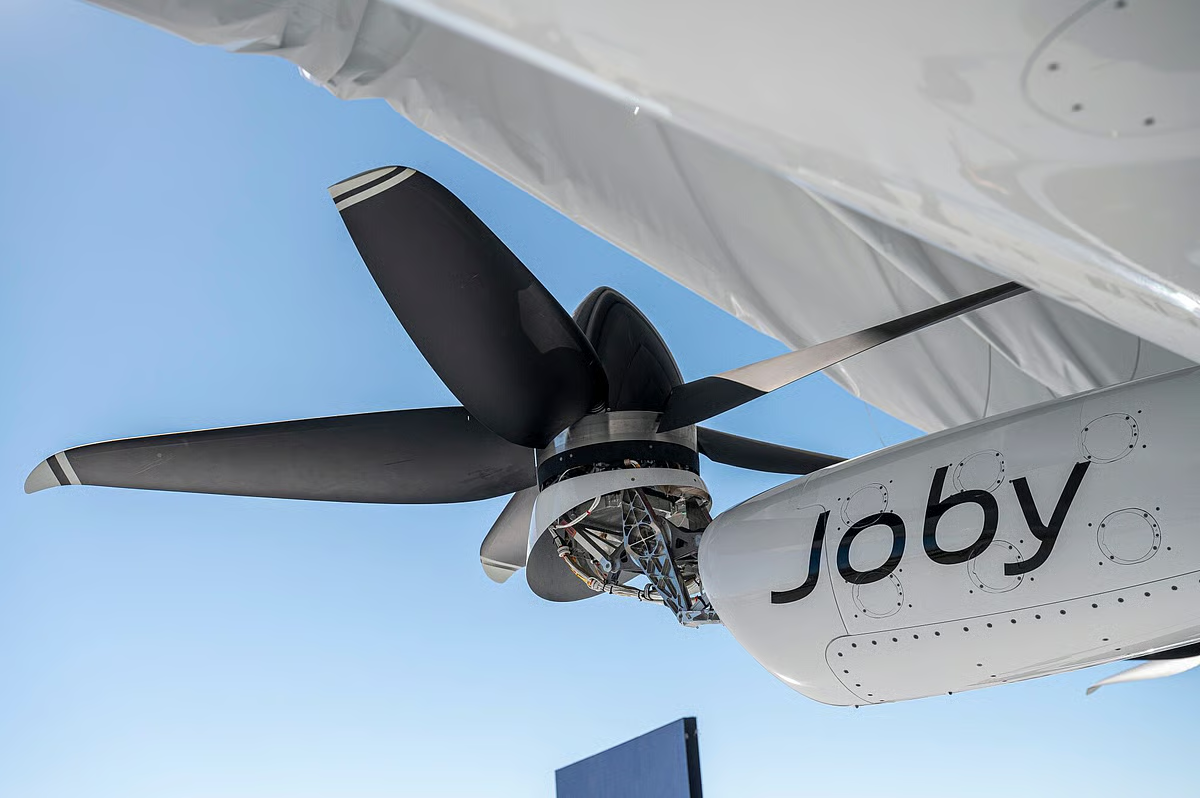

The future of urban transportation is edging closer to reality, as recent developments signal a potential breakthrough for advanced air mobility (AAM). A Presidential Executive Order has paved the way for limited commercial operations of electric vertical takeoff and landing (eVTOL) aircraft as early as next year, even before full Federal Aviation Administration (FAA) certification is complete. This move, coupled with manufacturing expansions by key players like Joby Aviation, is accelerating the timeline for what could be a significant shift in how people and goods move within cities.
Joby Aviation, a leading developer of eVTOL aircraft, is actively scaling up its production capabilities. Founder and CEO JoeBen Bevirt stated the company is transitioning to a phase of industrial-scale production, bolstered by ongoing collaboration with Toyota Motor Corporation. This investment aims to support higher production volumes needed to meet anticipated demand for these innovative aircraft.
Boosting the Manufacturing Footprint for Advanced Air Mobility
Joby completed an expansion of its aircraft assembly facility in Marina, California, in July. This added space is critical as the company works to increase output and prepare for the complexities of commercial manufacturing. Additionally, in October, the company initiated propeller blade production in Ohio, representing the first step in a broader manufacturing expansion planned for the state.
To support this increased capacity, Joby is procuring new capital equipment to double its monthly aircraft production from two to four. The company is also implementing 24-hour manufacturing operations at its California site, necessitating additional hiring. This strategic move underscores Joby’s commitment to quickly establishing a robust supply chain and manufacturing base for its eVTOL technology.
Certification Progress
The manufacturing ramp-up is directly tied to progress in the FAA certification process. In late April, Joby announced the commencement of power-on testing for the first of five FAA-conforming aircraft built specifically for Type Inspection Authorization (TIA) testing. This testing phase signifies the final stage of type certification.
TIA testing involves rigorous evaluation of the aircraft by FAA pilots and inspectors. Completion of TIA is necessary before Joby and other companies can receive full FAA certification to begin commercial passenger flights. The remaining four aircraft required for TIA are currently in production, keeping the company on track for potential limited operations in 2025.
Toyota’s Strategic Investment and Partnership
Joby’s expansion is also being fuelled by significant investment from Toyota. In May 2024, the company received a $250 million tranche as part of a broader strategic investment from Toyota Motor Corporation. This collaboration is designed to accelerate the commercialization of Joby’s eVTOL aircraft.
Currently, Joby and Toyota are working to finalize a definitive manufacturing alliance. Toyota’s established expertise in automotive manufacturing, particularly in areas like lean production and quality control, is proving invaluable in preparing Joby for high-volume aircraft production. This partnership showcases how traditional automotive giants are seeking to leverage new technologies like electric aviation.
The growing momentum behind AAM is attracting interest globally. Transport planners and investors are increasingly recognizing the potential of eVTOL aircraft to alleviate urban congestion and reduce carbon emissions. Cities grappling with inefficient ground transportation systems are actively exploring AAM as a viable solution to enhance mobility and sustainability. The overall concept of urban air mobility (UAM) is gaining traction as the industry develops.
However, several challenges remain. Establishing the necessary infrastructure, including vertiports and air traffic management systems tailored for low-altitude flight, is a significant undertaking. Public acceptance and noise concerns also need to be addressed for widespread adoption. Regulatory frameworks are still evolving and standardization across different jurisdictions will be crucial.
Looking ahead, the next key milestone for Joby and other AAM companies is the successful completion of TIA and subsequent FAA type certification. While regulatory approval is anticipated within the next year, the exact timeline remains subject to the FAA’s rigorous evaluation process. The industry will also be closely monitoring the development of vertiport infrastructure and air traffic management solutions to ensure a safe and efficient rollout of commercial AAM services.