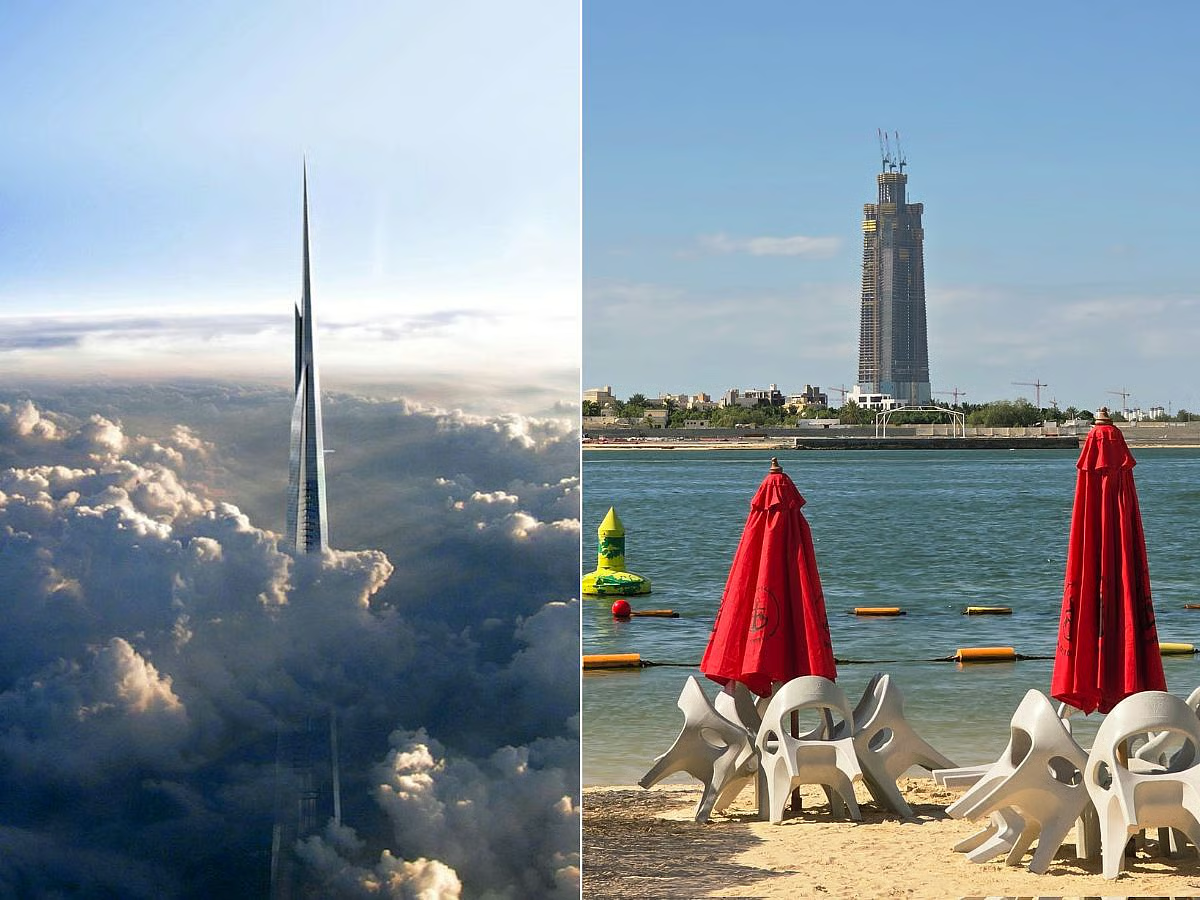

Saudi Arabia is experiencing a boom in ambitious construction projects, most notably the Jeddah Tower, currently the world’s tallest building under construction. The rapid rise of this supertall structure, alongside plans for even more audacious projects like the Rise Tower in Riyadh, signals a significant investment in infrastructure and a push for economic diversification. Construction on the Jeddah Tower has resumed after pandemic-related delays and is now over 50% complete with concrete pouring, aiming for completion by August 2025.
Located in Jeddah, the Jeddah Tower is being developed by Kingdom Holding Co, with Saudi Binladin Group, Dar Al-Handasah, and Turner Construction leading the building efforts. The project, initially stalled due to economic factors and controversy, is now a key component of the Kingdom’s Vision 2030 plan. The Rise Tower, while still in the planning stages, represents an even more significant leap in architectural ambition, aiming to reach an unprecedented 2 kilometers in height.
The Jeddah Tower: A Symbol of Saudi Arabia’s Vision 2030
The Jeddah Tower is intrinsically linked to Saudi Arabia’s Vision 2030, a strategic framework designed to reduce the nation’s dependence on oil and cultivate new economic sectors. The project aims to attract foreign investment and establish the Kingdom as a global hub for business and tourism. According to reports from the Council on Foreign Relations, the plan involves substantial investment in non-oil industries, including construction and real estate.
Construction Progress and Challenges
As of August 2025, the Jeddah Tower had reached 75 floors, with construction crews utilizing high-pressure pumps to accelerate the concrete pouring process. The core structure is now more than halfway complete, representing a significant milestone in the project’s development. However, the tower’s construction has not been without its hurdles.
Initial delays were attributed to labor issues and financial difficulties experienced by Saudi Binladin Group. The COVID-19 pandemic further exacerbated these challenges, leading to a temporary suspension of work. The developer announced the resumption of building works, signaling renewed commitment and financial stability.
Design and Planned Features
The Jeddah Tower is designed to be a mixed-use development, incorporating a luxury hotel, serviced apartments, and office spaces. The base of the tower will feature a five-level podium dedicated to retail, dining, and events, creating a vibrant public space. The tower’s slender, spiraling design is intended to minimize wind resistance and maximize views of the Red Sea.
The building’s height is expected to surpass 1,000 meters (3,281 feet), making it significantly taller than the current world’s tallest building, the Burj Khalifa in Dubai. Engineers are employing advanced construction techniques and materials to ensure the structural integrity of such a supertall building. This includes utilizing high-strength concrete and innovative foundation designs.
Rise Tower: Pushing the Boundaries of Skyscraper Technology
While the Jeddah Tower is a remarkable feat of engineering, the proposed Rise Tower in Riyadh represents an even more ambitious undertaking. This project aims to be the world’s first 2-kilometer-tall skyscraper, dwarfing all existing structures. The project is currently in the planning and design phase, with contractor bidding underway following design finalization in 2023-2024.
The Rise Tower’s design presents unprecedented challenges for engineers and architects. Maintaining structural stability at such extreme heights requires innovative solutions and a deep understanding of wind dynamics and material science. The project is expected to incorporate cutting-edge technologies, including advanced elevator systems and sustainable energy solutions.
The development of the Rise Tower is also tied to Saudi Arabia’s Vision 2030, specifically its goals for urban development and technological innovation. The tower is envisioned as a vertical city, capable of accommodating a large population and providing a wide range of amenities. The project’s success could position Saudi Arabia as a leader in high-rise construction and sustainable urban planning.
The scale of the Rise Tower necessitates careful consideration of logistical challenges, including material transportation and workforce management. The project’s environmental impact will also be a key concern, requiring the implementation of sustainable construction practices and energy-efficient technologies. Furthermore, the project’s feasibility relies on continued economic growth and investment in the Kingdom.
The focus on megaprojects like the Jeddah Tower and the Rise Tower reflects a broader trend in the Gulf region, where governments are investing heavily in infrastructure to diversify their economies and attract tourism. These projects are not only architectural marvels but also symbols of national ambition and economic progress. The Kingdom’s commitment to these ventures demonstrates its long-term vision for development and its willingness to embrace innovative technologies.
Looking ahead, the next crucial step for the Jeddah Tower is the completion of the remaining floors and the installation of the building’s facade. The project is currently slated for completion in August 2025, but unforeseen challenges could potentially impact this timeline. For the Rise Tower, the selection of a contractor and the commencement of detailed design work will be key milestones to watch. The ultimate realization of a 2km skyscraper remains a significant technological and logistical undertaking, with its success dependent on continued innovation and investment.