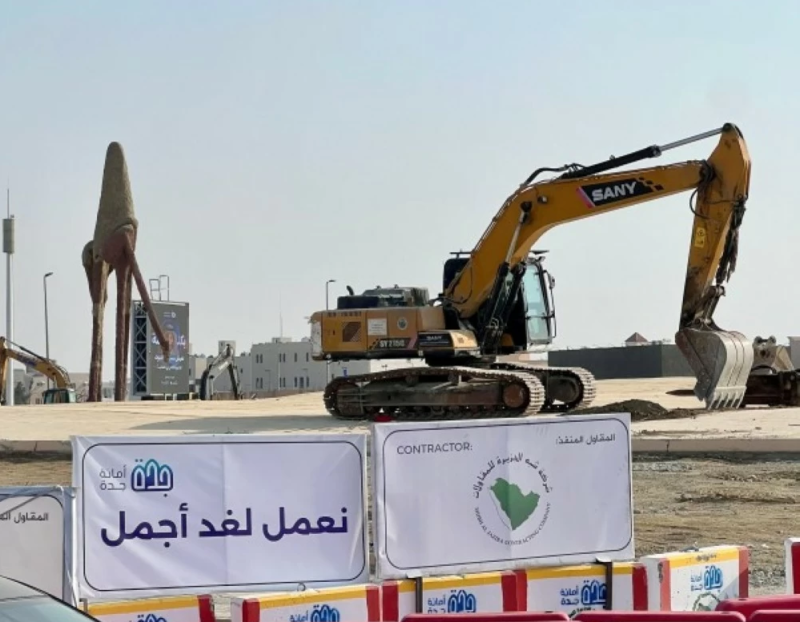

Jeddah residents will see significant changes to a major northern entry point as the Jeddah Municipality has begun dismantling the iconic Camel Roundabout. The project, announced this week, aims to alleviate long-standing traffic congestion in the Abhur district, with completion targeted for 2026. The removal of the roundabout and its replacement with traffic signals is a key component of a broader municipal effort to improve city-wide traffic flow.
Work commenced on removing the roundabout structure itself, with plans to redirect traffic to right-turn flows and eventually relocate the landmark camel sculptures. The demolition is focused on addressing bottlenecks in southern Abhur, a particularly problematic area for commuters. The municipality anticipates the changes will substantially enhance road efficiency and mobility in the region.
The Future of Jeddah Traffic: Removing the Camel Roundabout
The decision to remove the Camel Roundabout stems from years of documented traffic issues. According to the Jeddah Municipality, the roundabout’s design proved inadequate for the increasing volume of vehicles using the northern Corniche. This resulted in frequent backups, particularly during peak hours, impacting both local residents and those traveling through the city.
Addressing Congestion in Southern Abhur
Southern Abhur has long been identified as a congestion hotspot. The area’s geography, combined with increasing urbanization, has created a challenging traffic environment. The municipality’s comprehensive traffic solution seeks to address these issues through a multi-faceted approach, with the roundabout’s removal being the initial and most visible step.
The planned changes involve more than simply replacing a roundabout with traffic lights. The redirection of traffic to right-turn flows is intended to streamline movement and reduce the number of conflict points. This approach is commonly used in urban planning to improve traffic capacity and safety. However, some residents have expressed concerns about potential disruptions during the construction phase.
Additionally, the Jeddah Municipality has emphasized its commitment to preserving the artistic value of the Camel Roundabout’s sculptures. Designed by Saudi artist Rabee Al Akhras, the elongated, three-dimensional camels have become a recognizable landmark. The municipality has stated that the sculptures will be relocated to a new, suitable site, though the specific location has not yet been disclosed.
Impact on Commuters and Local Businesses
The project is expected to cause temporary disruptions for commuters. Traffic diversions will be necessary during the construction period, potentially adding to travel times. The municipality has not yet released detailed information regarding these diversions, but promises to provide updates as the project progresses.
Local businesses in the Abhur area may also experience some impact. Reduced accessibility during construction could affect customer traffic. However, the long-term benefits of improved traffic flow are anticipated to outweigh these short-term challenges. Improved accessibility could ultimately attract more customers to the area.
The broader initiative to improve Jeddah’s traffic infrastructure is part of the Saudi Vision 2030 plan, which prioritizes urban development and quality of life. Investments in transportation infrastructure are seen as crucial for supporting economic growth and attracting tourism. Related projects include expansions to the road network and improvements to public transportation options.
In contrast to some other urban redevelopment projects, the Jeddah Municipality has been relatively transparent about the Camel Roundabout’s removal. Public announcements and updates have been provided through official channels, aiming to keep residents informed. This proactive communication strategy is intended to minimize confusion and address concerns.
The removal of the roundabout is not an isolated incident. Several other cities in Saudi Arabia have undertaken similar projects to modernize their traffic systems. These efforts reflect a growing recognition of the need for efficient and sustainable transportation solutions. The implementation of smart traffic management systems is also being explored as a way to optimize traffic flow.
Looking ahead, the next phase of the project will focus on the installation of the new traffic signals and the implementation of the right-turn flow system. The municipality aims to complete these tasks by 2026, but the timeline is subject to potential delays due to unforeseen circumstances. The selection of a new location for the camel sculptures remains a key decision point, and residents will be watching for further announcements regarding their future home.