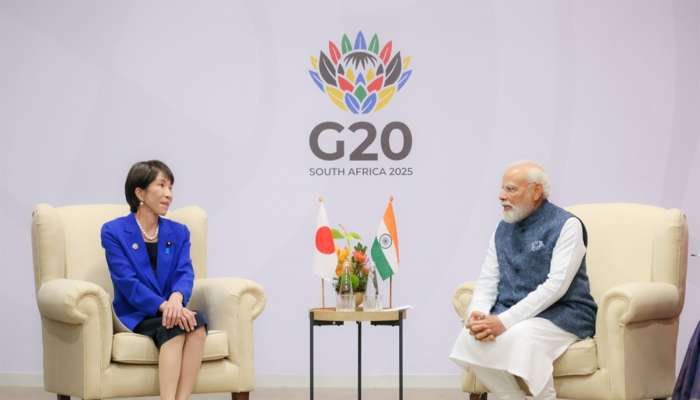

Japan and India are strengthening their strategic partnership, with a renewed focus on technological collaboration. During the recent G20 Summit in South Africa, Japanese Prime Minister Takaichi Sanae and Indian Prime Minister Narendra Modi held a productive bilateral meeting, reaffirming their commitment to deepening cooperation in critical areas like semiconductors, artificial intelligence (AI), and economic security. This meeting signals a continued prioritization of the Japan-India relationship as a cornerstone of regional stability and growth.
Deepening Japan-India Cooperation in Emerging Technologies
The meeting, which took place on Sunday, underscored the shared vision of both nations to enhance their strategic partnership. Prime Minister Modi extended his congratulations to Prime Minister Takaichi on her recent appointment, while Prime Minister Takaichi expressed condolences for the recent terrorist attack in Delhi, demonstrating a strong sense of empathy and solidarity. This exchange set a positive tone for discussions centered around bolstering the Japan-India relationship across multiple fronts.
Focus on Semiconductors and Artificial Intelligence
A key takeaway from the meeting was the emphasis on collaboration in critical and emerging technologies. Specifically, both leaders expressed a desire to leverage their respective strengths to foster innovation and growth in the semiconductor industry and artificial intelligence. This isn’t a new development; the Japan-India Joint Vision for the Next Decade, launched during Prime Minister Modi’s visit to Japan, already laid the groundwork for this collaboration.
However, the recent meeting signifies a commitment to move beyond vision statements and towards tangible results. Prime Minister Takaichi articulated a determination to concretize cooperation in economic security, recognizing the importance of resilient supply chains and technological independence. Prime Minister Modi echoed this sentiment, stating his intention to advance concrete cooperation in these vital areas.
Expanding the Scope of Collaboration
Beyond technology, the discussion encompassed a broad range of areas, including security and defense, economic partnerships, and people-to-people exchanges. This holistic approach reflects the multifaceted nature of the strategic partnership between Japan and India. Both leaders acknowledged the importance of continued dialogue and collaboration to address shared challenges and opportunities.
Furthermore, the leaders reaffirmed their commitment to realizing a “Free and Open Indo-Pacific,” a shared strategic objective that underscores their commitment to regional peace, stability, and prosperity. This alignment on geopolitical goals is a crucial element of their deepening relationship.
A Shared Vision for Regional Stability
The meeting highlighted the mutual recognition of India and Japan as valued partners and trusted friends. Both leaders emphasized that strong ties between their countries are indispensable for regional and global peace, prosperity, and stability. This sentiment underscores the growing importance of the Japan-India relationship in a rapidly changing world.
The Importance of Economic Security
The focus on economic security is particularly noteworthy. In an era of increasing geopolitical tensions and supply chain vulnerabilities, both nations recognize the need to strengthen their economic resilience. Collaboration in areas like semiconductors and AI is seen as crucial to achieving this goal. This proactive approach to economic security demonstrates a shared understanding of the challenges and opportunities presented by the current global landscape.
Commitment to Continued Dialogue
The leaders concluded the meeting by agreeing to stay in touch and meet again at the earliest opportunity. This commitment to continued dialogue underscores the importance they place on maintaining a strong and productive relationship. Prime Minister Modi’s attendance at the G20 Summit in Johannesburg, where he engaged in talks with multiple world leaders, further demonstrates India’s commitment to multilateral engagement and international cooperation.
Strengthening Ties for a Prosperous Future
The bilateral meeting between Prime Minister Takaichi and Prime Minister Modi at the G20 Summit represents a significant step forward in the deepening Japan-India relationship. The renewed focus on collaboration in critical technologies like semiconductors and AI, coupled with a shared vision for a Free and Open Indo-Pacific, positions both nations as key players in shaping the future of the region and beyond.
This commitment to strengthening ties is not just beneficial for India and Japan, but also contributes to global peace, stability, and prosperity. As both nations continue to work together, we can expect to see further advancements in technological innovation, economic cooperation, and strategic alignment. To learn more about the evolving dynamics of the Indo-Pacific region, explore resources on regional security and economic partnerships.