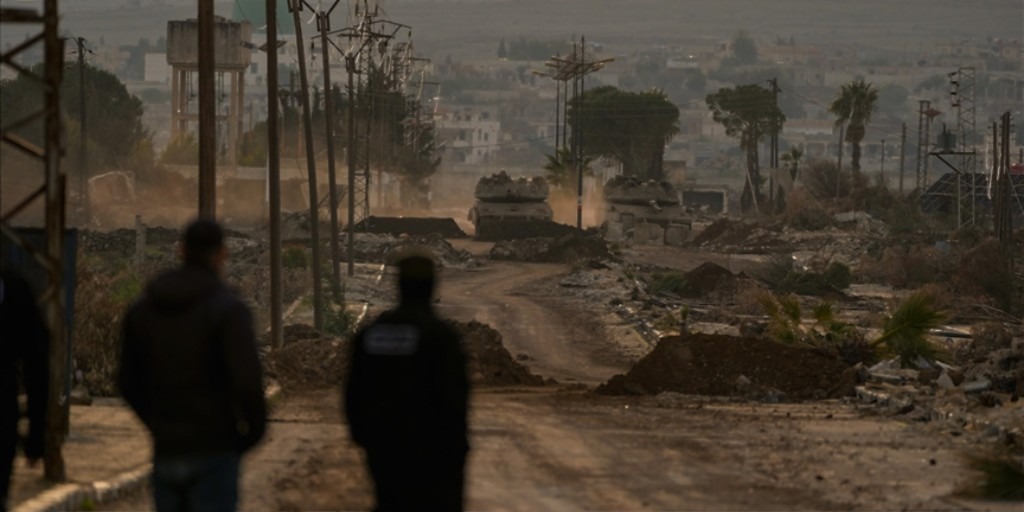

Israeli forces conducted another incursion into Syrian territory on Sunday, resulting in the detention of six Syrian citizens, according to reports from the Syrian Arab News Agency (SANA). These Israeli incursions, which have become increasingly frequent, raise ongoing concerns about regional stability and the sovereignty of Syria. The latest detentions occurred in the southern Quneitra countryside and the Daraa governorate.
The incidents took place as Israeli troops, utilizing four military vehicles, entered the Syrian villages of Qudna and Saida Al Hanout. Five young men were reportedly detained near Qudna while foraging for mushrooms, and a sixth was apprehended in Saida Al Hanout. Their current whereabouts and the reasons for their detention remain unknown.
Understanding Recent Israeli Incursions into Syria
This latest event is part of a pattern of Israeli incursions into Syria that have been observed for several years. Israel has consistently maintained that these operations are necessary to prevent the buildup of military infrastructure by Iran-backed groups within Syria, particularly Hezbollah. However, the Syrian government views these actions as a violation of its sovereignty and an act of aggression.
Historical Context
The relationship between Israel and Syria has been fraught with tension since the Six-Day War in 1967, during which Israel occupied the Golan Heights. While a formal ceasefire was established in 1973 following the Yom Kippur War, a peace treaty has never been signed. The Syrian Civil War, beginning in 2011, further complicated the situation, creating a power vacuum that allowed various actors, including Iran and its proxies, to establish a presence in the country. This has led to increased Israeli concerns about its northern border.
According to SANA, the five individuals detained near Qudna were reportedly engaged in a civilian activity – mushroom foraging – when they were intercepted by Israeli forces. They were subsequently transported to the Tal Al Ahmar Al Gharbi military base. The report indicates no immediate explanation was provided for the detention.
Meanwhile, the single detainee from Saida Al Hanout was also taken into custody without a stated reason. These incidents echo previous reports of similar detentions, often occurring in areas bordering the Golan Heights. The lack of transparency surrounding these operations fuels criticism from the Syrian government and international observers.
The frequency of these Israeli military operations has varied, often coinciding with perceived escalations in regional tensions. While Israel rarely comments publicly on specific operations, it generally confirms its policy of acting against what it considers threats to its security within Syria. The Syrian government consistently condemns these actions through its state media outlets.
The broader geopolitical landscape also influences these events. The ongoing conflict in Syria, the presence of multiple foreign actors, and the complex relationship between Iran, Israel, and the United States all contribute to the volatile situation. Concerns about regional security are paramount for all parties involved.
The detentions come amid continued efforts to de-escalate tensions in the region, including diplomatic initiatives involving Russia, Turkey, and other stakeholders. However, these efforts have yielded limited results, and the risk of further escalation remains significant. The situation is further complicated by the presence of various armed groups operating within Syria.
Looking ahead, it is likely that Israeli forces will continue to monitor and, when deemed necessary, operate within Syrian territory. The extent and frequency of these operations will likely depend on developments related to Iran’s activities and the broader regional context. The fate of the six recently detained individuals remains uncertain, and their release or potential legal proceedings will be a key indicator to watch in the coming days.
Further information regarding the detentions and the rationale behind them is expected to emerge from both Israeli and Syrian sources, though complete transparency is unlikely. Monitoring statements from the United Nations and other international bodies regarding the impact of these cross-border operations on civilian populations will also be crucial.
Reuters provides ongoing coverage of the Middle East.
Al Jazeera also offers news and analysis on the region.
SANA is the official Syrian news agency.