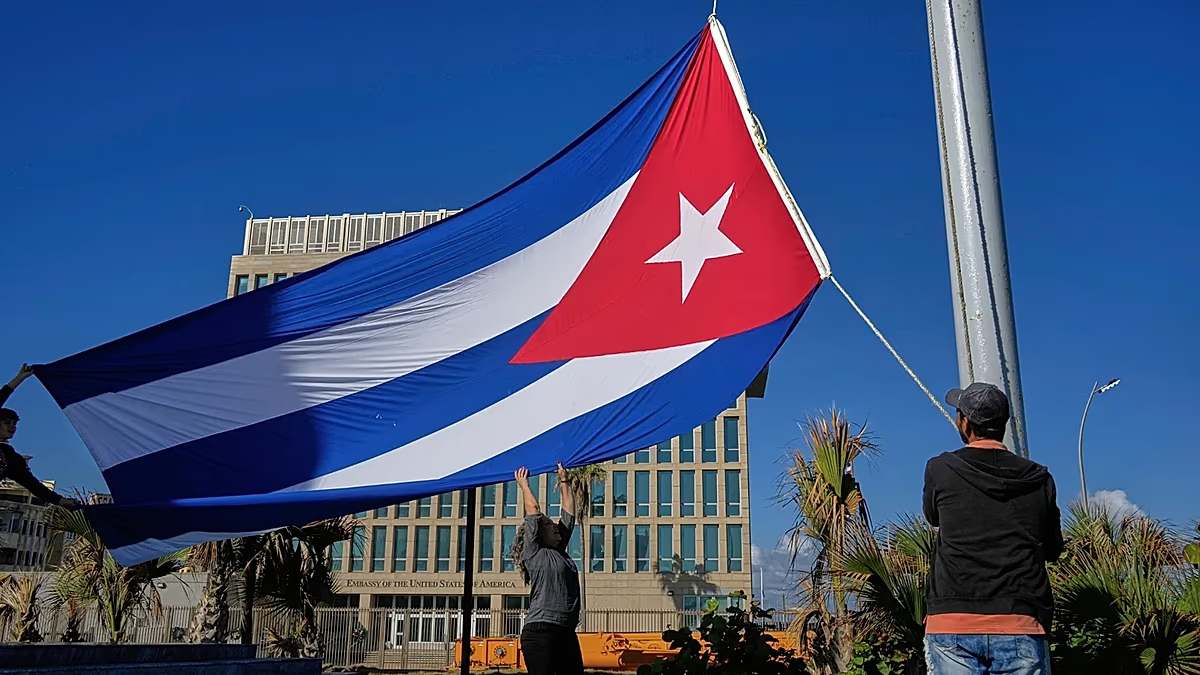

The recent removal of Venezuelan President Nicolás Maduro has sent shockwaves through the region, with Cuba facing particularly dire consequences. Following a U.S.-backed operation in Caracas, authorities confirmed the deaths of 32 Cuban nationals serving as Maduro’s bodyguards, highlighting the deep entanglement between the two nations. The fallout from Maduro’s ouster threatens to destabilize Cuba’s economy and potentially trigger political upheaval, raising concerns about the future of the island nation.
Beyond the immediate loss of life, Maduro’s removal represents a significant blow to Cuba, which relied heavily on Venezuela for economic and political support. Havana has lost a key ally and a crucial source of subsidized oil, a lifeline that accounted for approximately 70% of its total oil imports in recent months, according to political scientist Bert Hoffmann of the German Institute of Global and Area Studies. The Trump administration has also signaled that Cuba could be its next target, further exacerbating the situation.
The Impact on Cuba’s Economy
The close relationship between Cuba and Venezuela, forged by Fidel Castro and Hugo Chávez in the early 2000s, was built on a foundation of mutual benefit. Cuba provided Venezuela with doctors, healthcare personnel, and intelligence support, while Venezuela offered Cuba heavily discounted oil. This arrangement was vital for Cuba, particularly after the collapse of the Soviet Union, which had been its primary economic partner.
However, as Venezuela’s economic and political crisis deepened, its ability to sustain this support diminished. The recent events have accelerated this decline. Hoffmann notes that even finding alternative oil suppliers, such as Russia or Iran, presents challenges, as doing so could make those nations targets of U.S. sanctions.
Cuba is already grappling with its most severe economic downturn in decades. The country’s economy has contracted by around 4% in recent years, with a 1.5% decrease in 2023 alone. Combined with inflation exceeding 20%, shortages of food, medicine, and fuel are widespread, creating a precarious living situation for many Cubans.
A History of Alliance
The alliance between Cuba and Venezuela wasn’t solely economic. Maduro, educated in Cuba, positioned himself as the inheritor of Chávez’s revolutionary leftist ideology and maintained close ties with Havana. Cuban officials held key positions within Venezuela’s intelligence apparatus, demonstrating the extent of the collaboration.
This deep integration makes decoupling particularly painful for Cuba. According to Hoffmann, Cuba’s overreliance on tourism as a primary revenue source has also left it vulnerable, as political instability and crisis conditions deter visitors.
The U.S. could further tighten the screws on Cuba through a naval blockade of oil shipments. While the Cuban military is prepared for such a scenario, Hoffmann believes it wouldn’t necessarily spark widespread rebellion. He argues that a lack of faith in the potential for protest to bring about change could lead to resignation rather than resistance.
Former President Trump indicated a willingness to take action, stating on Sunday, “Cuba looks like it’s ready to fall. I don’t know if they’re going to hold out.” This statement underscores the perceived opportunity for regime change in Havana.
U.S. Secretary of State Marco Rubio, with a personal connection to the Cuban exile community, suggested that Cuban officials should be concerned. While he refrained from detailing specific U.S. plans, his comments hint at potential pressure on the Cuban government. NBC News reported on his statements over the weekend.
Despite the challenging circumstances, Hoffmann suggests that the Cuban leadership has not yet shown signs of collapse. He posits that the fear of what might follow a regime change is a powerful unifying force among the elite, prompting them to maintain cohesion and observe the fate of the post-Maduro leadership in Venezuela.
The situation remains fluid and highly uncertain. Monitoring the U.S. response, Venezuela’s new government’s policies toward Cuba, and the internal dynamics within the Cuban leadership will be crucial in the coming weeks and months. For further information on U.S.-Cuba relations, you can visit the U.S. Department of State’s Cuba page.
As the geopolitical landscape shifts, the future of Cuba’s economy and its political system hangs in the balance. Stay informed about developments in Venezuela and their implications for Cuba as this story unfolds.