


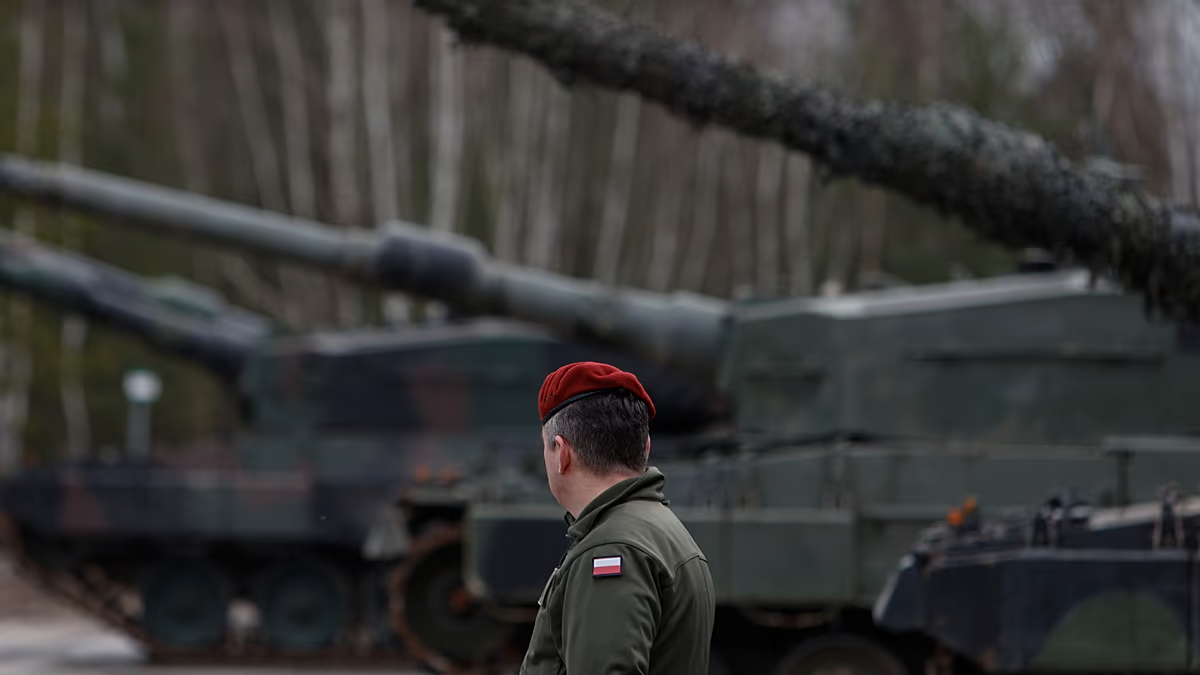

The escalating geopolitical tensions stemming from Russia’s invasion of Ukraine, coupled with perceived vulnerabilities and pressure from the United States, are forcing the European Union to urgently address its defence readiness. With no clear end to the conflict in Ukraine in sight, EU leaders are grappling with the need to bolster security while simultaneously supporting Kyiv. The recent US national security strategy further highlighted the importance of a stronger European defence posture, increasing the pressure on the bloc to act decisively.
European nations are facing a complex challenge: protecting their own territory and interests alongside their commitment to Ukraine’s sovereignty. In December, EU leaders agreed to a €90 billion loan to Ukraine, while Commission President Ursula von der Leyen unveiled new defence initiatives in October aimed at strengthening deterrence against Russia and other potential adversaries by 2030. These actions are taking place against a backdrop of increasingly stark warnings regarding potential conflict.
Is Europe Ready for War? Assessing Defence Readiness
Recent polling data suggests a significant hesitation among European citizens when it comes to direct military involvement. A Euronews survey of nearly 10,000 people revealed that 75% would not be prepared to take up arms to defend EU borders, with only 19% expressing willingness to fight. This reflects a broader uncertainty about both personal readiness and the overall preparedness of their nations for a potential war.
However, concerns about Russian aggression are prevalent. YouGov surveys indicate that a majority of citizens in Poland (51%), Lithuania (57%), and Denmark (62%) view Russia as one of Europe’s biggest threats, with “armed conflicts” consistently ranking among the top concerns for Europeans. This heightened anxiety primarily drives action in the Baltic states, notably Lithuania, Estonia, and Latvia, which share borders with Russia and Belarus.
Lithuania is currently implementing measures like “drone walls” and restoring swamps as natural defensive barriers, collaborating with Latvia on these projects. Both countries are also running public awareness campaigns and resilience exercises to mentally prepare their populations. Poland has similarly introduced security education, even including firearm training for students as young as 14; according to the education ministry, “theoretical preparation on the safe handling of weapons” is now a requirement in primary schools.
Finland and Sweden, driven by a similar sense of urgency, are reviving Cold War-era practices. They are distributing brochures with instructions on wartime procedures, including evacuation routes and shelter locations. Estonia has integrated national defence courses into its high school curriculum, demonstrating a proactive approach to civilian preparation. Notably, online search trends in these bordering nations – and increasingly across Europe – show rising interest in topics like evacuation packing and bomb shelter locations, a signal of public worry.
Brussels’ Response: Funding and Coordination
At the EU level, a considerable push is underway to enhance defence capabilities. European defence budgets have seen a substantial increase, exceeding €300 billion in 2024. The proposed EU Multiannual Financial Framework (MFF) for 2028-2034 allocates an additional €131 billion to aerospace and defence, a fivefold increase compared to the previous budget.
The “Readiness 2030” plan, endorsed by all 27 member states, aims to address critical logistical gaps and accelerate military response times. A key component is the creation of a ‘Military Schengen’ area, designed to remove bureaucratic obstacles hindering the movement of troops and equipment across EU borders, enabling deployment within three days during peacetime and six hours in emergencies. This initiative also involves upgrading key infrastructure, like bridges, to support heavy military vehicles. Euronews provides further detail on the Readiness 2030 plan.
The EU is also focusing on standardising military equipment and procedures to improve interoperability among member states. The ReArm Europe initiative, launched in 2025, serves as a central coordination platform to accelerate defence readiness and industrial capacity. It includes the European Defence Industry Programme (EDIP) offering €1.5 billion in co-financing for joint projects – requiring participation from at least three EU countries, or two plus Ukraine – and the Strategic Armament Financing Envelope (SAFE), a €150 billion loan facility to facilitate large-scale weapons purchases.
The Transatlantic Divide and Future Outlook
The recent US National Security Strategy has introduced friction, criticising Europe’s defence spending and overall approach to security. Washington reportedly expects Europe to assume greater responsibility for NATO’s conventional defence by 2027, a timeframe considered ambitious by some European officials. The US strategy also signaled a potential desire for normalized relations with Russia, a view not universally shared in Europe.
EU leaders have largely pushed back against the US assessment, emphasizing the importance of independent decision-making and rejecting interference in internal political choices. This divergence highlights a growing gap in transatlantic approaches to Russia’s war and future security arrangements.
Despite increased funding and EU-level initiatives, significant challenges remain. Regulatory bottlenecks, fragmented defence industries, and underinvestment continue to hinder progress. The success of these efforts hinges on deeper cooperation, closing existing capability gaps, and sustained support for Ukraine. The coming months and years will be critical in determining whether Europe can effectively bolster its defence readiness and navigate an increasingly volatile geopolitical landscape.
Watch for further developments in the implementation of the ReArm Europe initiatives and the ongoing debate surrounding transatlantic security cooperation. Staying informed on these issues is crucial for understanding the evolving security architecture of Europe and its role in the world.