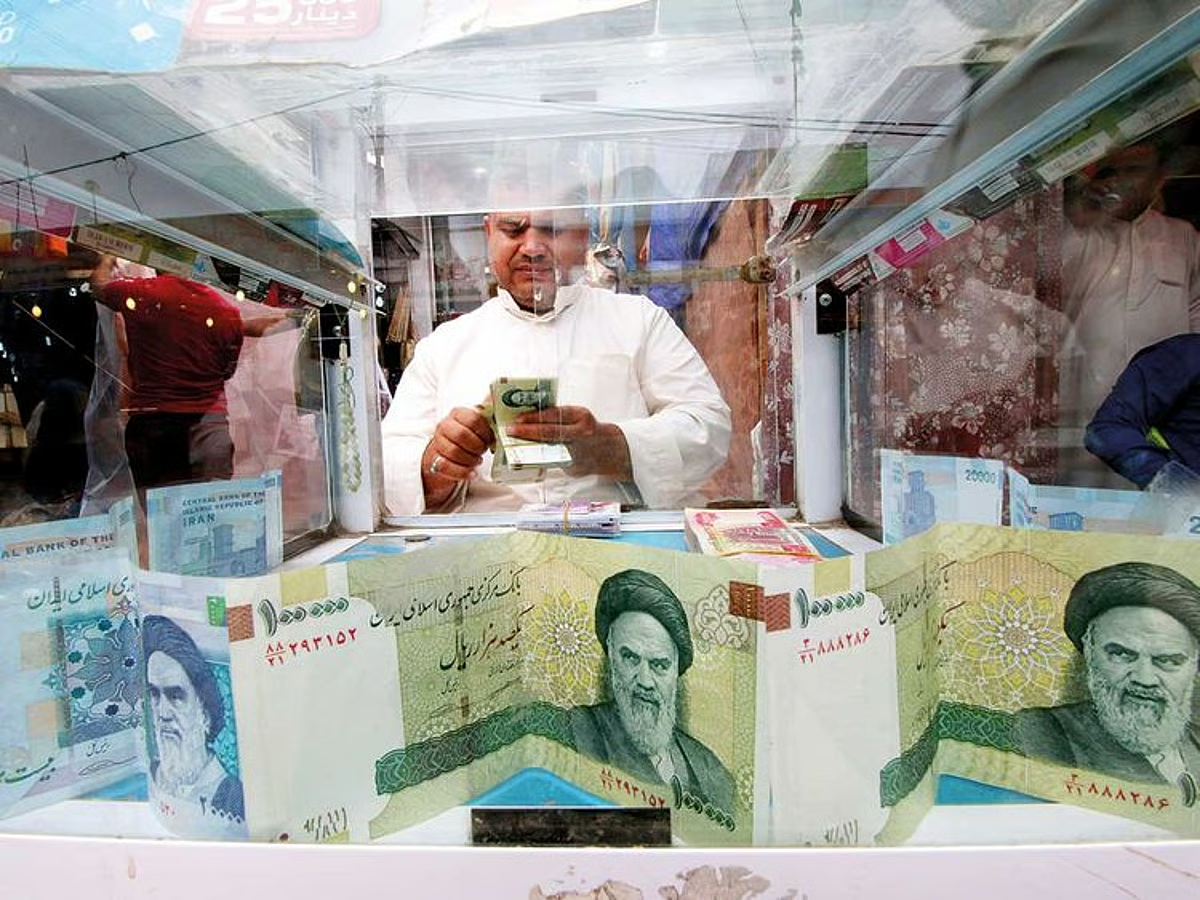

Iran’s rial has hit a new record low, continuing a downward trend fueled by persistent inflation and a challenging economic outlook. The currency’s decline is impacting both businesses and consumers, exacerbating financial pressures within the country. This latest drop underscores the deep-seated economic vulnerabilities facing Iran, with limited immediate prospects for stabilization.
The rial’s value has been steadily eroding, reaching a new low against major currencies in recent trading. This depreciation is largely attributed to the significant gap between Iran’s domestic inflation rate and that of its trading partners, coupled with a fragile economic growth forecast. The situation is further complicated by structural issues and a complex exchange rate system.
Inflation as the Primary Driver of Rial Weakness
Inflation remains the central challenge impacting the rial’s trajectory. The International Monetary Fund estimates that consumer price growth in Iran averaged around 42% in 2024 and is projected to remain high, around 33%, in 2025. Essential goods and services, including food, rent, transportation, and healthcare, have all experienced double-digit price increases, significantly diminishing purchasing power.
This high rate of domestic price increases mechanically weakens the currency. As prices rise faster within Iran than abroad, more rials are required to purchase the same amount of foreign goods, embedding depreciation into everyday transactions. This dynamic is particularly acute for import-dependent sectors.
Iran relies heavily on imports for crucial commodities like wheat, cooking oil, animal feed, and pharmaceutical ingredients. A weaker rial directly increases the cost of these imports for Iranian businesses, who are then forced to raise prices to maintain their profit margins. This creates a feedback loop that further fuels inflation and puts additional pressure on the currency.
A Fragile Economic Growth Outlook
The World Bank projects a contraction of Iran’s GDP by 1.7% in 2025, followed by a further decline of 2.8% in 2026. This pessimistic forecast is based on constrained trade, weak investment, and ongoing pressure on public finances, offering little support for the rial. Economic sanctions continue to play a significant role in these challenges.
Oil exports are Iran’s primary source of foreign exchange revenue. However, these earnings are subject to fluctuations in global oil prices and the discounts applied to Iranian crude sold through unofficial channels. Brent crude averaged around $60 a barrel last year, a level insufficient for Iran to balance its budget, according to economists.
Lower oil revenues restrict the government’s ability to intervene in currency markets or increase imports to alleviate domestic shortages. Without a substantial increase in export income or alternative sources of foreign currency, the supply of foreign exchange is expected to remain limited, continuing to weigh on the rial.
Structural Obstacles to Currency Stability
Beyond these immediate economic factors, deeper structural issues contribute to the rial’s instability. State-dominated industries, limited foreign investment, aging infrastructure, and chronic water shortages all hinder productivity and the development of non-oil exports. These sectors struggle to generate the hard currency needed to diversify Iran’s sources of revenue.
The country’s multi-tier exchange rate system also adds complexity. This system provides subsidized exchange rates for certain essential imports alongside the open market rate. While intended to protect consumers, economists argue that it distorts pricing, encourages arbitrage, and undermines confidence in the official exchange rate. Businesses frequently rely on the open market rate as a more accurate reflection of value, reinforcing volatility.
Reforming this complex system would be a politically and socially sensitive undertaking. However, without significant changes, the disparity between official and market exchange rates is likely to persist, contributing to ongoing economic uncertainty. The issue of currency exchange is central to these concerns.
Potential Pathways to Rial Stabilization
Economists agree that a meaningful stabilization of the rial requires a convergence of several key conditions. Foremost among these is sustained disinflation, which would necessitate tighter control over liquidity growth and more predictable fiscal management. Reducing inflation would help slow the erosion of purchasing power and lessen the demand for foreign currencies.
Improved foreign currency inflows are also crucial. This could be achieved through higher oil revenues, growth in non-oil exports, or renewed foreign investment, bringing both capital and technological advancements. Increased foreign investment could provide a much-needed boost to the Iranian economy.
Restoring confidence is another vital component. If households and businesses believe the exchange rate has reached a stable point, they will be less inclined to rush into purchasing foreign currencies at the first sign of price increases.
Without these shifts, most analysts anticipate continued downward pressure on the rial, with any stabilization efforts likely to provide only temporary relief. The current record low reinforces the reality that the currency serves as a barometer of deeper economic strains, and its future will depend on addressing these underlying issues.
Looking ahead, the Iranian government’s response to the ongoing economic challenges will be critical. The next key indicator to watch will be the central bank’s monetary policy decisions in the coming months, particularly regarding efforts to control inflation and manage the exchange rate. The success of these policies, and any potential changes to the multi-tier exchange rate system, will significantly influence the rial’s future performance.
– With input from Agencies