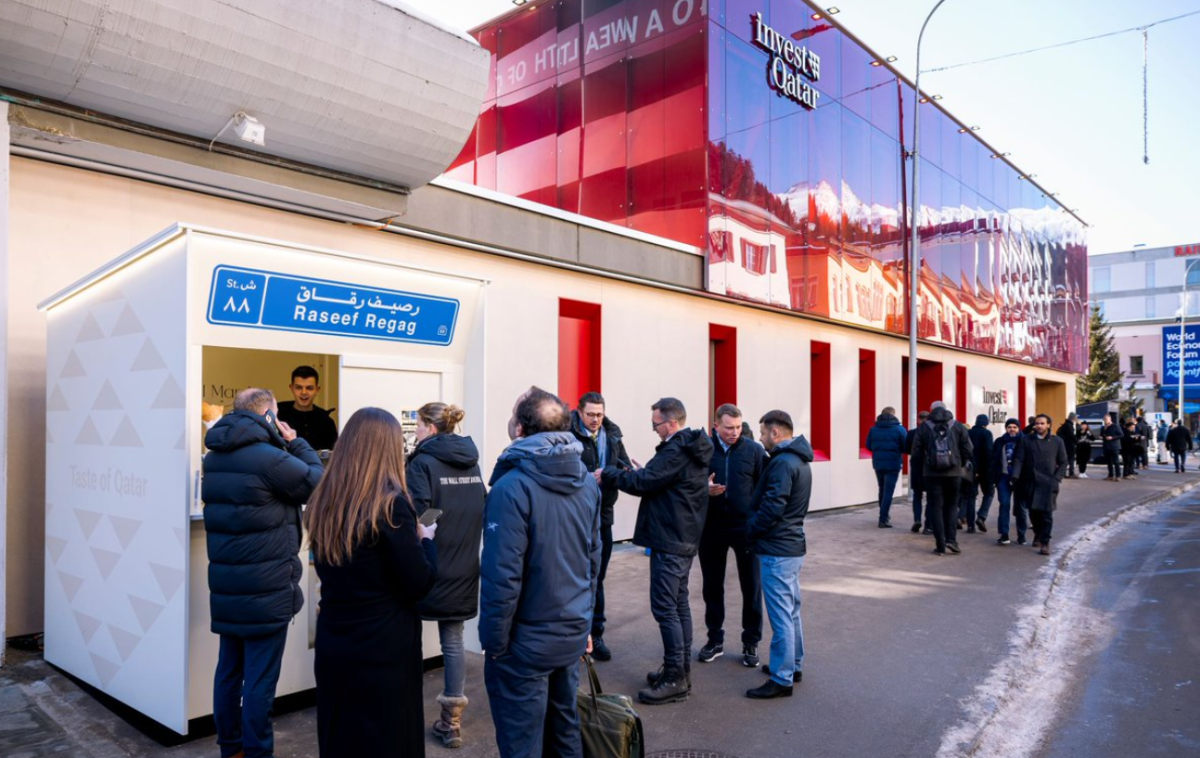

Doha, Qatar – Invest Qatar’s pavilion at the World Economic Forum (WEF) Annual Meeting 2024 in Davos, Switzerland, concluded its run as a key hub for global business and innovation discussions. The pavilion facilitated over 20 networking events and panel discussions, alongside more than 100 business meetings, showcasing investment opportunities in Qatar to a diverse international audience. This year’s presence built upon the success of the 2023 pavilion, signaling a growing commitment to attracting foreign capital.
The five-day event, which concluded on January 19th, brought together industry leaders, investors, and stakeholders to explore Qatar’s evolving economic landscape. According to organizers, the pavilion served as a platform to highlight the nation’s progress in economic diversification, sustainable development, and technological advancement. The WEF Annual Meeting traditionally takes place in January, drawing high-profile attendees from government, business, and academia.
Expanding Qatar’s Global Investment Profile
Invest Qatar partnered with the Financial Times’ FT Live to host a three-part series titled “Driving Sustainable Growth Through Innovation and Connectivity.” These sessions focused on critical issues such as the role of artificial intelligence, the importance of international collaboration, and the challenges facing the global economy. The discussions aimed to position Qatar as a forward-thinking partner in addressing these complex issues.
Sheikh Ali Alwaleed Al-Thani, CEO of Invest Qatar, expressed pride in the pavilion’s expanded presence and increased participation compared to the previous year. He stated the event reaffirmed Qatar’s dedication to fostering global partnerships and realizing its long-term vision for economic growth. The organization, established in 2019, focuses on attracting foreign direct investment.
Key Discussion Points at Davos
Beyond the Invest Qatar-hosted events, Sheikh Alwaleed Al-Thani participated in a Wall Street Journal session, “Clusters, Capital and Collaboration: A New Playbook for Tech Growth.” The panel, which included Raj Ganguly of B Capital and Trevor Thompson of Scale AI, explored strategies for accelerating technology development through targeted investment and collaborative ecosystems. The session, moderated by Willem Marx, emphasized the need for a new approach to tech growth.
The focus on technology aligns with Qatar’s National Vision 2030, which prioritizes knowledge-based economic development. Qatar has been actively investing in sectors like fintech, cybersecurity, and artificial intelligence to reduce its reliance on hydrocarbons. This diversification strategy is a key component of the nation’s long-term economic planning.
Mubarak Ajlan Mubarak Al Kuwari, Executive Director of the Permanent Committee for Organizing Conferences at the Ministry of Foreign Affairs, highlighted the strong attendance and engagement at the pavilion. He noted that this momentum supports Qatar’s role as a trusted international partner and a facilitator of dialogue. The Ministry plays a crucial role in coordinating Qatar’s participation in international forums.
The WEF meeting also provided opportunities to discuss broader geopolitical and economic trends impacting global foreign investment. Discussions reportedly touched on supply chain resilience, energy transition, and the evolving landscape of international trade. These factors are all relevant to Qatar’s efforts to attract and retain investors.
Qatar’s presence at Davos comes as the country continues to implement economic reforms aimed at improving the business environment. These reforms include streamlining regulations, enhancing investor protections, and promoting transparency. The government is actively working to create a more attractive destination for international businesses.
Looking ahead, Invest Qatar will likely focus on capitalizing on the connections made at Davos to pursue specific investment leads. The organization is expected to continue promoting Qatar’s strengths as an investment destination, particularly in sectors aligned with its national development goals. Monitoring the conversion of these engagements into concrete investments will be a key indicator of the pavilion’s long-term success.
The impact of global economic conditions and geopolitical events on investor sentiment remains a significant factor. Continued engagement with international stakeholders and proactive adaptation to changing market dynamics will be crucial for Qatar to maintain its momentum in attracting foreign capital.