
The future of sustainability in the Arab world took center stage today as the International Forum on Green Innovation commenced in Muscat, Oman. Organized by the Ministry of Higher Education, Research and Innovation in collaboration with the Federation of Arab Scientific Research Councils, the forum brings together over 200 experts, researchers, and policymakers to explore how innovative solutions can drive sustainable development across the region. This crucial gathering arrives at a time of escalating environmental concerns, highlighting the urgent need for a shift towards more responsible and eco-conscious practices.
Oman Hosts Key Forum on Green Innovation
Oman’s decision to host this significant event underscores its commitment to becoming a regional leader in green innovation and environmental stewardship. Dr. Rahma Ibrahim Al Mahrouqi, Minister of Higher Education, Research and Innovation, emphasized that supporting pathways to green innovation is a fundamental pillar of Oman Vision 2040, which aims to balance economic growth with robust environmental protection. The forum is seen as a vital platform for fostering collaboration and accelerating the adoption of sustainable practices.
A Shift Towards Sustainability
The forum’s timing is particularly relevant, given the accelerating environmental and climatic challenges facing the globe. Traditional development models are increasingly recognized as unsustainable, prompting a search for alternatives that prioritize long-term ecological health. Green innovation, encompassing the integration of research, technology, and environmental entrepreneurship, is positioned as a key enabler for this transition. It’s about moving beyond simply mitigating damage to actively creating solutions.
Enhancing Arab Cooperation and Knowledge Exchange
A central goal of the International Forum on Green Innovation is to strengthen Arab integration in the fields of sustainability. This will be achieved through the exchange of expertise between research institutions and regional organizations, and by providing support for national policies and initiatives focused on the environment, energy, smart agriculture, and entrepreneurship. The forum aims to create a unified front in addressing shared environmental challenges.
Prof. Abdelmajid Benamara, Secretary General of the Federation of Arab Scientific Research Councils, highlighted the progress made by Arab nations in building robust scientific capabilities. He stated that the focus is now shifting from knowledge creation to the practical application of research, transforming outputs into tangible products, patents, and startups that benefit society. This represents a crucial step in realizing the full potential of sustainable development in the region.
Key Themes and Presentations at the Forum
The forum’s program is structured around three core scientific sessions, each delving into specific aspects of green innovation. The first session explored the future landscape of green innovation, examining the latest research trends in renewable energy, resource management, and the circular economy, alongside the hurdles to achieving net-zero emissions.
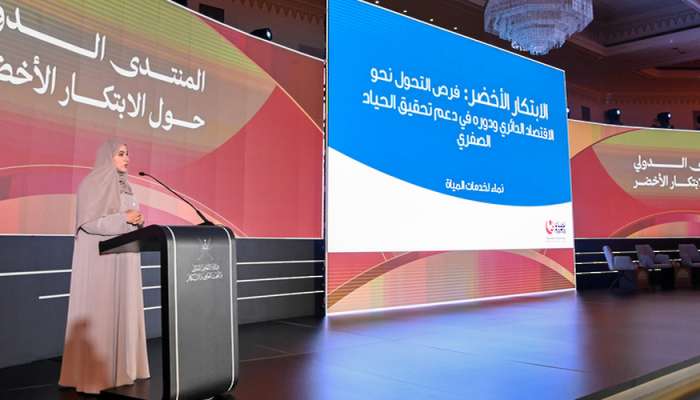
Subsequent sessions showcased practical solutions. Dr. Buthaina Mahfoudh Al Wuhaibi from Nama Water Services presented on “Opportunities for Transitioning towards a Circular Economy and its Role in Supporting the Achievement of Net-Zero Carbon by 2050.” Dr. Salah Somar Al Zadjali from the Ministry of Higher Education, Research and Innovation detailed “Research Support and Capacity Building Programs.” These presentations offered valuable insights into real-world applications and the support systems available to drive innovation.
Focus Areas: Renewable Energy, Waste Management, and Beyond
The second session concentrated on tangible advancements in renewable energy and green technologies. Presentations covered topics such as solar systems, innovative plant root engineering using microbes, and the biological conversion of waste into valuable resources like protein, biofuels, and fertilizers. This demonstrated the diverse range of possibilities within the sustainable development sphere.
The third session broadened the scope to include innovation in waste management and the enhancement of the circular economy, drawing on international experiences. Discussions centered on advanced recycling technologies, novel biomaterial production models, and the application of artificial intelligence to develop effective environmental solutions. Circular economy principles were a recurring theme, emphasizing the importance of minimizing waste and maximizing resource utilization.
Regional and International Participation
The forum boasts participation from a wide array of specialized entities, including the Arab Center for the Studies of Arid Zones and Dry Lands (ACSAD), the International Center for Agricultural Research in the Dry Areas (ICARDA), the Arab Organization for Agricultural Development, the Association of Desert Research Centers, and the Arab Union for Sustainable Development and Environment. This diverse representation underscores the collaborative spirit of the event and its regional significance.
The presence of these organizations solidifies the forum’s role as a crucial regional scientific platform. It provides a space for experts, decision-makers, and researchers to anticipate future trends and collectively work towards bolstering Arab cooperation in green innovation and achieving long-term sustainable development goals. Furthermore, the discussions around climate change solutions are expected to yield actionable strategies for the region.
In conclusion, the International Forum on Green Innovation in Muscat represents a pivotal moment for the Arab world. By fostering collaboration, sharing knowledge, and promoting the adoption of green technologies, the forum is paving the way for a more sustainable and resilient future. The insights and partnerships forged during this event are expected to have a lasting impact on the region’s environmental policies and economic development. Attendees and stakeholders are encouraged to continue the dialogue and translate the forum’s outcomes into concrete action.