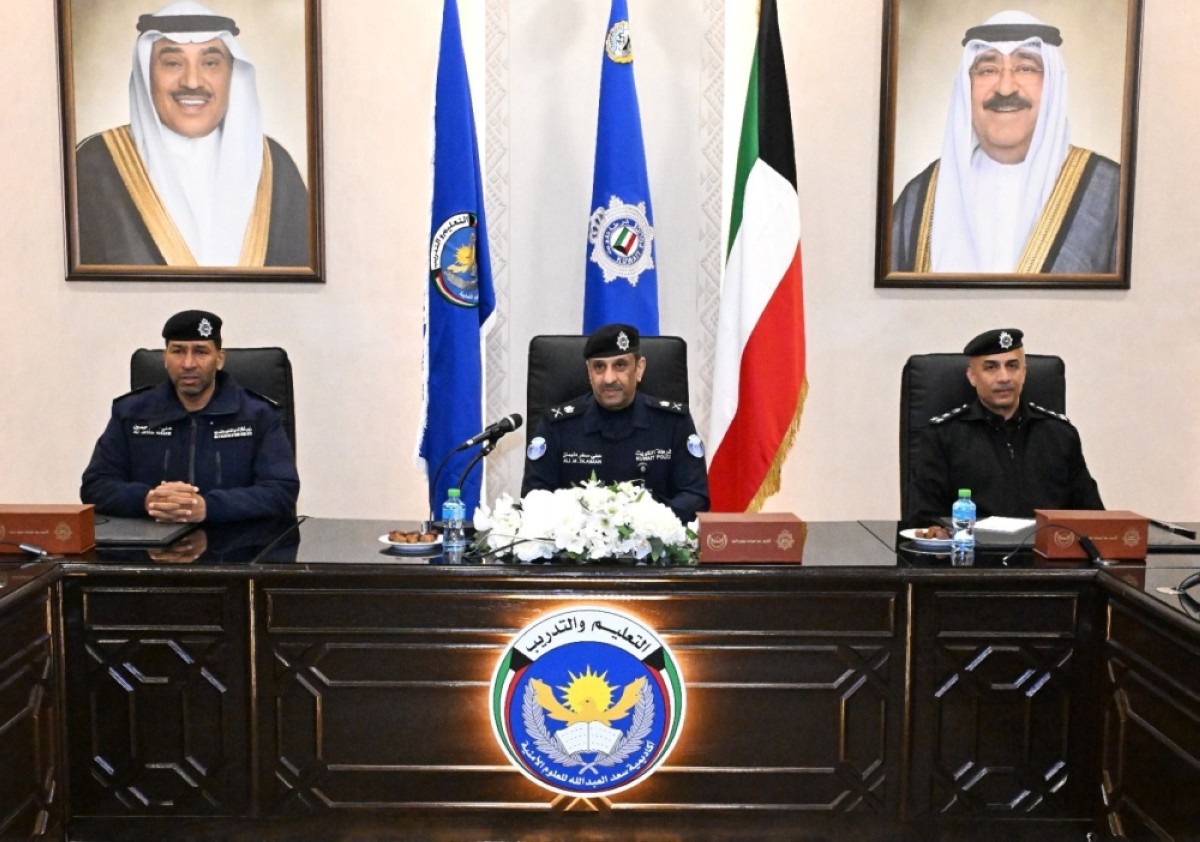

Kuwait is consistently reinforcing its commitment to national security, and recent developments highlight a two-pronged approach: bolstering the education and training of its security forces and swiftly addressing threats to personnel. A key figure in this effort, Major General Ali Al-Adwani, Assistant Undersecretary for Supporting Security Services, recently emphasized the leadership’s dedication to these crucial areas, focusing on preparing a highly skilled and ready security apparatus for the future. This commitment to Kuwait security is paramount in maintaining stability within the region.
Strengthening Security Through Education and Training
Major General Al-Adwani’s recent inspection visit to the Saad Al-Abdullah Academy for Security Sciences underscores the importance placed on developing a robust education and training system. The visit wasn’t merely a formality; it was a detailed review of the academy’s progress, encompassing the Police College, Police School, and the Women’s Police Institute. This holistic approach ensures all branches of the security forces receive top-tier preparation.
Focus on Academic Standards
A significant aspect of the academy’s development is the newly established Central Examinations Committee. This committee is designed to standardize examinations for specialized officer cadets, a move intended to enhance academic fairness and, crucially, ensure the quality of educational outcomes. By implementing consistent evaluation methods, the academy aims to produce officers who are not only physically capable but also possess the intellectual rigor required for modern security challenges.
The standardization process will also contribute to a more meritocratic system, identifying and promoting the most capable individuals within the ranks. This focus on quality control is a vital component of long-term national security planning. Al-Adwani followed up on the current examination process during his visit, demonstrating the committee’s immediate operational relevance.
Expanding Regional Collaboration
Beyond internal improvements, the Ministry of Interior is also actively monitoring the academic progress of Kuwaiti students training at military colleges across the Gulf Cooperation Council (GCC). This regional collaboration is a cornerstone of Kuwait’s security strategy, fostering stronger ties and shared expertise with neighboring nations.
Furthermore, the academy is actively developing plans to elevate the overall level of education and training. These plans likely incorporate advancements in security technology, modern policing techniques, and enhanced leadership development programs. The visit also highlighted the academy’s key achievements and preparations for upcoming national engagements, demonstrating its proactive role in safeguarding Kuwait.
Swift Response to Security Incidents
Alongside the proactive investment in education, Kuwait’s security forces have demonstrated a firm commitment to responding decisively to threats. A separate incident, also reported by the Ministry of Interior, involved the arrest of two suspects accused of deliberately ramming a vehicle into a military serviceman in the Al-Wafra farming area of Al-Ahmadi Governorate.
The serviceman sustained injuries to his hands and left leg, receiving treatment at Sabah Al-Ahmad Hospital before being discharged. This incident serves as a stark reminder of the risks faced by those serving in the security forces. The swift apprehension of the suspects and the impoundment of their vehicles send a clear message: such acts of aggression will not be tolerated.
Zero Tolerance for Reckless Behavior
The Ministry of Interior explicitly stated that reckless driving, attempts to flee, or any form of assault against security personnel are considered serious offenses. They affirmed a policy of firm and uncompromising action against perpetrators. This strong stance is essential for maintaining order and protecting the lives of those responsible for upholding law enforcement in Kuwait.
The incident also prompted a review of security measures in the Al-Wafra area, potentially leading to increased patrols and enhanced surveillance. This proactive approach to risk mitigation is a key element of Kuwait’s overall security strategy. The focus on responsible driving also highlights a broader concern for public safety.
The Interconnectedness of Education and Response
The two events – the academy inspection and the arrest of the suspects – are not isolated incidents. They represent a cohesive strategy for ensuring Kuwait’s security. Investing in the education and training of security personnel equips them with the skills and knowledge to prevent incidents from occurring in the first place. Simultaneously, a robust and responsive law enforcement system ensures that those who do pose a threat are quickly apprehended and brought to justice.
This dual approach, championed by figures like Major General Al-Adwani, is crucial for maintaining a stable and secure environment in Kuwait. The emphasis on both proactive preparation and reactive response demonstrates a comprehensive understanding of the challenges facing the nation. The ongoing development of the security sector, including improvements to police training and infrastructure, will undoubtedly contribute to a safer and more prosperous future for Kuwait.
In conclusion, Kuwait’s dedication to security is evident in its commitment to both education and swift action. Major General Al-Adwani’s visit to the Saad Al-Abdullah Academy for Security Sciences and the decisive response to the assault on a military serviceman demonstrate a proactive and resolute approach to safeguarding the nation. Continued investment in these areas will be vital for maintaining Kuwait’s stability and ensuring the safety of its citizens. To learn more about Kuwait’s security initiatives, visit the official Ministry of Interior website.