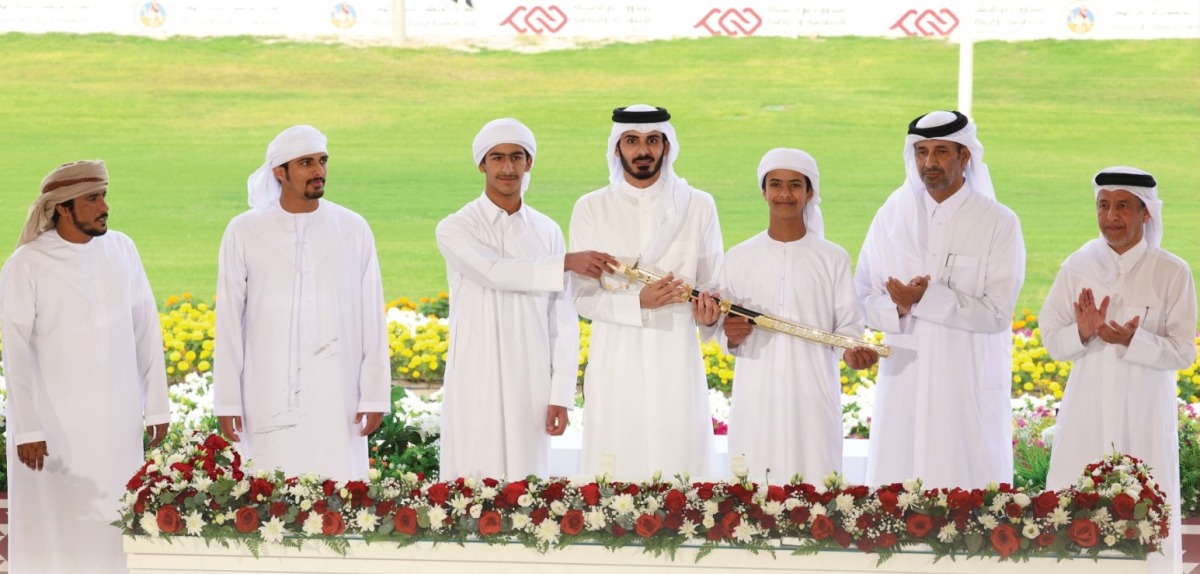

Doha, Qatar – The final races of the Founder Sheikh Jassim bin Mohammed bin Thani Festival for Purebred Arabian Camels concluded Saturday at the Al Shahaniya Camel Racetrack, with H E Sheikh Khalifa bin Hamad bin Khalifa Al-Thani, Minister of Interior and Commander of the Internal Security Force (Lekhwiya), presiding over the award ceremony. The festival, a significant event in Qatari heritage and sport, saw fierce competition in both the Sin Al Hail and Al Zamoul categories for tribal owners. Winners were recognized with prestigious awards including Golden and Silver Swords and Daggers.
The event, held annually, showcases the tradition of camel racing, deeply rooted in the culture of the Arabian Peninsula. This year’s festival drew substantial participation from camel owners across Qatar and neighboring Gulf states, highlighting the continued popularity of the sport. The races are categorized based on the camels’ lineage and origin, adding layers of complexity and prestige to the competition.
Celebrating Excellence in Purebred Arabian Camel Racing
Saeed Jaber Abdullah Al Harbi received the coveted Golden Sword for his victory in the sixth race, specifically for open Hail camels. This award represents the highest honor within the Sin Al Hail competition, recognizing exceptional breeding and racing performance. The festival aims to preserve and promote the heritage of camel breeding and racing, fostering a sense of national pride.
Additionally, two Silver Swords were presented to recognize outstanding achievements in specialized Hail categories. Muslim Ali Saeed Al Mansouri was awarded for winning the fourth race, designated for Omani Hail camels, while Mohammed Sultan Matar Al Ketbi secured the second Silver Sword in the fifth race, reserved for produced Hail camels. These distinctions acknowledge the diverse origins and breeding practices within the camel racing community.
The Al Zamoul competition also saw its champions honored with Silver Daggers. Mansour Faisal Mubarak Al Shahwani claimed the first dagger in the race for produced Zamoul camels. Mohammed Sultan Matar Al Ketbi added to his accolades with a win in the second race, for Omani Zamoul camels. Hamad Rashid Hamad Al Ketbi completed the set of dagger recipients with his victory in the third race, dedicated to open Zamoul camels.
The Significance of Sin Al Hail and Al Zamoul
The Sin Al Hail and Al Zamoul classifications are central to the festival’s structure and reflect different breeding philosophies. Sin Al Hail typically refers to camels bred for speed and endurance, while Al Zamoul focuses on camels known for their beauty and distinctive physical traits. Understanding these categories is key to appreciating the nuances of camel racing.
According to organizers, the festival has grown significantly in recent years, attracting increased investment and participation. This growth is attributed to the Qatari government’s commitment to preserving cultural traditions and promoting sports tourism. The event also provides a platform for breeders to showcase their animals and connect with potential buyers, contributing to the economic viability of the camel breeding industry.
The Al Shahaniya Camel Racetrack, a state-of-the-art facility, plays a crucial role in hosting the festival. The racetrack features advanced technology, including automated racing systems and comprehensive veterinary care, ensuring the safety and well-being of the participating camels. The facility’s development reflects Qatar’s dedication to modernizing traditional sports.
The festival’s conclusion marks the end of the 2025-2026 season. The Ministry of Interior has not yet announced dates for the next season’s registration or preliminary races. Future developments will likely focus on enhancing the spectator experience and further promoting the event internationally, potentially attracting even greater participation and recognition for Qatari heritage sports. The continued success of the festival depends on sustained investment and the dedication of the camel racing community.
Looking ahead, observers will be watching for any changes to the race categories or regulations, as well as the implementation of new technologies to improve the efficiency and fairness of the competition. The long-term impact of the festival on the preservation of Arabian camel breeds remains a key area of interest.