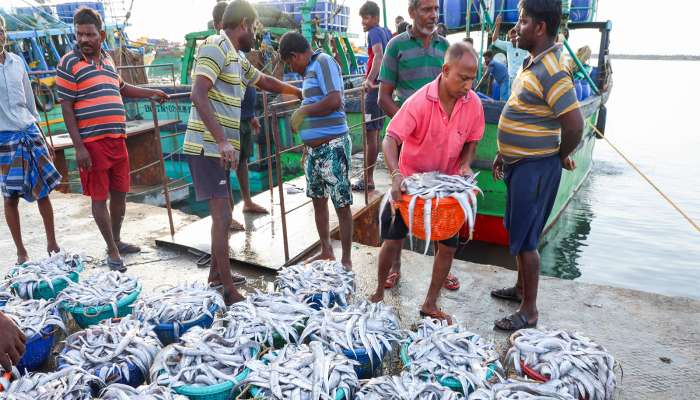

India is significantly bolstering its support for the shrimp and seafood industry, a move that comes as exports to the United States remain remarkably strong despite global economic headwinds. Recent data released by the Ministry of Commerce & Industry reveals sustained demand for Indian seafood, particularly frozen shrimp, in a key international market. This commitment is manifested through financial assistance, infrastructure development, and strategic trade initiatives designed to enhance the sector’s competitiveness and ensure continued growth.
Robust US Demand Fuels India’s Seafood Sector Growth
The United States continues to be a crucial market for Indian seafood exports. In 2024-25, India exported 311,948 metric tonnes of frozen shrimp to the US, valued at USD 2.51 billion. While export volumes peaked in 2021-22 at 342,572 metric tonnes (worth USD 3.15 billion), the current figures demonstrate a resilient performance amidst fluctuating global market conditions. This sustained demand highlights the quality and reliability of Indian seafood exports.
However, recent months have shown a slight dip. Provisional data for August-October 2025 indicates shrimp exports to the US decreased to 55,282 tonnes, valued at USD 512.81 million, compared to 83,375 tonnes and USD 673.98 million during the same period last year. This dip, while notable, doesn’t overshadow the overall positive trend and is being addressed through proactive government measures.
Government Initiatives to Strengthen the Seafood Industry
The Indian government, recognizing the economic importance of the aquaculture sector, has implemented a multi-pronged strategy to support its growth. A key driver of these efforts is the Marine Products Export Development Authority (MPEDA).
MPEDA’s Role in Promoting Exports
MPEDA has been instrumental in facilitating trade and fostering connections between Indian exporters and international buyers. In 2025 alone, over 100 buyer-exporter interactions were organized. These interactions, alongside participation in international seafood fairs across Asia and Europe, are designed to showcase Indian products and build lasting relationships.
Additionally, MPEDA has provided significant financial assistance. Over the past five years, Rs 10,189.91 lakh has been allocated to support 83 value-added seafood units. A further Rs 328.99 lakh was invested in promoting disease-free shrimp production, a critical aspect of maintaining export quality and market access. This focus on quality control is vital for maintaining India’s reputation as a reliable seafood supplier.
Infrastructure Development Under PMMSY
The Pradhan Mantri Matsya Sampada Yojana (PMMSY) is playing a pivotal role in modernizing the Indian fisheries and aquaculture infrastructure. Nationwide, infrastructure projects worth Rs 2,403 crore have been established under PMMSY. These projects include the construction of cold storage facilities, advanced processing units, and improved transportation networks. These improvements are crucial for reducing post-harvest losses and ensuring the efficient delivery of products to both domestic and international markets.
GST Rate Reduction Boosts Competitiveness
In September 2025, the government further demonstrated its commitment to the sector by reducing Goods and Services Tax (GST) rates to 5% on over 20 fisheries and aquaculture-related products. This reduction in input costs is expected to significantly enhance the competitiveness of Indian seafood in the global market, making it more attractive to buyers and encouraging further export growth. This move is particularly beneficial for small and medium-sized enterprises (SMEs) within the fish farming industry.
Addressing Challenges and Future Outlook
While the overall outlook for the Indian shrimp export market remains positive, challenges persist. Maintaining disease control in shrimp farms, adapting to evolving international regulations, and diversifying export markets are key areas of focus. The government and MPEDA are actively working to address these challenges through research and development, improved biosecurity measures, and the exploration of new trade opportunities.
The recent dip in US exports during August-October 2025 serves as a reminder of the need for continuous monitoring and proactive adaptation to market dynamics. However, the substantial investments in infrastructure, the strategic trade initiatives, and the supportive policy environment suggest that India is well-positioned to capitalize on the growing global demand for seafood.
In conclusion, India’s intensified support for its shrimp and seafood sector, coupled with robust demand from key markets like the US, paints a promising picture for the future. The ongoing initiatives focused on quality control, infrastructure development, and cost reduction are expected to further strengthen the industry’s competitiveness and drive sustainable growth in the years to come. For more information on India’s trade policies and seafood export data, visit the Ministry of Commerce & Industry website.