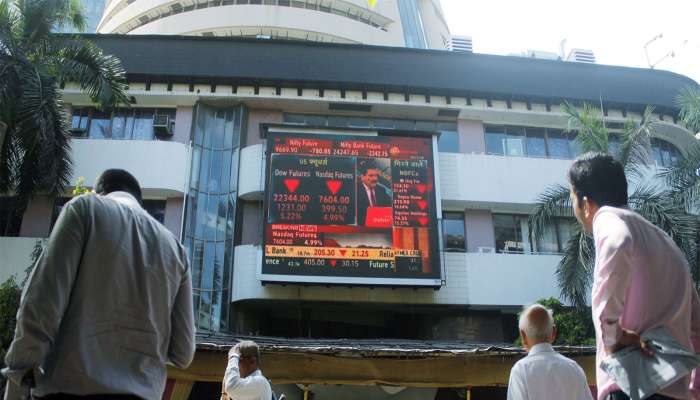

India’s economy is demonstrating remarkable resilience and growth, with the latest data revealing an expansion of 8.2% in the second quarter of FY26. This marks the highest growth rate in six quarters and positions India as a leading global economic force. The surge is fueled by robust performance across key sectors, including manufacturing, construction, and services, as detailed in the recent SBI Research Ecowrap report. This positive momentum is expected to continue, with projections indicating a strong India economic growth trajectory for the foreseeable future.
Q2 FY26: A Deep Dive into India’s Economic Performance
The SBI Research report paints a vibrant picture of India’s economic health. The 8.2% growth in Q2 FY26 significantly surpasses previous quarters and underscores the effectiveness of ongoing economic reforms and policies. Nominal GDP also experienced a healthy increase, growing by 8.7% compared to 8.3% in the same period last year.
This growth isn’t just a statistical anomaly. A key indicator is the narrowing gap between real and nominal GDP, now at just 0.5 percentage points – a substantial improvement from the 12 percentage point difference observed in Q1 FY23. This suggests a more accurate reflection of economic activity and a reduction in distortions.
Core Sector Strength
The report highlights a particularly strong performance in the core sectors, excluding agriculture and public finance. Core Gross Value Added (GVA) rose by an impressive 8.5%, a considerable jump from the 5.6% recorded in the previous year. This indicates that the fundamental drivers of the Indian economy are gaining significant traction.
Drivers of Growth: Domestic Demand and Sectoral Performance
The current phase of India economic growth is largely driven by domestic demand, a positive sign of self-sustaining economic activity. While services exports contribute, the report emphasizes the importance of internal consumption and investment.
Several sectors are contributing significantly to this growth:
- Manufacturing: Witnessed a sharp 9.1% rise, indicating a resurgence in the industrial sector.
- Services: Expanded by 9.2%, led by strong gains in finance, real estate, and trade-related activities.
- Agriculture: Grew at a steady 3.5%, providing a stable base for overall economic expansion.
- Construction: Continued its upward trend, fueled by infrastructure development and housing demand.
These diverse contributions demonstrate a broad-based economic recovery, reducing reliance on any single sector.
Investment and Consumption Trends
On the expenditure side, the data reveals encouraging trends. Private consumption increased by 7.9%, while capital formation rose by 7.3%. This sustained demand environment is crucial for maintaining growth momentum.
Importantly, the nature of imports is shifting towards productive investments. Increased imports of capital goods, rare earths, and chemicals support higher investment activity, signaling a focus on long-term economic development. Interestingly, a contraction in the import of valuables like gold suggests a move away from speculative spending towards more practical investments. This shift contributes to a more stable and sustainable economic outlook for India.
MSME Credit Surge: A Sign of Broadening Growth
Perhaps the most striking finding from the SBI Research report is the remarkable surge in credit growth to Micro, Small, and Medium Enterprises (MSMEs). Historically, incremental MSME credit averaged Rs 1.17 lakh crore annually between FY2009 and FY2025.
However, in just the first seven months of FY26, this figure has already reached Rs 3.74 lakh crore! Projections indicate that FY26 could see an incremental MSME credit of Rs 6.4 lakh crore – roughly 5.5 times the 16-year average.
This substantial increase in MSME credit signifies that the benefits of economic growth are reaching deeper into the economic fabric of the country. MSMEs are vital for job creation and contribute significantly to India’s GDP, making their robust health integral to sustained expansion. This signals strengthening financial inclusion in India.
Inflation and the Role of the RBI
With inflation remaining low, the report suggests that the Reserve Bank of India (RBI) may now shift its focus to guiding rate expectations for future policy decisions, while maintaining its current neutral stance. Low inflation provides a conducive environment for investment and consumption, bolstering overall economic growth.
Looking Ahead: India’s Path to a $5 Trillion Economy
The report confidently projects that India’s real GDP will grow by 7.6% in FY26. This growth is expected to propel India’s GDP past the USD 4 trillion mark by March 2026. Further projections anticipate a GDP of around USD 4.4 trillion in FY27.
Based on these trends, the SBI Research report concludes that India is firmly on track to achieve its ambitious goal of becoming a USD 5 trillion economy by March 2029. This sustained India economic growth requires continued policy support, investment in infrastructure, and a focus on nurturing the MSME sector.
In conclusion, the latest data confirms a strong and positive trajectory for the Indian economy, driven by internal demand, robust sectoral performance, and a significant surge in MSME credit. While challenges certainly remain, the current environment offers a compelling narrative of sustained growth and increasing economic prosperity for India. Monitoring key indicators and adapting policies based on evolving economic conditions will be critical to ensuring India reaches its potential as a global economic leader.