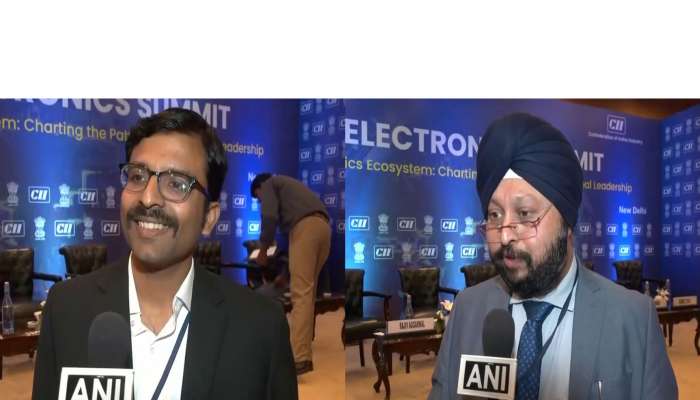

India is rapidly emerging as a significant player in the global electronics manufacturing landscape, fueled by a strategic combination of free trade agreements (FTAs), proactive government policies, and increasing investor interest. Recent reports indicate a substantial surge in both domestic production and exports, positioning the nation as a rising force in the international supply chain. Industry leaders believe this growth trajectory is set to continue, with ambitious targets set for the coming years.
India’s Ascent in Global Electronics Manufacturing
For years, India has been known for its prowess in software and IT services. However, a deliberate shift towards hardware production is now underway, transforming the country into a competitive hub for electronics exports. This transformation is not occurring in a vacuum; it’s the result of calculated strategies and a supportive ecosystem built by the government and embraced by the industry.
Shiva Srinivasan, Managing Director of MEL Systems & Services Ltd, emphasized to ANI the crucial role of ongoing trade negotiations with key regions like the EU, ASEAN, and Latin America. “The ongoing FTAs will expand the market for us,” he stated, adding that investments in infrastructure such as semiconductor parks and logistics modernization are vital enablers for sustained growth.
Government Initiatives Driving Growth
The Indian government’s commitment to the electronics industry is increasingly visible through sector-specific investments and policies. This targeted approach represents a departure from previous years, where support was more broadly applied. Previously, the sector didn’t receive the dedicated focus it does today, overshadowed by the success of the software and service industries.
This proactive approach is attracting significant capital and encouraging innovation. Official data reveals a six-fold increase in domestic electronics production over the past decade, reaching 11.3 lakh crore rupees. Simultaneously, exports have experienced an eight-fold surge, climbing to 3.27 lakh crore rupees since 2014-15. This accelerated economic momentum is a clear indicator of the effectiveness of current strategies.
Projected Growth and Ambitious Targets
The trajectory of India’s electronics sector is pointing upwards, with projections forecasting a substantial leap in export volumes. Current estimates suggest exports will reach $120 billion by March 2026, a significant increase from the $38 billion recorded in the previous year. Looking further ahead, the government has set an even more ambitious target to achieve $500 billion in electronics production by 2030.
This growth isn’t limited to sheer volume; India is striving to move up the value chain. Gurmeet Singh, Executive Director of the Electronics and Computer Software Export Promotion Council (ESC), described this as a defining moment for the industry. “The electronics industry is looking forward, and we are all geared up to replicate our IT success story into electronics manufacturing and exports,” he explained.
Moving Beyond Assembly: A Focus on Value Addition
India is strategically transitioning from a primarily assembly-led model to one focused on deeper value addition. This involves fostering domestic component manufacturing, research and development, and advanced technological capabilities. Government incentives are proving to be a key catalyst in this shift, attracting both domestic and international players to invest in Indian manufacturing facilities.
The government is not only pursuing FTAs but is also proactively engaging stakeholders to ensure they understand how to leverage these new opportunities. This “last mile” outreach, as Singh described it, is crucial for maximizing the benefits of these trade agreements. Progress on mutual recognition agreements is also being prioritized, as these are considered vital for increasing India’s market penetration and expanding its global footprint.
Challenges and Mitigation Strategies
Despite the positive outlook, challenges remain. Reliance on imports of rare earth minerals and gold compounds poses a potential bottleneck. Additionally, factors like logistics costs and compliance burdens contribute to higher overall costs compared to competitors such as China, Vietnam, and Mexico.
However, the industry remains optimistic that these hurdles are being addressed through ongoing reforms, dedicated skilling programmes, and strengthened collaboration between the government and industry stakeholders. These measures are designed to mitigate these barriers and improve India’s overall competitiveness in the global semiconductor industry.
A Defining Phase for Indian Electronics
India’s electronics sector is undeniably entering a dynamic and pivotal phase. With growing manufacturing capacity, improved competitiveness, and expanding global opportunities, the nation is poised to assume a much larger role in global supply chains. The combination of strategic policies, active trade negotiations, and a burgeoning domestic ecosystem suggest that India is well-positioned to capitalize on the evolving global landscape of electronics manufacturing and establish itself as a key hub for innovation and production.
To learn more about specific government schemes supporting this growth, explore resources on the Ministry of Electronics and Information Technology (MeitY) website. Further insights into the electronics export market can be found through the Electronics and Computer Software Export Promotion Council (ESC).