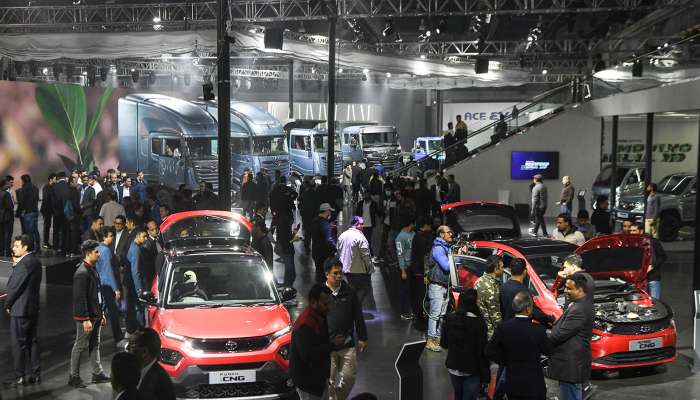

India’s automobile industry wrapped up calendar year 2025 on a remarkably strong note, defying earlier predictions of a slowdown and showcasing robust growth across nearly all segments. Driven by a confluence of positive factors – from healthy consumer demand and improved rural sentiment to increased infrastructure spending and a favourable macroeconomic environment – major manufacturers reported significant year-on-year gains in December. This surge signals a continued recovery and expansion for one of India’s key economic drivers.
A Record-Breaking Year for Passenger Vehicles
The passenger vehicle (PV) segment spearheaded the growth, with market leaders like Maruti Suzuki India Limited and Mahindra & Mahindra posting impressive figures. Maruti Suzuki, the country’s largest carmaker, reported total sales of 217,854 units in December 2025, a substantial increase from the 178,248 units sold in the same month the previous year. Notably, domestic sales reached an all-time high of 182,165 units, demonstrating strong consumer preference for their compact cars and increasingly popular utility vehicles.
For the entire calendar year, Maruti Suzuki achieved its highest-ever total sales of 2.35 million units, bolstered by record exports of nearly 396,000 units. This performance underscores the company’s ability to cater to both domestic and international markets effectively.
Mahindra & Mahindra also experienced a stellar year, closing December with 86,090 vehicles sold, a 25% year-on-year increase including exports. Domestic SUV sales reached 50,946 units, highlighting the continuing consumer preference for sport utility vehicles. The company emphasized that 2025 marked its highest-ever annual volumes in both SUVs and light commercial vehicles, fueled by strong demand in urban and semi-urban areas.
Toyota Kirloskar Motor wasn’t far behind, reporting a 33% year-on-year increase in December sales, reaching 39,333 units. Domestic sales jumped 37% to 34,157 units, culminating in a record calendar year for Toyota India with 388,801 units sold – its highest annual tally to date.
Commercial Vehicle Segment Gains Momentum
The commercial vehicle (CV) segment continued to benefit significantly from the government’s focus on infrastructure development. Ashok Leyland reported sales of 21,533 vehicles in December 2025, a 27% growth compared to the previous year. Medium and heavy commercial vehicles (M&HCVs), particularly buses, saw strong traction, reflecting sustained investment in both the public and private sectors.
VE Commercial Vehicles (VECV), a part of the Eicher group, also experienced robust growth, selling 10,384 vehicles in December – a nearly 25% year-on-year increase. This growth was driven by domestic trucks and buses, with exports also showing healthy expansion. Mahindra’s Trucks and Buses business reported a sharp 43% growth in December, selling 2,260 vehicles, with both cargo and passenger segments contributing to the uptrend. This positive trend in the Indian auto sector is a strong indicator of economic activity.
Two-Wheeler Segment Revs Up
In the two-wheeler space, Royal Enfield continued its upward trajectory, selling 103,574 motorcycles in December 2025, a 30% increase over the previous year. Domestic sales grew 37%, while exports exceeded 10,000 units. The company attributed this success to sustained demand for its core models and the positive reception of its new launches throughout the year.
B Govindarajan, Managing Director of Eicher Motors Ltd. and CEO of Royal Enfield, stated that December 2025 marked a “truly defining year” for the brand, characterized by strong growth, record performance, and deeper engagement with its riding community.
Rural Demand and Tractor Sales Fuel Growth
Rural demand remained a crucial driver of growth, particularly in the agricultural sector. Mahindra’s farm equipment business sold 31,859 tractors in December, a 39% year-on-year increase, supported by strong agricultural output, improved cash flows, and favourable weather conditions. Escorts Kubota Limited also reported robust growth, with tractor sales rising 38.5% to 7,577 units.
Both companies cited supportive government policies, strong Kharif output, and positive rural sentiment as key factors driving demand. The positive outlook for the automotive market is closely tied to the health of the agricultural economy.
Construction Equipment Shows Moderation, GST Impact Positive
While most segments experienced growth, construction equipment sales showed some moderation. Escorts Kubota sold 812 construction machines in December, slightly lower than the previous year, due to high base effects and slower project mobilization. However, the company noted improving sentiment compared to previous months and anticipates a gradual recovery aided by infrastructure spending.
A significant contributor to the overall positive sentiment has been the recent changes to the Goods and Services Tax (GST) rates. Rate cuts across various automobile categories, including bikes, buses, small cars, and tractors, have enhanced affordability and stimulated demand. The simplification of the GST structure, reducing the number of slabs from four to two, further streamlined the tax system and boosted investor confidence.
Looking Ahead
The strong performance of the Indian automobile industry in 2025 sets a positive tone for the coming year. While challenges remain, such as global economic uncertainties and supply chain disruptions, the underlying fundamentals – strong domestic demand, supportive government policies, and a growing middle class – suggest continued growth potential. The industry is poised to capitalize on these opportunities and further solidify its position as a key engine of economic growth for India.