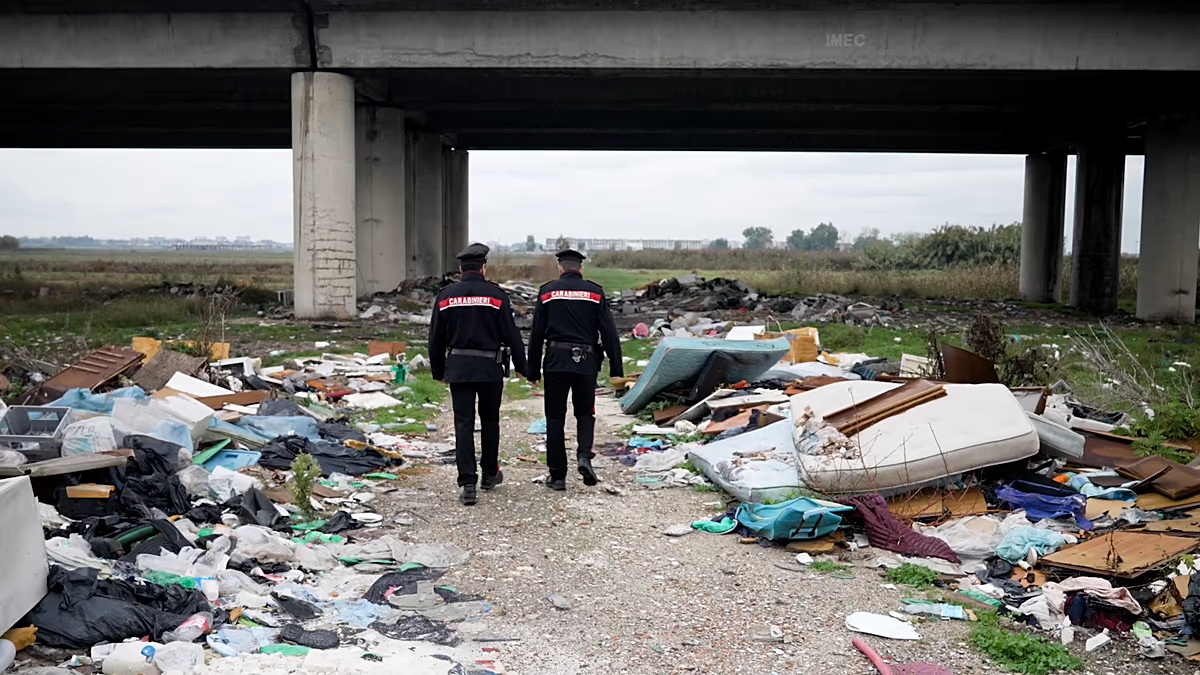

A severe public health crisis is unfolding in the Land of Fires, a region between Naples and Caserta in Italy, where decades of illegal toxic waste dumping have led to alarmingly high cancer rates. The area, also known as the Triangle of Death, has been plagued by the Camorra mafia’s control over waste disposal, resulting in widespread environmental contamination and a growing health emergency. The Italian government is now under pressure to address the Land of Fires situation.
The affected territory encompasses nearly three million inhabitants and has experienced decades of industrial, chemical, and even radioactive waste being illegally buried or burned. This criminal activity, orchestrated by the Camorra, has been facilitated by corruption within economic and institutional networks. Recent rulings by the European Court of Human Rights have highlighted Italy’s prolonged inaction and the resulting risk to residents’ lives, demanding a comprehensive environmental action plan.
The Escalating Health Crisis in the Land of Fires
The health consequences of the Land of Fires contamination are becoming increasingly apparent. Doctors in the region report significantly higher cancer rates than the national average. Luigi Costanzo, a family doctor in Frattamaggiore, reports seeing fifteen cancer cases among his 1,500 patients, compared to the Italian average of nine.
Additionally, the contamination of soil, water, and air is linked to a surge in respiratory illnesses, degenerative diseases, infertility, and congenital malformations. The Italian authorities officially recognized the health impact of this pollution in 2021, though families have been raising concerns for much longer.
Legal Battles and International Condemnation
Families affected by the pollution have sought justice through legal channels, including the European Court of Human Rights. Marzia Cacciopoli, whose son Antonio died from a brain tumor in 2014, describes the situation as a “silent murder” by a state aware of the dangers. The Court’s January 2024 ruling condemned Italy for its inaction and ordered the implementation of an environmental action plan, including independent monitoring and public access to information.
Cleanup Efforts and Ongoing Concerns
A special commissioner was appointed in February to oversee the cleanup and secure hundreds of contaminated sites. However, the announced timelines – potentially extending up to ten years – and the perceived inadequacy of funding are fueling public discontent. The scale of the environmental damage and the complexity of remediation pose significant challenges.
Meanwhile, residents and activists continue to mobilize through various collectives, documenting illegal dumping and pressing authorities for more decisive action. Associations like Le Mamme di Miriam, named after a cancer survivor, actively patrol the territory. Antonietta Moccia, a member of the association, expresses a deep distrust of institutions, stating, “They let us die — and they continue to let us die.”
The Role of the Camorra and Waste Management
The Camorra’s involvement in illegal waste disposal remains a central issue. While large-scale trafficking routes have reportedly shifted, illegal dumping continues, and fires ignited by clandestine companies regularly release toxic fumes. The organization has historically profited from exploiting loopholes in the waste management system and intimidating those who oppose their activities. Reuters provides further background on the Camorra’s role.
The situation in the Land of Fires highlights the critical intersection of environmental crime, public health, and organized crime. Looking ahead, the success of the cleanup efforts will depend on sustained funding, effective enforcement, and a commitment to transparency. Continued monitoring of cancer rates and environmental conditions will be crucial to assess the long-term impact of the contamination and ensure the health and safety of the region’s residents. Citizens can support organizations working on the ground and advocate for stronger environmental regulations.