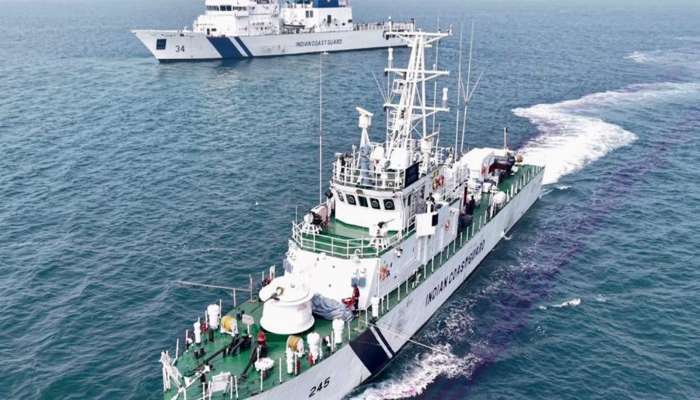

The recent visit of the Indian Coast Guard (ICG) Ship Sarthak to Chabahar Port in Iran marks a significant step in strengthening maritime cooperation between the two nations and underscores India’s strategic vision for the Indian Ocean Region. This four-day engagement, commencing December 16th, represents the first-ever port call by an ICG vessel to Chabahar, a strategically vital deep-water port offering a direct maritime link to Iran, Afghanistan, and the landlocked countries of Central Asia. The visit showcases India’s growing influence and capacity to ensure secure sea lanes, supporting its broader foreign policy objectives.
The Strategic Importance of Chabahar Port
Chabahar Port is located on the Gulf of Oman, and its development is crucial for regional trade and connectivity. For India, it bypasses Pakistan, providing a critical alternative route for goods and facilitating access to the energy-rich Central Asian region. This access is particularly important for the delivery of humanitarian aid and the development of infrastructure in Afghanistan, a key strategic partner for India. The port isn’t merely about trade; it’s a cornerstone of India’s geopolitical strategy, aiming to counter regional imbalances and promote economic integration.
India’s Vision: SAGAR and MAHASAGAR
The Sarthak’s deployment aligns perfectly with India’s overarching maritime vision, encapsulated in the SAGAR – Security and Growth for All in the Region – and MAHASAGAR – Maritime, Holistic, All-encompassing Security and Growth – initiatives. These doctrines prioritize cooperation with all nations in the Indian Ocean region to ensure maritime safety and security, foster economic growth, and combat piracy and other illicit activities. The visit to Chabahar is a tangible demonstration of India’s commitment to these principles, showcasing its proactive role in safeguarding shared interests. This commitment extends to robust maritime security and disaster response capabilities.
Strengthening Bilateral Ties through Joint Exercises
The core of the Sarthak’s visit lies in a series of carefully planned professional interactions and collaborative exercises with the Iranian Navy and other maritime agencies. These activities are designed to enhance interoperability, share best practices, and build trust between the two coast guards. Through joint training, both sides improve their collective ability to respond to maritime challenges.
Focus Areas of the Joint Training
Key areas of focus during the port call include:
- Maritime Search and Rescue (SAR): Joint drills will refine the procedures for locating and assisting vessels in distress, crucial for a busy shipping lane like the Gulf of Oman.
- Maritime Law Enforcement (MLE): Collaborative exercises focused on combating piracy, smuggling, and illegal fishing will bolster regional security.
- Marine Pollution Response (MPR): A demonstration focusing on oil spill containment and the handling of Hazardous and Noxious Substances (HNS) will showcase a coordinated approach to protecting the marine environment.
Furthermore, valuable coordination drills between the Maritime Rescue Coordination Centres (MRCC) of both nations, along with table-top exercises and joint Visit, Board, Search and Seizure (VBSS) drills, are planned to improve communication and operational effectiveness. These drills help create a unified response framework, vital in times of crisis.
Beyond Professional Engagements: Community Outreach and Environmental Awareness
The visit is not solely focused on military and security cooperation. It also incorporates community-building activities, reflecting a broader commitment to people-to-people connections. National Cadet Corps (NCC) cadets embarked on the Sarthak will participate in sports fixtures and a “beach walkathon” as part of the Puneet Sagar Abhiyan.
Puneet Sagar Abhiyan and Coastal Cleanliness
The Puneet Sagar Abhiyan is a nationwide initiative aimed at promoting environmental awareness and achieving coastal cleanliness. This participation illustrates India’s dedication to regional cooperation that extends beyond security concerns to encompass environmental stewardship. The collaborative beach cleanup demonstrates a shared responsibility for preserving the health of the marine ecosystem.
Expanding Maritime Footprint & Regional Stability
Before arriving in Chabahar, ICG Ship Sarthak completed a successful visit to Kuwait, interacting with the Kuwait Coast Guard. This highlights the Indian Coast Guard’s increasing presence and engagement with maritime partners throughout the Gulf region. The series of port calls strengthens diplomatic ties and establishes India as a reliable security provider.
The four-day visit to Chabahar Port isn’t just a routine deployment; it’s a strategically significant gesture. It reaffirms India’s long-term commitment to the development of Chabahar, to bolstering maritime collaboration with Iran, and to contributing to the peace, stability, and sustainable development of the wider Indian Ocean Region and the Gulf.
This visit reaffirms India’s dedication to a rules-based maritime order and its proactive role in fostering a secure and prosperous future for the region. It presents a unique opportunity for both India and Iran to reaffirm their bilateral ties and deepen their understanding of each other’s maritime capabilities and concerns. These types of engagements are vital for building a resilient and cooperative maritime environment.