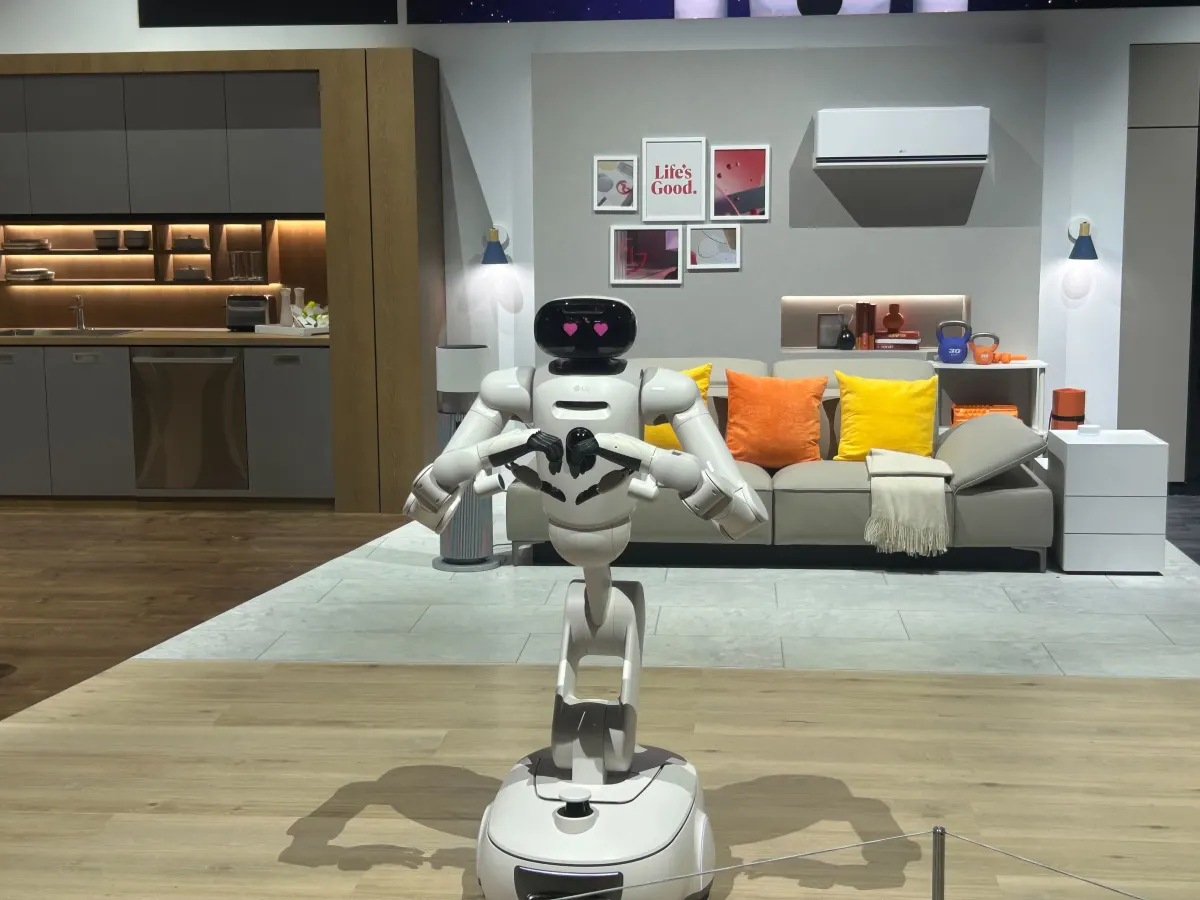

Las Vegas – LG unveiled CLOiD, a new AI-powered home robot, at this year’s Consumer Electronics Show (CES), aiming to automate a wide range of household tasks. The robot, demonstrated at LG’s keynote and throughout the show floor, is designed to assist with chores, provide home monitoring, and ultimately function as an “ambient-care agent” integrated with LG’s smart home ecosystem. While the concept is ambitious, the current iteration revealed a slow pace and uncertainty around its release date.
The announcement comes as interest in domestic robotics continues to grow, with companies like Amazon and Enabot already offering competing products. LG positions CLOiD as more versatile than these alternatives, leveraging its robotic arm design to handle physical tasks like laundry and food preparation. However, observers at CES noted the robot’s performance wasn’t seamless, raising questions about its practical readiness.
The Vision of an Automated Home with a Home Robot
LG’s CLOiD isn’t just about tackling individual chores; it’s a key component of the company’s larger “Zero Labor Home” strategy. This model envisions a fully automated living space where robots and smart appliances collaborate to handle all essential domestic duties. The core of this functionality relies on a vision language model that interprets images and video into text-based understanding, and a vision language action program that converts spoken commands into physical action.
CLOiD is equipped with multiple cameras and sensors, which connect to LG’s ThinQ smart home app. This integration allows the robot to access data about the home environment and proactively offer assistance. For example, the bot could suggest a recipe based on ingredients available in the refrigerator or alert users to potential security concerns.
Capabilities Demonstrated at CES
During presentations, CLOiD was shown performing basic tasks such as transferring clothes from a basket to a dryer and placing a croissant in an oven. These demonstrations, while showcasing the robot’s potential, highlighted its deliberate and often slow movements. The robot’s interaction with the refrigerator was particularly notable, as it paused for an extended period before selecting a carton of milk.
The limitations in speed weren’t necessarily seen as flaws by LG, which contends that the value proposition lies in alleviating all workload from the user. The idea is that users can continue with their daily activities—such as work or personal care—while CLOiD manages household responsibilities in the background. Instead, LG emphasized integration with its broader smart appliance portfolio.
Beyond CLOiD: LG’s Expanding AI Home Ecosystem
Alongside the home robot, LG showcased a suite of AI-enhanced appliances designed to work seamlessly with CLOiD and the ThinQ app. This included the return of the LG Wallpaper OLED TV, lauded for its incredibly thin profile and immersive display. LG also presented an intelligent oven capable of identifying food items and recommending optimal cooking recipes, and a smart refrigerator that responds to voice commands.
These appliances represent a more immediate and tangible benefit for consumers than a full-fledged domestic robot. The appliances are currently available or nearing release, offering a clear pathway to smart home adoption. LG hopes the synergy between CLOiD and these devices will solidify its position in the competitive smart home market.
Further demonstrating interest in artificial intelligence, LG also announced new advancements in its smart home AI platform related to energy management and personalized user experiences. These enhancements build upon existing ThinQ features, promising greater efficiency and convenience for homeowners. The company sees AI as central to differentiating its appliances from competitors.
Experts suggest that the cost of creating and maintaining a complex AI system like this is considerable, and that consumer adoption of home robots generally hinges on affordability and demonstrable value.
Availability and Future Outlook
Despite the announcement, details regarding CLOiD’s launch remain scarce. LG representatives acknowledged the robot would become available in the future, but could not provide a specific timeframe. Promotional materials included a disclaimer indicating that the presented products are still under development and subject to change.
This lack of concrete information is consistent with the broader trend observed at CES, where many robotic solutions are presented as proof-of-concept technologies rather than retail-ready products. The focus appeared to be on generating excitement and showcasing LG’s long-term vision for the smart home.
The next step for LG will be refining CLOiD’s functionality and addressing the concerns regarding its speed. Industry observers will be watching for announcements regarding pricing, certification, and a firm release date. Successfully integrating CLOiD with its other smart appliances and demonstrating its practical benefits in a real-world setting will be crucial for driving consumer adoption of this technology. The pace of development, while promising, will ultimately dictate whether CLOiD delivers on its ambitious potential.