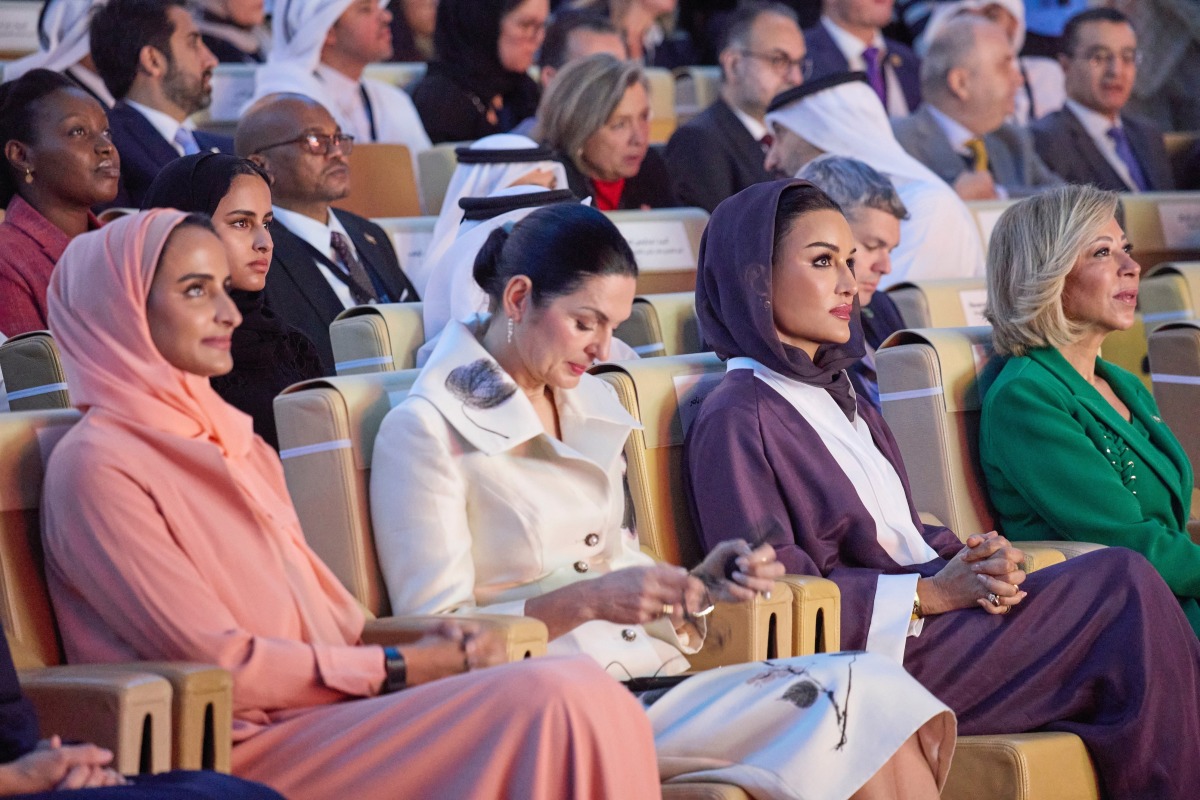

Doha, Qatar – The World Innovation Summit for Education (WISE 12) opened yesterday in Doha with a compelling call for prioritizing human values in the face of rapid technological advancements. Chairperson of Qatar Foundation, H H Sheikha Moza bint Nasser, emphasized the critical need to ensure that education remains centered on humanity as artificial intelligence and other technologies reshape the learning landscape. The biennial summit, hosted by Qatar Foundation, draws together global leaders, educators, and innovators to discuss the future of education.
Over 4000 participants, including ministers, policymakers, and experts, are convening at the Qatar National Convention Centre for the two-day event. This year’s theme, “Humanity.io: Human Values at the Heart of Education,” underscores the commitment to fostering equitable and relevant learning experiences in a changing world. The summit will explore key areas like culturally aware innovation, the integration of AI in K-12 learning, and strategies for lifelong learning and higher education.
The Urgent Need for Human-Centered Education
H H Sheikha Moza bint Nasser asserted that education is a fundamental right, not merely a service, and is essential for the progression of humanity, justice, and progress. She cautioned against allowing technology to unilaterally dictate the future of learning, urging a proactive approach to ensure ethical considerations and human dignity are paramount. She stated the goal is to cultivate a science that serves humanity, liberating rather than enslaving.
This emphasis on values aligns with Qatar Foundation’s long-standing efforts to promote holistic development and critical thinking. According to officials, the foundation views education as a cornerstone of both national and global advancement.
New Tools for Assessing Educational Quality
As part of her opening remarks, Sheikha Moza announced the forthcoming WISE Education Index. This new global tool aims to expand the conventional evaluation of educational quality beyond academic achievement, by incorporating social and cultural values into its assessments. This initiative reflects WISE’s ongoing mission to improve education and promote effective, innovative solutions such as the prestigious WISE Prize.
Minister of Education and Higher Education, H E Lolwah bint Rashid bin Mohammed Al Khater, echoed this sentiment, highlighting that technological progress should be seen as a continuation of our inherent human drive for knowledge and innovation. She emphasized the importance of aligning national visions and decisions with human values to effectively navigate global changes and unlock opportunities for growth.
The opening session also featured diverse perspectives on the intersection of humanity and technology. Syrian singer-songwriter Faia Younan explored the role of the artist as artificial intelligence evolves. Former Google X Chief Business Officer Mo Gawdat presented a historical perspective on knowledge, tracing its evolution from books to the internet and the now-transformative impact of AI. He explained AI’s potential to revolutionize fields like mathematics and biology.
Meanwhile, author Laila Lalami, in a conversation moderated by filmmaker Amjad Alnour, shed light on the power of fiction in grappling with the moral challenges posed by artificial intelligence. She argued that storytelling fosters empathy and provides a crucial space for examining the implications of AI on human consciousness and narratives. This discussion touched upon the growing field of edtech, and how ensuring ethical development is key.
The summit’s dialogue also touches on adapting higher education models and developing skills that are relevant in the 21st century. Discussions encompass workforce readiness and the role of education in promoting economic and community strength.
WISE 12 is scheduled to conclude today with the announcement of the WISE Prize winners. The awards recognize outstanding contributions to education from around the globe and are a central component of the summit’s commitment to recognizing and celebrating impactful innovation. What remains to be seen is how the conversations held at WISE 12 will translate into concrete policies and practices within national and international education systems, and whether the newly announced WISE Education Index will gain traction as a key metric for assessing educational quality.