
A growing trend among the world’s wealthiest individuals sees countries less as permanent homes and more as strategically chosen locations for lifestyle and financial optimization – a phenomenon captured in recent discussions surrounding the “nomad billionaire.” This shift, particularly visible in luxury real estate markets, represents a fundamental rethinking of citizenship, residency, and the very concept of home. Rather than traditional ties to a single nation, high-net-worth individuals are building interconnected networks of properties to maximize mobility, minimize tax liabilities, and enhance their personal and financial freedom.
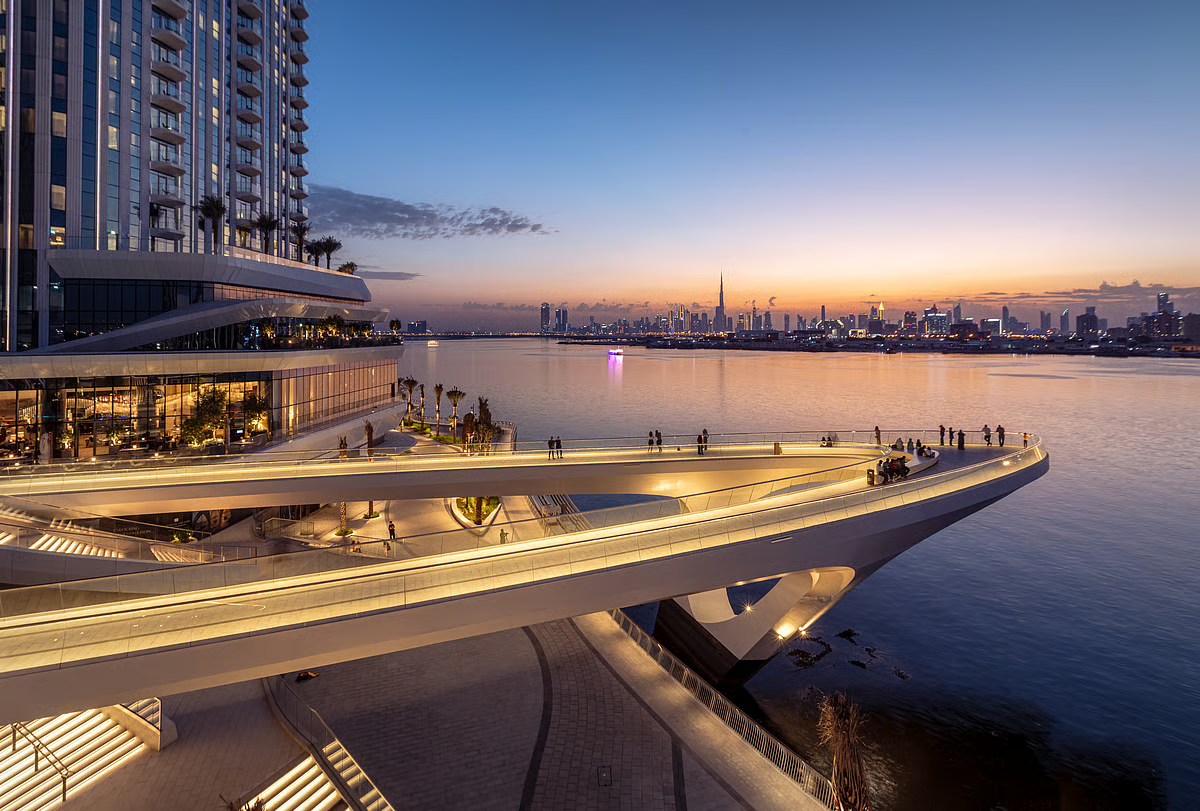
The Middle East and North Africa (MENA) region is at the forefront of this evolution, experiencing significant investment in luxury properties geared towards this increasingly mobile clientele. Cities like Dubai, Riyadh and Doha are not simply locations for investment; they’re becoming key nodes in a global network designed to cater to the needs of those with substantial wealth. This reimagining of real estate reflects broader changes in global wealth distribution and international policies regarding taxation and migration.
The Rise of the Nomad Billionaire and its Impact on Luxury Real Estate
Historically, affluent individuals often maintained a strong connection to their country of origin, establishing long-term roots and building generational wealth in a single location. However, globalization, increased financial scrutiny, and a desire for greater personal freedom have spurred a move towards a more fluid model of ownership. This trend has accelerated with recent geopolitical events and evolving tax regulations.
The modern luxury home is no longer purely an indulgence. It’s a strategic asset within a broader portfolio, designed to facilitate seamless transitions between business ventures, leisure activities, and cultural experiences. The distinction between “investment property” and “lifestyle hub” is becoming increasingly blurred, as these residences offer both financial benefits and enhanced quality of life. This is driving demand for properties with specific amenities and access to services catering to international travel and wealth management.
Privacy, Mobility, and Brand as Key Drivers
Three core elements are now paramount for ultra-high-net-worth buyers: privacy, mobility, and brand association. Demand for properties offering sanctuary-level privacy, reinforced security, and discreet service is rising sharply. Simultaneously, the ability to move freely across borders is crucial, leading to interest in locations with favorable visa programs and well-connected transportation networks.
Brand status also holds significant weight, with buyers seeking residences affiliated with internationally recognized luxury brands. These branded properties offer a consistent level of quality, service, and exclusivity, reinforcing the owner’s identity and providing access to a network of like-minded individuals. The concentration of these highly sought-after qualities is a key aspect of the MENA region’s appeal.
A Borderless Ownership Model Emerges
The traditional concept of a “primary residence” is increasingly obsolete. Ownership is becoming more diversified, fractional, and experiential. Some wealthy individuals are actively exploring co-investment opportunities in global residence portfolios, sharing the costs and benefits of multiple properties. Others view their homes as curated spaces for different phases of their lives, rotating their time and resources accordingly. This change requires developers to think beyond simply constructing buildings.
Developers are now tasked with creating environments that cater to a nomadic lifestyle, providing services and amenities that support seamless transitions between locations. This includes concierge services, travel arrangements, and access to local networks. Meeting this demand requires a deep understanding of the needs and aspirations of this highly mobile clientele, but also the evolving landscape of international residency and taxation.
Future Trends to Watch
Several potentially transformative dynamics are emerging within this trend. One possibility is the development of “networked residency rights,” where governments offer reciprocal residency benefits linked to luxury property ownership across allied nations. Existing “golden visa” programs, offering residency in exchange for significant real estate investment, may become more interconnected.
Another development is the integration of artificial intelligence (AI) into luxury homes, allowing them to adapt to the owner’s preferences in real time, regardless of location. This could mean replicating a preferred climate, lighting scheme, or even entertainment experience across multiple residences. The growth of globally branded residential villages, offering a consistent lifestyle across continents, is also a prospect worth monitoring.
The MENA Region’s Central Role
The MENA region is actively shaping this new paradigm. Large-scale developments in Saudi Arabia, such as NEOM and the Red Sea Project, combined with the established luxury market in Dubai and emerging opportunities in other Gulf states, are attracting significant investment. These projects are designed to appeal specifically to the nomad billionaire, offering a blend of stability, innovation, and world-class infrastructure.
The question for these individuals is evolving from “Where is home?” to “Which home best suits my current needs?” The answer is increasingly found in the region’s offerings. The future of this trend remains dependent on geopolitical stability and evolving global tax regulations. However, the demand for flexible, high-quality residences in strategically located hubs like the MENA region is expected to continue growing in the coming years, as the nomad billionaire reshapes the landscape of global real estate and personal freedom. Continued observation of new residency initiatives and the integration of smart home technology will be crucial to fully understand the impact of this evolving lifestyle.