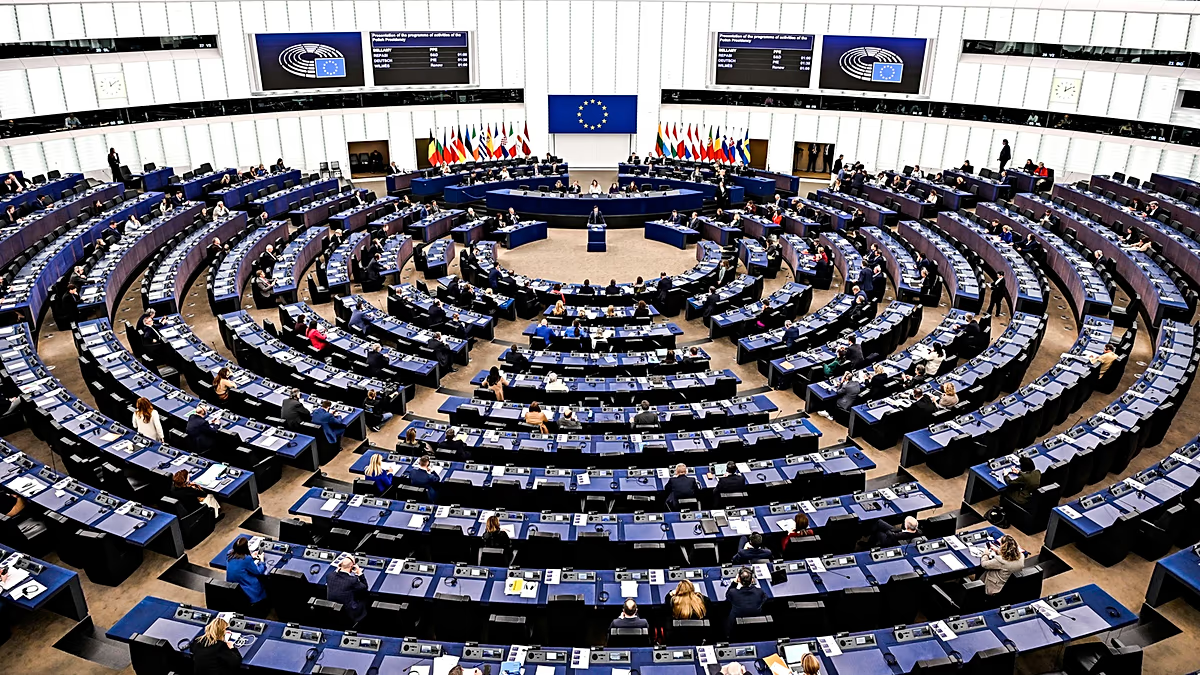

The European Parliament’s traditional centre is struggling to hold as the political landscape shifts rightward. The latest plenary session demonstrated that the long-dominant alliance is no longer undisputed, with the European People’s Party (EPP) now faced with a choice: collaborate with its pro-European, progressive allies or team up with the hard right.
This development is significant as the EPP, which dominates the hemicycle, navigated a crucial vote on simplifying corporate sustainability reporting. Initially, the party attempted to pass the bill with the centrist majority but ultimately turned to the right-wing parties, including the European Conservatives and Reformists (ECR) and far-right groups, to secure the necessary votes.
The Centre’s Struggle to Maintain Influence
The EPP justified its shift to the right by citing the need to reduce bureaucracy. According to Jörgen Warborn, the Swedish MEP and rapporteur for the file, the party’s amendments were supported by the right-wing parties. This move is in line with EPP chair Manfred Weber’s strategy of ruling out structured cooperation with the far right while relying on their votes when necessary.
The EPP argues that if progressive forces showed more flexibility, the votes of the right-wing would no longer be decisive. This stance is reflected in the party’s willingness to work with the hard right on specific issues, such as the “Omnibus I” package, which applies EU due diligence rules only to large corporations and removes fines for non-compliance.
However, this approach has raised concerns among progressive groups, who feel that the EPP is compromising on key issues. The “Venezuela majority,” which emerged in October 2024, has resurfaced in subsequent decisions, including the postponement and dilution of the EU deforestation law.
Implications for EU Policy and Leadership
The EPP’s flirtations with the far-right pose a challenge for Ursula von der Leyen, the President of the European Commission. Von der Leyen has relied on the traditional centrist majority to advance her agenda but is now faced with a more fragmented and polarized Parliament.
Commission officials are alarmed by the fragmentation, as critical votes descend into recriminations and culture wars among the parties that are supposed to support the president’s vision. Meanwhile, patience is wearing thin among member states, which are concerned about the Parliament’s perceived inability to act with speed and resolve.
Von der Leyen is attempting to navigate this complex landscape by maintaining a delicate balance between her pro-European majority and the shifting political landscape. She has developed a close relationship with key leaders, including German Chancellor Friedrich Merz, Italian Prime Minister Giorgia Meloni, and Polish Prime Minister Donald Tusk, all of whom come from the right and have pushed her to re-evaluate elements of her first mandate.
As the EU navigates these challenges, it is clear that the centre is struggling to hold. The EPP’s willingness to work with the hard right on key issues will likely continue to shape the EU’s policy agenda. For more information on the European Parliament’s evolving dynamics, visit the European Parliament’s news page. To stay up-to-date on the latest developments, follow reputable sources such as Euractiv. The coming months will be crucial in determining the direction of EU policy and leadership.