


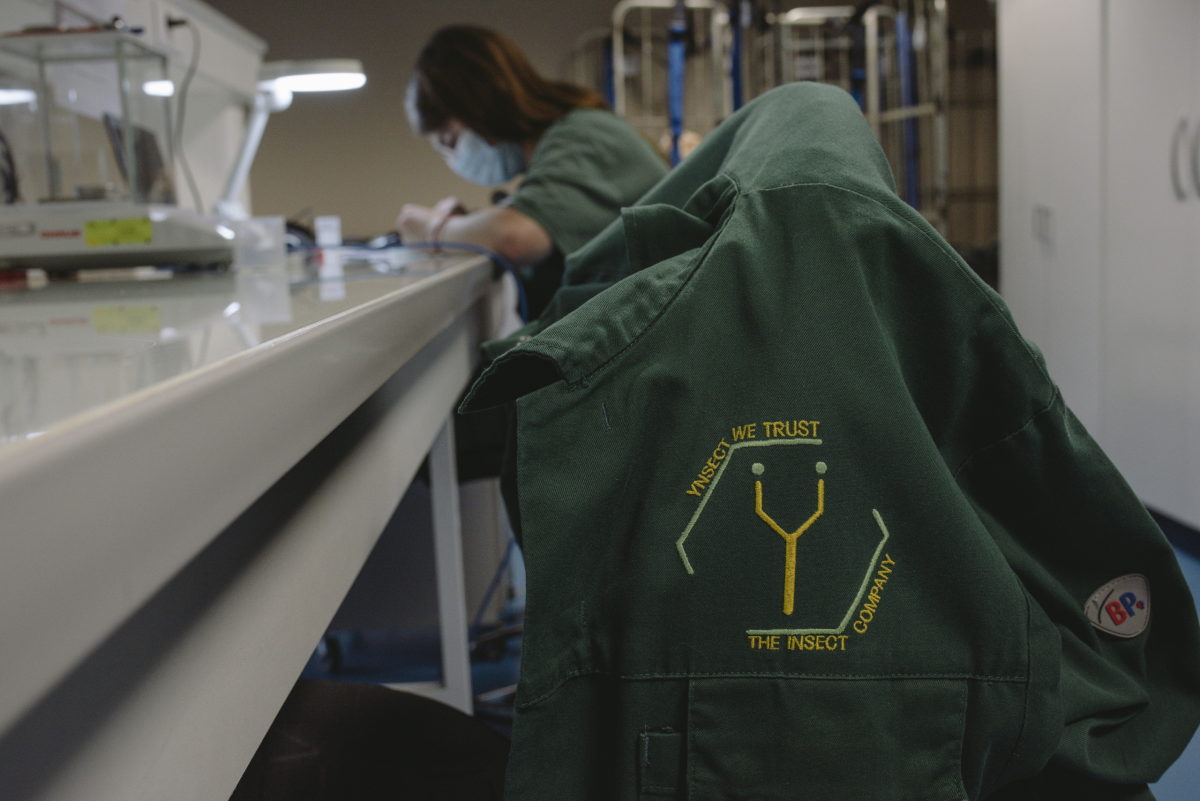

French insect farming startup Ÿnsect, once hailed as a leader in sustainable protein production, has entered judicial liquidation – a form of bankruptcy – after failing to achieve profitability despite raising over $600 million in funding. The collapse of the company, which attracted investment from high-profile figures like Robert Downey Jr., highlights the challenges of scaling up innovative food technologies and the complexities of navigating commodity markets.
The liquidation, announced in February 2024, marks a dramatic fall for Ÿnsect, which aimed to revolutionize animal and potentially human food chains with insect-based protein. While the “ick” factor often associated with eating insects received attention, the company’s core business focused on providing protein for animal feed and pet food, sectors where economic realities ultimately proved insurmountable.
The Rise and Fall of Insect Protein Pioneer Ÿnsect
Founded in 2016, Ÿnsect quickly gained traction with its vision of a circular economy, utilizing insects to convert organic waste into valuable protein sources. This approach promised a more sustainable alternative to traditional protein sources like fishmeal and soy, which have significant environmental impacts. The company’s initial success attracted substantial investment from impact-focused venture capital firms and public investment banks.
However, Ÿnsect struggled to translate its ambitious vision into consistent revenue. Publicly available data shows that revenue peaked at €17.8 million (approximately $21 million) in 2021, a figure reportedly inflated by internal transfers. By 2023, the company had amassed a net loss of €79.7 million ($94 million), signaling deepening financial trouble.
Strategic Missteps and Capital Intensive Investments
A key strategic decision that contributed to Ÿnsect’s downfall was the 2021 acquisition of Protifarm, a Dutch mealworm producer focused on the human food market. While diversifying the company’s potential revenue streams, the acquisition added another layer of complexity and required investment in a market segment that remained small and unprofitable for Ÿnsect. The company acknowledged at the time that human food would represent a minor portion of its revenue for years to come.
The most significant financial burden was the construction of Ÿnfarm, a massive “giga-factory” in Northern France. This facility, intended to produce insect protein at an unprecedented scale, consumed hundreds of millions of dollars in funding before the company could demonstrate a viable business model or achieve positive unit economics. The scale of the investment proved unsustainable given the company’s revenue challenges.
Commodity Market Pressures and the Animal Feed Dilemma
Ÿnsect’s initial focus on animal feed proved problematic. The animal feed market is highly competitive and driven primarily by price, making it difficult for a new, more expensive protein source to gain significant market share. The ideal scenario of a fully circular system, where insects are fed solely on food waste, rarely materialized in practice. Instead, large-scale insect production often relied on cereal by-products already used in animal feed, adding an extra cost without substantial environmental benefit.
The company later pivoted towards the pet food market, recognizing its higher margins and greater willingness to pay for sustainable ingredients. However, this shift came too late to salvage the company’s financial position. By the time the pet food strategy was fully implemented, Ÿnsect was already heavily burdened by debt and the costs associated with Ÿnfarm.
According to Professor Joe Haslam of IE Business School, Ÿnsect’s struggles weren’t unique to insect farming. He argues the company’s failure is a result of a “mismatch between industrial ambition, capital markets, and timing,” a pattern he observes in other European deep tech startups. He points to examples like Northvolt and Lilium as exhibiting similar issues of over-ambitious scaling and underfunding of core manufacturing capabilities.
Implications for the Insect Farming Industry
Despite Ÿnsect’s collapse, the broader insect farming sector isn’t necessarily doomed. Competitor Innovafeed, for example, appears to be navigating the challenges more effectively, reportedly due to a more gradual and incremental approach to scaling production. The key difference seems to be a focus on smaller, more manageable facilities and a more disciplined approach to capital expenditure.
The failure of Ÿnsect has prompted reflection on the support needed for industrial startups in Europe. Antoine Hubert, Ÿnsect’s former CEO, has since co-founded Start Industrie, an association advocating for policies that foster the growth of French industrial companies. This highlights a growing recognition that funding alone isn’t enough to build successful deep tech businesses; supportive industrial policies and a focus on manufacturing are also crucial.
The company’s remaining assets are now being offered for sale, and its former CEO, Emmanuel Pinto, expressed hope that the expertise and technology developed by Ÿnsect will be utilized to advance the field of sustainable protein production. The future of Ÿnsect’s technology remains uncertain, but the liquidation process is expected to conclude in the coming months, potentially leading to the acquisition of its assets by other players in the insect farming industry or related sectors. The long-term impact on the development of alternative proteins will depend on how quickly and effectively these assets can be redeployed.