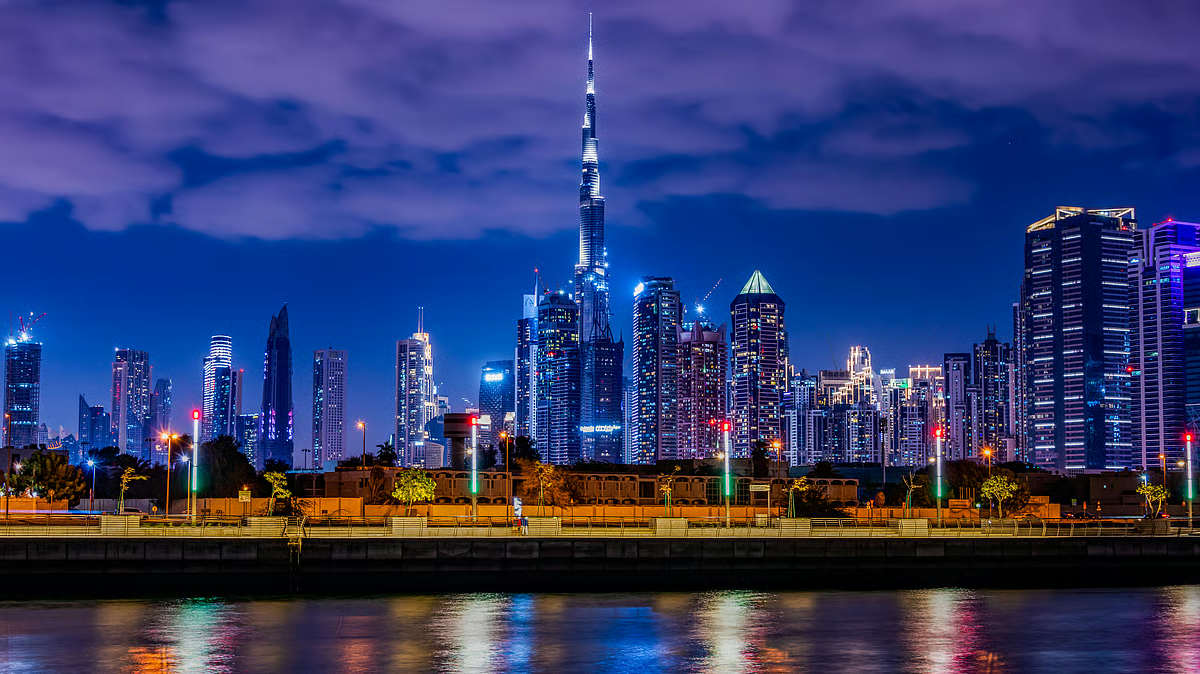

The United Arab Emirates (UAE) real estate market is experiencing a shift as more developers adopt an architect-led approach, focusing on design-led development to create more sustainable and livable communities. Traditionally driven by financial returns, the industry is increasingly recognizing the importance of spatial quality and user experience. This trend is not only impacting aesthetics but also the long-term value and resilience of properties across the nation.
Recent data demonstrates the robust health of the UAE property sector, with Dh893 billion in transactions recorded in 2024, and Dubai accounting for Dh760.7 billion of that total. However, experts note that buyers and investors are now seeking more than just square footage; they prioritize cohesive, well-planned communities that enhance their quality of life. This demand is fueling the rise of developers with an architectural background or those actively integrating architects into early-stage planning.
The Rise of Design-Led Development in the UAE
For years, property development in the UAE, and the wider Gulf region, prioritized rapid construction and maximizing yield. This often resulted in projects that lacked nuanced consideration for how people would actually live and interact within the spaces. Now, a growing emphasis on innovation, sustainability, and luxury living is driving a re-evaluation of these priorities.
Architects bring a unique skillset to the development process, focusing on the interplay between form and function. They are trained to consider not only the visual appeal of a building but also the usability of its interior spaces, a critical element often overlooked in purely commercially-driven projects. A well-designed space, even within a smaller footprint, can significantly enhance a resident’s experience and, consequently, the property’s desirability.
Beyond Aesthetics: Sustainability and Resilience
The benefits of design-led development extend far beyond surface-level improvements. Architects are fundamentally trained to adopt a systems-thinking approach, considering the interconnectedness of various factors from the outset of a project. This includes integrating passive cooling techniques, maximizing natural daylight, and selecting durable, long-lasting materials.
These considerations directly contribute to the UAE’s Net Zero 2050 strategic initiative, reducing operational costs and minimizing environmental impact. By incorporating sustainable practices into the core design, developers can create buildings that are not only attractive but also responsible and future-proof.
Optimizing Unit Mix and Amenities
Strategic decision-making regarding unit types and communal facilities is equally vital. While studios may offer lower entry points for investors, an oversupply can lead to lower occupancy rates and diminished long-term value. Attracting and retaining long-term residents requires a balanced property portfolio that caters to a diverse range of needs.
Similarly, adding amenities solely for the sake of boasting a lengthy list can be counterproductive. Developers are finding success by curating high-quality, genuinely useful facilities that foster a sense of community. Prioritizing usability and intentional design over sheer quantity is becoming a key differentiator in the competitive UAE real estate market.
Adding features like private swimming pools to mid-range buildings, while tempting, often introduces significant maintenance burdens and shared liabilities, negatively impacting both owners and the building’s overall financial health.
The Future of Integrated Design and Development
Many industry professionals believe the historical separation between architectural design and property development is diminishing. Increasingly, developers are seeking architectural expertise during the initial financial and strategic planning stages, rather than as an afterthought. This integration allows for a more agile and responsive development process, capable of adapting to changes in market demand without sacrificing quality.
Several developers are now employing architects in leadership roles, or establishing in-house design teams to ensure a consistent vision throughout the project lifecycle. This move acknowledges that successful real estate investment requires a holistic approach, where design is not merely an aesthetic element but a core driver of value. Greater collaboration between architects and developers looks to be the key.
Looking ahead, the UAE government is expected to continue incentivizing sustainable building practices through updated regulations and financial support. The success of recent urban planning initiatives will likely serve as a model for future projects, further solidifying the role of architects in shaping the nation’s built environment. Monitoring upcoming policy changes and the evolving preferences of buyers will be crucial for developers navigating this dynamic market.