
The Sultanate of Oman reaffirmed its commitment to regional stability and strengthened ties with Lebanon as His Majesty Sultan Haitham bin Tarik hosted an official dinner in honour of President General Joseph Aoun. This significant event, held at the Al Alam Palace guesthouse today, marks a pivotal moment in Omani-Lebanese relations and underscores Oman’s role as a key diplomatic player in the Middle East. The visit and subsequent ceremony highlight the importance of fostering strong bilateral relationships, particularly in these complex geopolitical times, and solidifying Oman-Lebanon relations.
A State Visit Honoured with Tradition
President General Joseph Aoun’s official visit to the Sultanate is a gesture of mutual respect and a demonstration of the desire for enhanced cooperation between the two nations. The welcoming ceremony at Al Alam Palace was steeped in Omani tradition, reflecting the deep-rooted values of hospitality that are central to the country’s culture. The hosting of such a prestigious dinner demonstrates Oman’s dedication to nurturing its connections with Arab nations and shows how highly it values the Lebanese presidency.
Symbolism of the Al Alam Palace Guesthouse
The choice of the Al Alam Palace guesthouse as the venue for the official dinner is itself symbolic. A historic location, it signifies the importance Oman places on the visit and the esteem reserved for President Aoun and his delegation. It’s a space traditionally used for receiving high-ranking foreign dignitaries, and provides a fitting backdrop for discussions on matters of state and shared interests.
Exchange of Honours and Commemorative Gifts
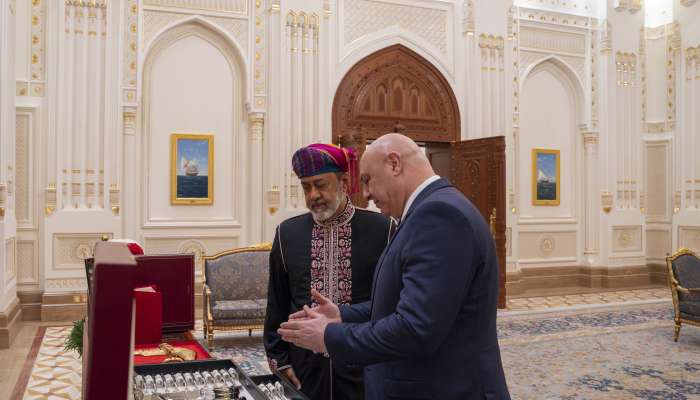
Prior to the formal dinner, His Majesty the Sultan and President Aoun engaged in a private exchange of orders and commemorative gifts. This intimate moment embodies the friendly spirit of the visit and the building of personal rapport between the two leaders. Such exchanges aren’t just ceremonial; they represent a deeper commitment to understanding and collaboration.
The presentation of accolades further signified the depth of the diplomatic ties. His Majesty conferred the Oman Military Order “First Class” upon President Aoun, a prestigious recognition of his leadership and service. In return, President Aoun awarded His Majesty the Sultan the “National Order of the Cedar, Grand Collar Rank,” the highest honour bestowed by the Lebanese Republic. This reciprocal gesture showcases mutual recognition and a desire to reinforce the bonds between them.
High-Level Attendance Showcases Importance
The official dinner was a high-profile affair, attended by a distinguished gathering. This included members of the Royal family, ministers, undersecretaries, and senior military commanders. Ambassadors from various Arab and friendly countries accredited to the Sultanate of Oman were also present, signifying broad regional interest in the strengthening of bilateral cooperation. The presence of such a comprehensive guest list reinforces the strategic significance of this visit.
The participation of key Omani officials underscores the government’s commitment to building bridges with Lebanon. It’s a clear signal that the leadership views engagement with Beirut as a priority, especially in terms of economic and political support. Likewise, the attendance of ambassadors signifies a wider regional awareness of, and support for, this positive development.
Focus on Regional Stability and Future Collaboration
While specific details of the discussions between His Majesty and President Aoun haven’t been fully released, the visit is widely understood to focus on strategies for enhancing regional stability. Oman has longstanding experience as a mediator in regional conflicts, and President Aoun’s visit likely allowed for discussions on the current challenges facing Lebanon and the wider Middle East. Addressing these challenges contributes to the overall prosperity of the Gulf region.
It’s anticipated that the talks covered potential areas of collaboration in diverse fields, including investment, trade, and cultural exchange. Given Lebanon’s ongoing economic difficulties, Oman’s potential role in providing economic assistance and facilitating investment was likely a key agenda item. Further, exploring opportunities surrounding sustainable development initiatives could contribute significantly to Lebanon’s long-term recovery.
The reaffirmation of the Oman-Lebanon relations through the official dinner and exchange of honours suggests a renewed phase of cooperation between the two countries. This includes strengthening political discourse to find shared solutions and building on long-standing cultural ties. It also signals a commitment to continuing dialogue on issues of mutual concern, striving towards a more peaceful and prosperous future for the region.
This state visit represents a crucial step in fostering deeper understanding and stronger cooperation between Oman and Lebanon. As the two leaders continue to explore avenues for collaboration, it’s clear that both nations are committed to building a brighter future. To learn more about Oman’s diplomatic efforts and its role in the region, please visit the official website of the Omani Ministry of Foreign Affairs. We encourage further exploration into the developing relationship between these two important Arab nations.