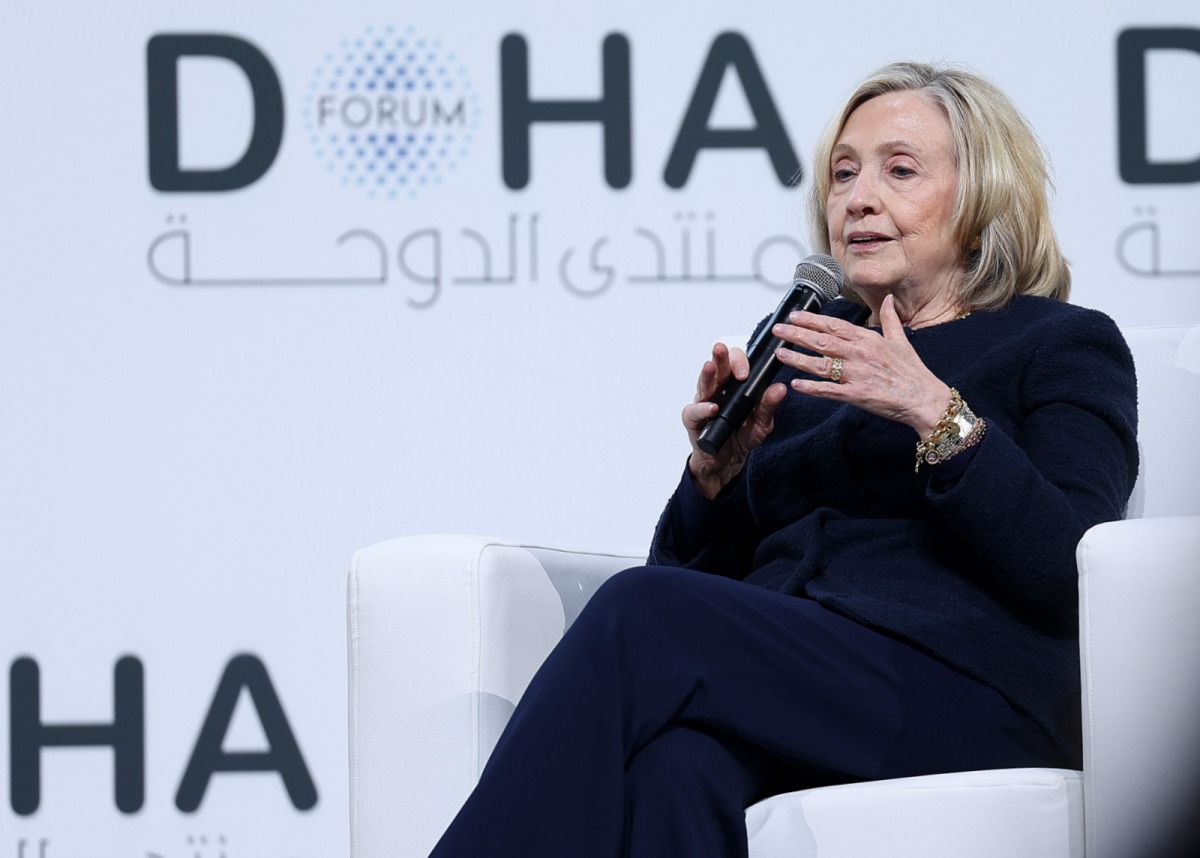

Doha, Qatar – Former U.S. Secretary of State Hillary Clinton, speaking at the Doha Forum, urged increased U.S. involvement in global crises, particularly highlighting the “horrific” suffering in Gaza. Clinton criticized current U.S. foreign policy as overly isolationist and warned of potential setbacks under a second Trump administration. Her remarks underscored a growing debate about America’s role in international affairs and the need for proactive diplomacy.
The comments came during a discussion with Foreign Policy Editor-in-Chief Ravi Agrawal on the second day of the Doha Forum, a platform for international dialogue on pressing global issues. Clinton also expressed support for the recent ceasefire agreement in Gaza, acknowledging the role played by the previous administration in facilitating the deal. The forum, which began Sunday, is focused on finding solutions to challenges facing the Middle East and the wider world.
Shifting U.S. Foreign Policy and the Gaza Conflict
Clinton voiced strong disapproval of the current U.S. National Security Strategy, which prioritizes non-interventionist policies. She argued that this approach weakens American influence and undermines crucial alliances. According to Clinton, a retreat from international engagement creates a vacuum that can be exploited by adversaries.
She specifically criticized the lack of robust U.S. response to Russia’s ongoing invasion of Ukraine, comparing it to the international response to Saddam Hussein’s invasion of Kuwait. Clinton suggested that both the Biden and potentially a future Trump administration could have taken a more assertive stance in supporting Ukraine’s defense.
Concerns Over a Second Trump Administration
Clinton expressed concern that a second Trump administration could further erode core American values and weaken international partnerships. She pointed to perceived reluctance to strongly condemn Russian aggression and attempts to pressure Ukraine into unfavorable peace negotiations as examples of this trend. This potential shift in policy has raised anxieties among allies regarding the reliability of U.S. commitments.
Additionally, Clinton lamented the conflicts in Gaza, Ukraine, Sudan, and the Democratic Republic of Congo, emphasizing the urgent need for the U.S. to actively work towards alleviating suffering and promoting stability in these regions. She called for a more proactive approach to humanitarian crises and a renewed commitment to international cooperation.
The Importance of Diplomacy and Soft Power
While acknowledging the importance of strategic competition with China, Clinton stressed the necessity of sustained diplomatic engagement. She emphasized that effective diplomacy requires consistent follow-up and the cultivation of strong relationships.
Clinton also highlighted the value of “soft power” – the ability to influence through cultural and economic means – as a crucial tool for building international influence. She argued that investing in soft power initiatives can enhance a nation’s standing and promote its interests abroad. This approach contrasts with a solely military or economically coercive foreign policy.
Concluding the session, Clinton addressed the concerning rollback of women’s rights globally, including increases in domestic abuse and child marriage. Despite these setbacks, she remained optimistic, asserting that the pursuit of gender equality remains “the unfinished business of the 21st century.”
Looking ahead, the debate over U.S. foreign policy is likely to intensify as the presidential election approaches. The outcome of the election will significantly shape America’s role in addressing global challenges, including the ongoing conflict in Gaza and the war in Ukraine. Observers will be watching closely for any indications of a potential shift in the U.S. approach to international affairs and the prioritization of humanitarian concerns.