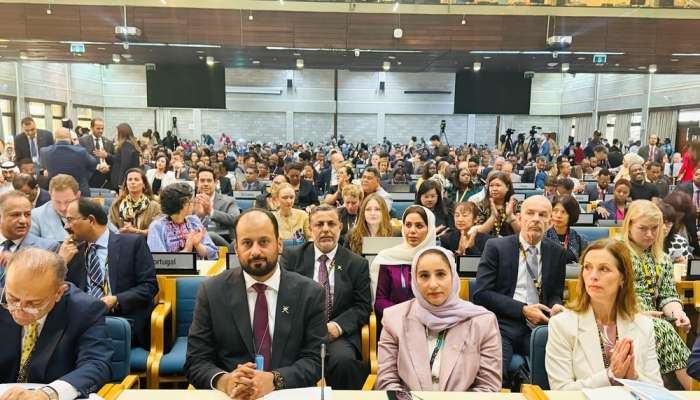

The global push for environmental sustainability received a significant boost this week as the High-Level Segment of the 7th Session of the United Nations Environment Assembly (UNEA-7) commenced in Nairobi, Kenya. This crucial gathering of world leaders and environmental experts is focused on “Advancing Sustainable Solutions for a Resilient Planet,” a theme reflecting the urgent need for collaborative action. The assembly promises to be a pivotal moment in shaping international environmental policy and accelerating the implementation of solutions to pressing ecological challenges.
UNEA-7: A Call for Accelerated Environmental Action
Chaired by Dr. Abdullah bin Ali Al Amri, Chairman of the Environment Authority and President of UNEA-7, the session is being held under the leadership of the Sultanate of Oman. Dr. Al Amri emphasized that Oman’s presidency has been characterized by extensive communication with nations worldwide, ensuring a truly inclusive and ambitious outcome. He powerfully stated that environmental stability isn’t merely an ecological concern, but a fundamental pillar supporting peace, prosperity, and social cohesion. Protecting our natural world, he argued, is intrinsically linked to safeguarding security and fostering opportunities for sustainable growth.
Shifting Focus from Problem Identification to Implementation
A key distinction highlighted by Dr. Al Amri is the session’s deliberate shift in focus. Rather than simply cataloging the myriad environmental problems facing the planet – a task already well-documented – UNEA-7 aims to accelerate the implementation of existing and innovative solutions. The world, he asserted, doesn’t need more reports outlining the challenges; it needs resolute political will translated into coordinated and effective action on the ground. This pragmatic approach is central to the assembly’s goals.
Priorities for a Resilient Future
Dr. Al Amri outlined a clear set of priorities to guide the discussions and outcomes of UNEA-7. These priorities are designed to address interconnected environmental issues and build a more sustainable and resilient world for all. A central theme is strengthening environmental resilience across vital systems.
Key Areas of Focus
The assembly is prioritizing enhancing environmental resilience in four critical areas: natural systems, food security, water resources, and urban environments. This holistic approach recognizes that these systems are deeply intertwined and that addressing vulnerabilities in one area can have positive ripple effects across others. Furthermore, a crucial element is achieving greater coherence among existing international environmental agreements. The aim is to modernize and streamline the global environmental governance framework, making it more effective and less fragmented. Finally, Dr. Al Amri stressed the importance of broad engagement, calling for the active participation of all stakeholders – governments, international organizations, the private sector, and civil society – in the pursuit of sustainable solutions. Environmental governance requires a multi-faceted approach.
The Omani Experience: A Model for Sustainability
The Sultanate of Oman is not only leading the assembly but also offering its own experience as a case study in balancing human needs with environmental preservation. Dr. Al Amri showcased Oman’s long history of sustainable resource management, rooted in a deep cultural awareness of the environment. This historical perspective, he explained, provides a strong foundation for Oman’s leadership in driving the assembly’s efforts towards a more sustainable future. Oman’s commitment to sustainable development is evident in its policies and initiatives.
A Call for Unity and Integrated Action
In his concluding remarks, Dr. Al Amri issued a powerful call to action, urging the adoption of a strong ministerial declaration. This declaration, he emphasized, should reflect a unified commitment from the international community and signify a decisive transition from fragmented, individual efforts to integrated, collaborative action. The success of UNEA-7 hinges on the ability of nations to come together and forge a common path forward.
International Participation and the Importance of UNEA
The session has drawn significant international attendance, underscoring the global recognition of the urgency of environmental issues. The UN Environment Assembly serves as a vital platform, bringing together environmental leaders and decision-makers from around the world. Its primary objective is to formulate decisive resolutions that strengthen international cooperation and support global environmental governance. This year’s assembly is particularly important given the increasing impacts of climate change and biodiversity loss.
As the highest global environmental authority within the UN system, UNEA’s participation extends beyond government officials to include representatives from international organizations, the private sector, and civil society. This broad representation ensures that a diverse range of perspectives are considered in the development of environmental policies and solutions. The outcomes of UNEA-7 will undoubtedly shape the global environmental agenda for years to come, and the emphasis on practical implementation offers a hopeful sign for a more sustainable future. Further discussions on climate action are expected to be a key component of the assembly’s final resolutions.