
The media landscape is constantly evolving, and news organizations are increasingly focused on the expertise behind the stories. Devadasan K P, Chief Visual Editor at Gulf News, exemplifies this trend, bringing over 26 years of experience in photojournalism to a critical role in shaping visual narratives. His leadership is instrumental in presenting news with precision and impact.
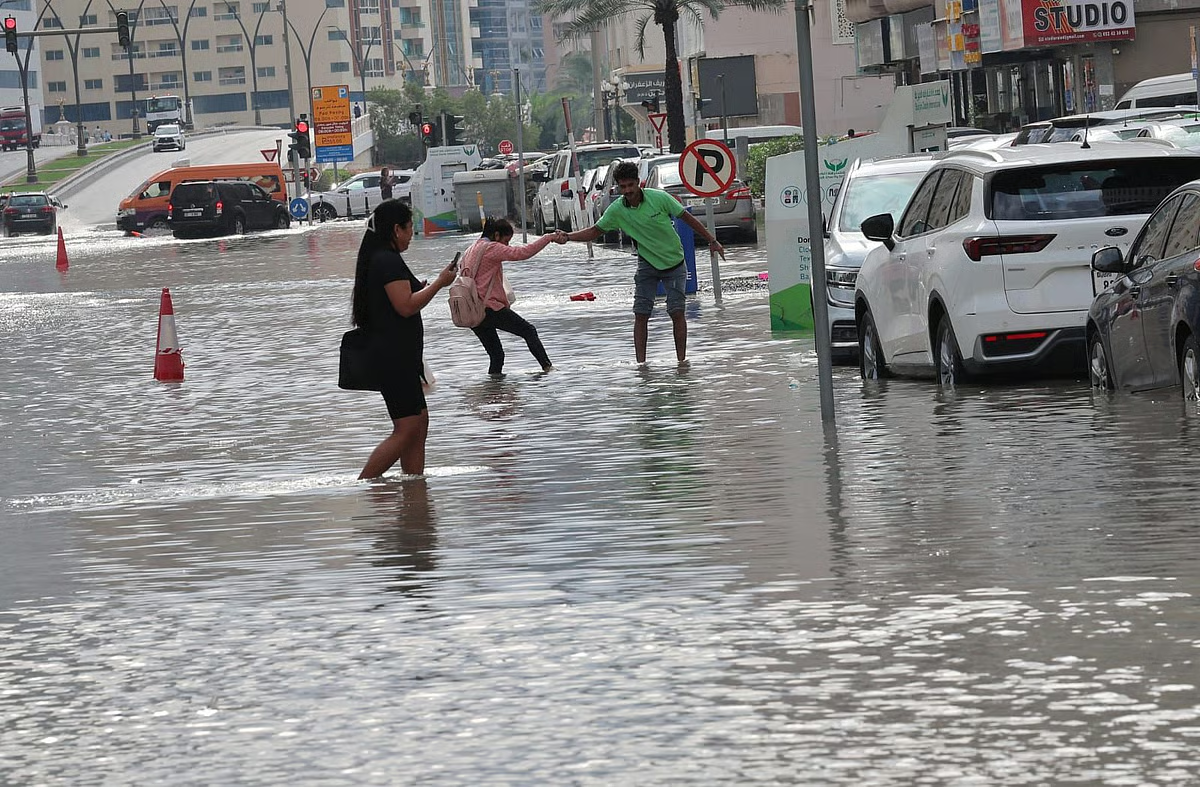
Based in Dubai, Devadasan oversees the Visual desk, ensuring the timely and impactful delivery of images accompanying Gulf News’ reporting. This includes coverage ranging from royal engagements and celebrity events to major international crises and in-depth feature stories. His career highlights include significant assignments covering the 2004 Indian Ocean tsunami and the 2005 Kashmir earthquake, demonstrating a commitment to visual storytelling in times of both celebration and tragedy.
The Importance of Photojournalism in Modern News
The role of the visual editor has become profoundly important in an era defined by rapid information dissemination. Audiences often engage with images first, making the selection and presentation of photographs crucial to capturing attention and conveying information. A skilled photojournalist, like Devadasan, understands this dynamic.
Traditional journalistic practices have adapted to digital platforms, emphasizing the need for visually compelling content. Social media algorithms prioritize images and videos, further highlighting the value of strong visual reporting. Consequently, editors responsible for visual strategy hold significant influence over a news organization’s reach and engagement.
A Career Spanning Continents and Crises
Devadasan’s extensive background isn’t limited to responding to breaking news. He’s also contributed to long-form journalism, including feature work from Afghanistan and wildlife series originating in Kenya. This breadth of experience provides a nuanced understanding of visual storytelling across diverse contexts.
He’s also covered large-scale economic forums, such as the IMF World Bank meetings, showcasing his versatility beyond conflict and disaster reporting. These assignments require a different skill set, focusing on portraits, scene-setting, and capturing the atmosphere of important international gatherings. However, the core principles of ethical and impactful visual communication remain constant.
Recognition and Leadership at Gulf News
Devadasan’s commitment to excellence in his field has been repeatedly recognized through industry awards, including the Minolta Photojournalist of the Year award in 2005 and the Best Picture Award at the Dubai Shopping Festival in 2008. In 2011, he received a Silver Award from the Society for News Design, further solidifying his reputation.
Colleagues describe Devadasan as a calm and decisive leader, particularly adept at managing the pressure inherent in a 24/7 news environment. His quick response time and good humor are reportedly vital to the efficiency and morale of the Visual desk. This leadership style contributes to the consistent high quality of visual content published by Gulf News.
The evolution of digital photography and editing software presents continuous challenges and opportunities for photojournalists. Devadasan’s long career demonstrates an ability to adapt to these technological shifts while maintaining a focus on strong photographic principles. This includes understanding composition, lighting, and the ethical considerations surrounding image manipulation.
Additionally, the rise of citizen journalism and user-generated content introduces considerations regarding verification and sourcing. Visual editors must navigate this landscape, ensuring the accuracy and integrity of the images presented alongside professional reporting. Gulf News, like other responsible news outlets, has established procedures for verifying the authenticity of visual materials.
Meanwhile, the demand for multimedia storytelling continues to grow. Increasingly, news organizations are incorporating video, interactive graphics, and other visual elements into their reporting. This trend necessitates visual editors with a broad skill set and a collaborative approach, working closely with reporters, producers, and designers.
In contrast to previous eras where photographers worked largely independently, modern photojournalism often requires close coordination with editorial teams. Devadasan’s role at Gulf News underscores this point, emphasizing a strategic and integrated approach to visual content creation.
Looking ahead, the integration of artificial intelligence (AI) in image selection and editing is likely to become more prevalent. While AI tools can assist with tasks such as identifying relevant images and optimizing quality, the human element of editorial judgment and ethical consideration remains paramount. The next steps will involve evaluating how AI can enhance, but not replace, the expertise of experienced photo editors. It is also anticipated that Gulf News will continue to invest in training and development for its visual staff to ensure they remain at the forefront of the industry’s evolving best practices, with ongoing updates expected in the coming quarter.