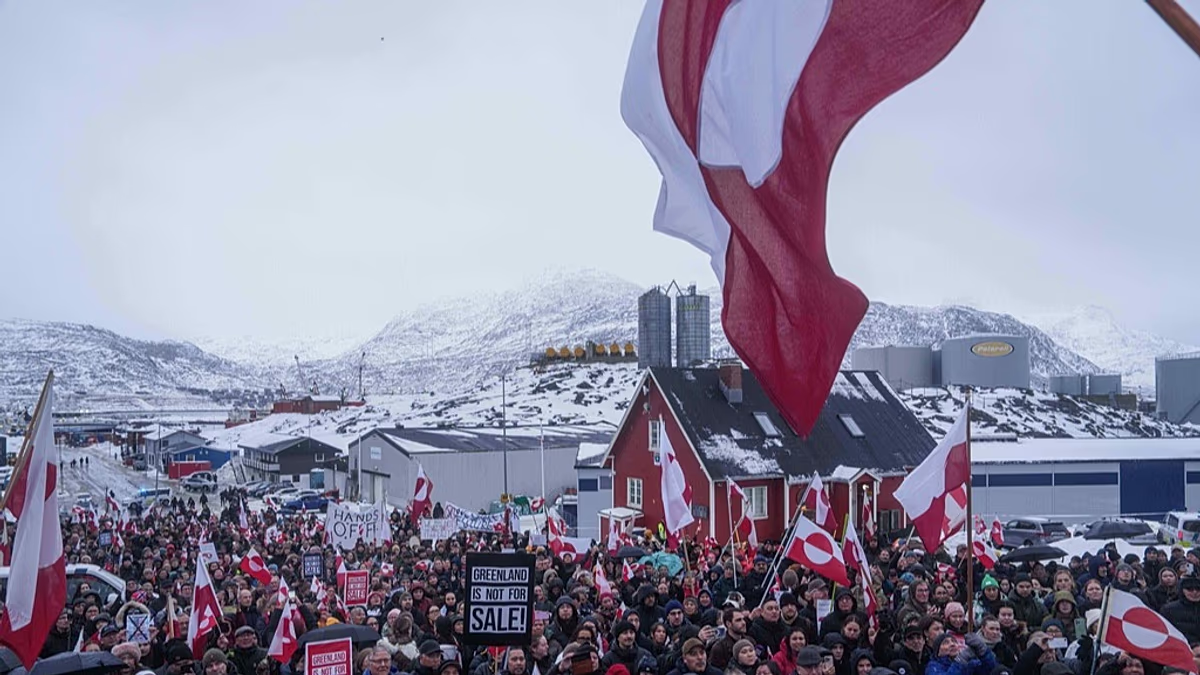

A viral social media post claiming that Greenland’s parliament has banned Donald Trump and his descendants from entering the territory for 100 generations is circulating online. The claim, which surfaced amid escalating tensions over Trump’s expressed interest in acquiring Greenland, has been widely shared but is demonstrably false. The post originates from a satire account and highlights the anxieties surrounding the US president’s recent rhetoric and actions.
The alleged ban was posted by “The Halfway Post” on X (formerly Twitter) and quickly gained traction, amassing nearly two million views as of January 20, 2026. This follows a period of increased discussion regarding Trump’s desire to gain control of the semi-autonomous territory of the Kingdom of Denmark, a topic he has repeatedly addressed in recent weeks.
The Situation Surrounding Greenland and US Interests
The current diplomatic friction stems from President Trump’s persistent suggestions that the United States should control Greenland, citing national and global security concerns in the Arctic region. He has at times proposed purchasing the territory and, more recently, alluded to the possibility of military acquisition. “We have to have it,” Trump reportedly told reporters on Tuesday, according to various news outlets.
In response to Trump’s overtures, several European nations – France, Finland, Germany, the Netherlands, Norway, Sweden, and the UK – dispatched a small contingent of troops to Greenland on what they described as a reconnaissance mission. This move was intended as a show of solidarity with Denmark and a demonstration of commitment to Greenland’s independence.
Germany has since withdrawn its military personnel from the mission on Saturday, January 18th. However, the situation remains tense, with Trump threatening to impose substantial tariffs on all eight European countries, as well as Denmark, if they continue to oppose his plans for Greenland.
The leaders of the involved European nations issued a joint statement on January 18th, reaffirming their “full solidarity” with Denmark and the people of Greenland. They condemned the tariff threats as undermining transatlantic relations and pledged to maintain a united front.
Satire and Misinformation
Despite the serious geopolitical implications, the claim of a 100-generation ban on the Trump family is a fabrication. The Halfway Post explicitly identifies itself as a comedy and satire account, employing dadaist principles – an art movement known for its absurdity and rejection of traditional norms – in its content.
There have been no official announcements or legislative actions from the Greenlandic or Danish governments indicating any intention to ban Trump or his relatives. The viral post is a clear example of how satire can be misinterpreted and spread as factual information, particularly in the current climate of heightened political sensitivity.
Nevertheless, the president’s ambitions have caused considerable unease throughout Europe and within NATO. Concerns are growing that a dispute over Greenland could fracture the alliance, especially if the US were to take unilateral action against a NATO member like Denmark.
Greenland’s Prime Minister, Jens-Frederik Nielsen, has consistently stated that Greenland wishes to remain a part of Denmark. He acknowledged protests against a potential US takeover occurring outside the US consulate in Nuuk and emphasized Greenland’s commitment to dialogue, respect, and international law. Following Trump’s tariff threats, Nielsen reiterated that Greenland would not be coerced into submission.
The situation highlights the growing importance of Arctic security and the strategic value of Greenland, given its geographical location and potential resources. The region is becoming increasingly contested as climate change opens up new shipping routes and access to previously inaccessible areas.
Looking ahead, the coming weeks will be crucial in determining whether the dispute over Greenland escalates. The implementation of Trump’s threatened tariffs in February could significantly worsen transatlantic relations and further destabilize the situation. Observers will be closely watching for any further diplomatic initiatives or military movements in the region, as well as the potential impact on the broader NATO alliance.