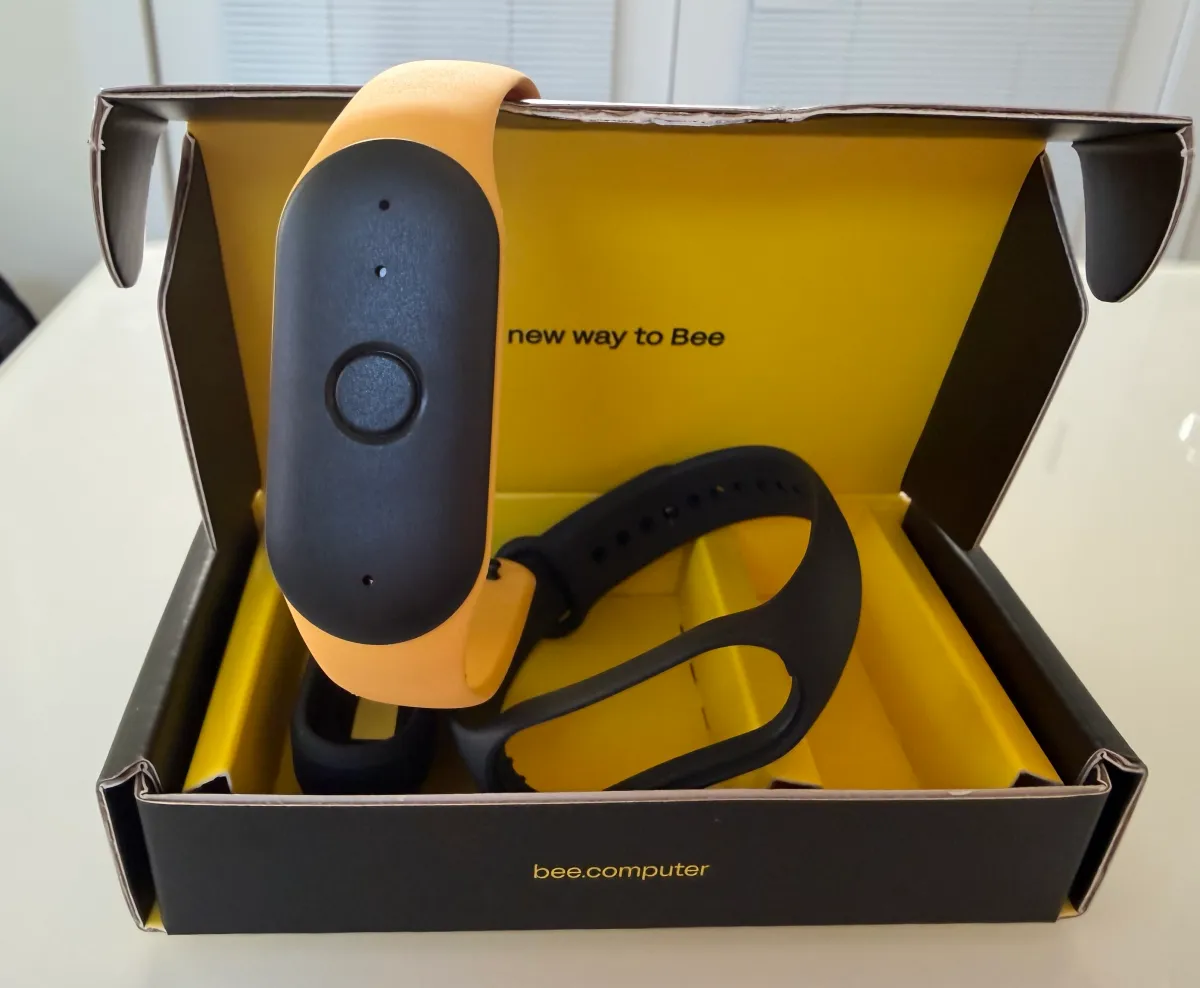

Amazon is entering the burgeoning market of wearable artificial intelligence with Bee, a device designed to record and summarize everyday conversations. Early testing of the device reveals a user-friendly experience, activated with a single button press, and a companion app offering customizable controls for recording and AI interaction. The product aims to provide more than just a transcript, offering segmented summaries of discussions.
The Bee device, unveiled at CES 2024, joins a growing field of AI-powered audio recorders like Plaud, Granola, Fathom, Fireflies, and Otter. However, Amazon differentiates its offering by focusing on contextual summarization rather than simply providing a raw transcript of spoken words. This approach could appeal to users seeking to quickly recall key information from meetings or casual interactions.
How Bee Works: Recording and Summarization
Unlike some competing wearables that faced criticism for always-on listening, Bee requires explicit activation for recording. A green light illuminates to signal to others that the device is actively capturing audio. Users can configure a double press of the button to bookmark sections, initiate processing, or perform both actions. A press and hold allows for voice notes or direct interaction with the integrated AI assistant.
The app segments recorded audio into distinct sections, each visually differentiated with a unique background color. Users can tap on these segments to view the corresponding transcription. Amazon also allows users to confirm and add “facts” about themselves, enabling the AI to personalize its responses and insights, similar to features found in other conversational AI platforms.
Limitations in Current Functionality
While promising, Bee isn’t without its drawbacks. Currently, the app lacks robust speaker identification capabilities, requiring manual confirmation of who is speaking within each segment. This contrasts with professional transcription services that automatically label multiple speakers. A significant limitation is that Bee discards the original audio file after transcription, precluding users from verifying accuracy by replaying the recording.
The physical design also presented some challenges during testing. The sports band attachment proved unreliable, detaching on multiple occasions during normal use. The clip-on pin, however, appeared more secure, though it hasn’t undergone extensive testing.
Beyond Productivity: The “Ambient Intelligence” Vision
Amazon positions Bee not as a purely professional tool, but as an “ambient intelligence” device designed to integrate into daily life. The company envisions Bee assisting users with tasks triggered by conversations, such as suggesting LinkedIn connections after a conference meeting or prompting research on a discussed product. This integration leverages Google’s services to provide contextual follow-up actions.
The device also supports voice notes as an alternative to traditional text-based note-taking. A dedicated “Memories” section allows users to revisit past conversations, while a “Grow” section promises personalized insights based on accumulated data. This focus on personal knowledge management is a key differentiator for Bee.
The Future of Conversational AI and Privacy Concerns
The emergence of AI-powered recording devices raises important questions about social norms and privacy. While recording video in public is often discouraged, the acceptability of continuous audio recording, even with consent, remains uncertain. The potential for self-censorship in public spaces is a valid concern, as individuals may modify their behavior knowing their conversations could be digitally documented.
An anecdote from CES illustrates this point: a Soundcore representative jokingly suggested someone speak louder for their AI recording device. This highlights a growing awareness that everyday conversations may increasingly be “on the record,” regardless of explicit agreement. The broader adoption of such technology will likely necessitate a cultural shift regarding audio recording etiquette.
Amazon plans to release additional features for Bee throughout the coming year. The success of Bee will likely indicate whether consumers are receptive to the idea of wearable AI that proactively records and analyzes their conversations. Industry observers will be watching to see how Amazon addresses privacy concerns and refines the device’s functionality to broaden its appeal and establish a new category of personal AI assistants. The device’s ability to accurately capture and summarize information, alongside user acceptance of its recording practices, will be crucial for its long-term viability.