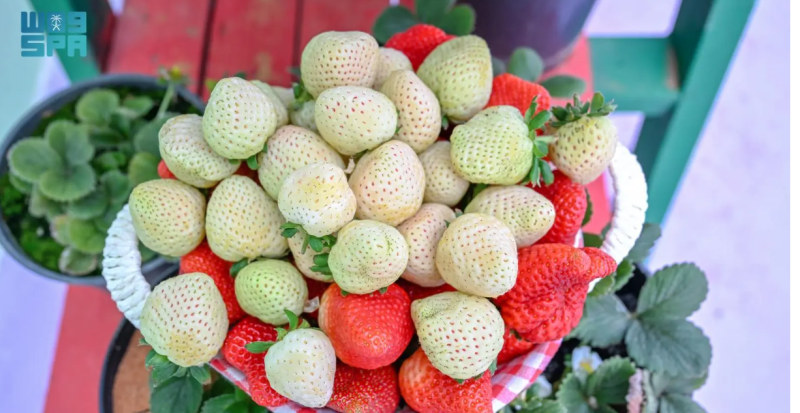

A significant agricultural achievement has been recorded in the Hail region of Saudi Arabia with the inaugural harvest of white strawberries. This marks the first successful cultivation of this rare fruit variety within the Kingdom, positioning Saudi Arabia as only the third nation globally, alongside the United States and Japan, capable of producing them. The development underscores the country’s increasing investment in and capacity for advanced agricultural techniques.
The harvest took place recently in Hail, a region known for its developing agricultural sector. The introduction of white strawberries represents a move towards higher-value crop production within Saudi Arabia, diversifying its agricultural output beyond traditional dates and grains. This success is attributed to a combination of the region’s suitable climate and the implementation of modern irrigation systems.
The Rise of White Strawberry Cultivation in Saudi Arabia
The cultivation of white strawberries is a relatively new phenomenon, even in the countries where it’s already established. These aren’t a genetically modified organism; rather, they are a naturally occurring variation of the common red strawberry. Their pale color and unique flavor profile contribute to their premium market value, often fetching significantly higher prices than traditional red varieties.
The project in Hail was initiated through an exclusive agreement between local farm owners and the University of Florida, according to the Saudi Press Agency. This collaboration allowed for the trial of the white strawberry variety under controlled conditions, adapting cultivation methods to the specific environment of the Hail region. The partnership highlights Saudi Arabia’s willingness to leverage international expertise to advance its agricultural capabilities.
Unique Growing Process
The production of white strawberries involves a specialized pollination technique. Instead of traditional strawberry pollination, the flowers of red strawberry plants are pollinated with those of pineapple plants. This process extends the ripening period by approximately 30 days, resulting in the characteristic white color and a subtly different flavor profile.
This extended ripening period also impacts the sugar content of the fruit. The report indicates that white strawberries generally have a lower acidity and a higher sugar concentration compared to their red counterparts, contributing to their sweeter taste. The process requires careful monitoring and laboratory conditions to ensure successful pollination and fruit development.
The success of this trial represents a significant step in diversifying Saudi Arabia’s agricultural landscape. The Kingdom has been actively pursuing initiatives to enhance food security and reduce reliance on imports, as outlined in its Vision 2030 plan. This includes investing in innovative farming technologies and exploring the cultivation of high-demand, specialized crops like these strawberries.
However, the initial harvest is expected to be limited in scale. The specialized pollination process and the extended ripening period contribute to lower yields compared to conventional strawberry farming. Scaling up production to meet potential demand will require further research and optimization of the cultivation techniques.
Beyond the direct agricultural benefits, the white strawberry farms are also contributing to the growth of tourism in Hail. The farms are offering visitors interactive experiences, allowing them to learn about the unique cultivation process and sample the premium produce. This agritourism aspect is gaining traction as a way to diversify the regional economy.
The development of the fruit industry in Hail is not isolated. Saudi Arabia has been making strides in other areas of controlled environment agriculture, including greenhouse farming and vertical farming. These advancements are particularly important given the country’s arid climate and limited arable land.
The Ministry of Environment, Water and Agriculture has been a key driver of these changes, providing support and incentives for farmers to adopt modern technologies and diversify their crops. This includes funding for research and development, as well as programs to promote sustainable agricultural practices. The ministry has also focused on improving irrigation infrastructure to conserve water resources.
The introduction of white strawberries also aligns with a broader trend towards premium and specialty food products globally. Consumers are increasingly willing to pay a higher price for unique and high-quality food experiences. This creates opportunities for Saudi Arabian farmers to tap into niche markets and increase their profitability.
Looking ahead, the farm owners in Hail are planning to expand production of white strawberries based on the success of the initial harvest. They are also exploring the possibility of licensing the technology to other farmers in the region and across the Kingdom. The long-term viability of the project will depend on factors such as market demand, production costs, and the ability to maintain consistent quality.
Further research is also needed to fully understand the optimal growing conditions for white strawberries in the Saudi Arabian climate. This includes investigating different pollination techniques, irrigation strategies, and pest control methods. The University of Florida collaboration is expected to continue, providing ongoing support and expertise. The next steps will likely involve analyzing the economic impact of the harvest and assessing the potential for wider commercialization within the next year.