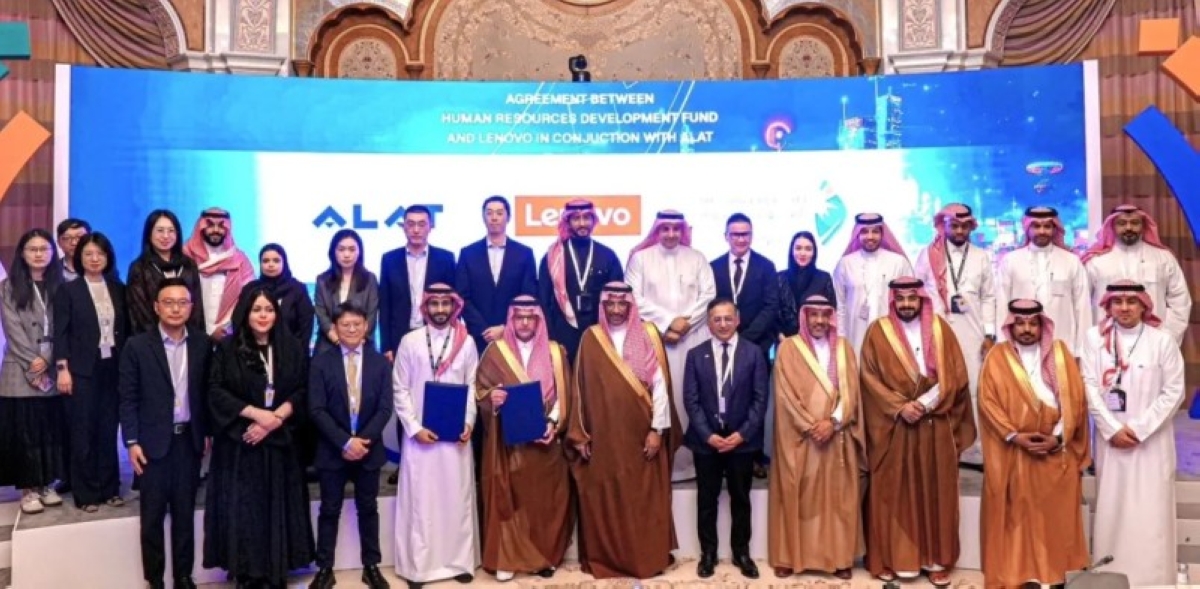

RIYADH – The Human Resources Development Fund (HADAF) of Saudi Arabia has launched initiatives to bolster its domestic workforce with specialized skills in high-growth sectors. Recent agreements with global companies Lenovo, Hyundai, and NAVA signal a commitment to training programs focused on electric vehicles (EV) and advanced electronics, providing opportunities for 356 Saudi citizens and supporting these programs with over SR68 million in funding. These partnerships aim to align Saudi talent development with the Kingdom’s ambitious industrial diversification goals.
The signing of the agreements took place during the General Conference of the United Nations Industrial Development Organization (UNIDO) in Riyadh, underlining the national focus on industrial progress. Collaborations include both domestic training and opportunities within China, designed to elevate the expertise of Saudi nationals in strategically vital fields. This initiative is part of a larger effort to prepare the nation’s labor force for the evolving demands of the global economy.
Boosting Saudi Arabia’s Industrial Capabilities Through Targeted Training
Saudi Arabia is undergoing a significant transformation, moving beyond its traditional reliance on oil revenues. A core component of this shift, as outlined in Vision 2030, is the development of a robust and diversified industrial sector. These HADAF agreements directly support this ambition by addressing the critical need for a skilled workforce capable of driving innovation and growth in emerging industries.
Focus on Electric Vehicles and Advanced Electronics
The partnerships will focus on equipping Saudi nationals with specialized knowledge and practical experience in the EV supply chain and advanced manufacturing. The agreement with Hyundai Middle East and the National Automotive and Vehicle Academy (NAVA) will likely cover areas such as EV assembly, maintenance, and related engineering roles. Meanwhile, the collaboration with Lenovo Innovation and Technology, alongside Al-Alat Company, aims to build skills in the production and support of advanced electronic devices.
This dual focus reflects the Kingdom’s strategic priorities. Investing in electric vehicles is aligned with global sustainability trends and diversification of the automotive sector, and plays into Saudi Arabia’s national green initiatives. Developing expertise in advanced electronics addresses growing demands in areas like telecommunications, information technology, and smart city infrastructure. This requires a skilled workforce, driving the need for programs like these.
The HADAF’s support will cover costs and incentives directly tied to employment, ensuring that the training is relevant and leads to job creation. According to a press release from HADAF, the aim is to improve the quality and effectiveness of training, preparing Saudi workers to compete in the global marketplace. This is a model designed to maximize the return on investment in human capital.
Economic Context and Vision 2030
The timing of these agreements is significant, coinciding with positive momentum in the Saudi industrial sector. Non-oil industrial production saw a 5.3 percent increase in 2024, and the Industrial Production Index (IPI) rose by 2.1 percent. According to recent reports, the industry and logistics sector contributed SR263 billion to the Kingdom’s non-oil GDP in the same period.
The Kingdom has set ambitious targets for industrial expansion, including increasing industrial GDP to SR1.4 trillion and attracting over SR1 trillion in investment for sector development. Achieving these goals will necessitate a substantial increase in local production of high-value goods. Furthermore, it is anticipated that this growth will unlock hundreds of thousands of new job opportunities for Saudi citizens. This training push is therefore a core pillar of the Kingdom’s economic strategy.
HADAF’s initiatives are not isolated instances. The Ministry of Industry and Mineral Resources has been actively promoting foreign investment and fostering partnerships to accelerate industrial diversification. The UNIDO conference itself was a platform for showcasing Saudi Arabia’s commitment to advancing its industrial base and integrating into global supply chains. The ministry has indicated its support for further collaborations of this type.
This strategic investment in human capital development directly addresses potential skill gaps that could hinder the Kingdom’s industrial progress. By prioritizing employment-linked skills training, the HADAF is helping to ensure a sustainable workforce pipeline for both existing and emerging industries. The focus on in-demand fields like EV and advanced electronics is designed to maximize the impact of these programs.
These agreements also reinforce Saudi Arabia’s broader efforts to diversify its economy away from oil dependence. By cultivating expertise in non-oil sectors, the Kingdom aims to create a more resilient and sustainable economic future. This diversification is crucial for long-term economic stability and achieving the goals outlined in Vision 2030. The move enhances the country’s regional and international competitiveness.
Looking ahead, the successful implementation of these training programs will be crucial. Monitoring key performance indicators such as placement rates, salary levels, and employer satisfaction will be essential to assess their effectiveness. It remains to be seen how quickly the 356 trainees will complete their programs and enter the workforce, as well as the extent to which similar partnerships will be forged in other strategic sectors. Future announcements regarding additional funding and expanded program offerings are expected in the coming months.