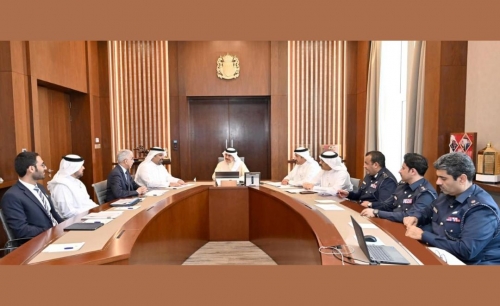

Bahrain is intensifying its focus on improving road safety and tackling traffic congestion, reaffirming its commitment to the well-being of its citizens and the efficiency of its infrastructure. This dedication stems from the directives of His Majesty King Hamad bin Isa Al Khalifa, prioritizing the protection of lives and property, and is being actively driven forward by the government under the leadership of His Royal Highness Prince Salman bin Hamad Al Khalifa, the Crown Prince and Prime Minister. Recent discussions and approvals by the Traffic Council, chaired by the Minister of Interior, General Shaikh Rashid bin Abdullah Al Khalifa, outline a comprehensive strategy for a safer and smoother commute across the Kingdom.
Bahrain Prioritizes Road Safety and Traffic Management
His Excellency General Shaikh Rashid bin Abdullah Al Khalifa has consistently emphasized that ensuring the safety of citizens on the roads is a paramount concern. This isn’t merely a statement of intent, but a commitment backed by concrete action, including the implementation of new measures and a continuous review of existing protocols. The focus extends beyond preventing accidents to also encompass optimizing traffic flow, reducing delays, and enhancing the overall driving experience for everyone in Bahrain.
The Minister, also Chairman of the Traffic Council, highlighted the crucial role of coordinated efforts between various government bodies. He stressed that a holistic approach, encompassing legislative changes, infrastructure development, and technological advancements, is essential for achieving sustainable improvements in road safety and traffic efficiency.
Review of National Traffic Strategy & Congestion Reduction
The Traffic Council recently convened to review its agenda, demonstrating a proactive approach to addressing the nation’s transportation challenges. Key figures present included the Ministers of Finance and National Economy, Transportation and Telecommunications, Works, and Education, signifying the broad scope of the issues being tackled.
A central point of discussion was the development of a national strategy specifically designed to reduce traffic congestion. This initiative has been designated as a priority program by the government, recognizing the significant impact congestion has on economic productivity and quality of life.
Comprehensive Congestion Study
To inform this strategy, the Council approved the appointment of a specialized consultancy firm. This firm will undertake a comprehensive study to analyze the root causes of congestion across Bahrain. Simultaneously, a dedicated working group, comprised of representatives from relevant authorities, has been established.
This working group will be responsible for:
- Assessing current congestion levels with detailed data analysis.
- Coordinating the roles and responsibilities of different agencies involved in traffic management.
- Identifying and adopting international best practices for congestion mitigation.
- Laying the groundwork for a fully integrated and effective congestion-reduction strategy.
Legislative Measures and Infrastructure Updates
Beyond strategic planning, the Traffic Council is actively pursuing legislative measures to support improved traffic management. H.E. Gen. Shaikh Rashid underscored the importance of a robust and coordinated legal framework to ensure the long-term sustainability of these efforts. This includes reviewing existing traffic laws and proposing amendments to address emerging challenges.
Significant infrastructure updates were also discussed. These include the ongoing development and expansion of Road 76 in Sakhir, a project aimed at improving connectivity and easing traffic flow in a rapidly developing area. Furthermore, the council addressed the issue of heavy truck accumulation in residential zones, outlining measures to redirect these vehicles to designated routes and minimize disruption to local communities. These measures are vital for enhancing the quality of life for residents and promoting safer neighborhoods.
Future Infrastructure Projects: King Hamad Causeway & GCC Railway
Looking ahead, the Ministry of Transportation and Telecommunications presented proposals for two major infrastructure projects with the potential to significantly transform Bahrain’s transportation landscape.
These projects are:
- King Hamad Causeway Link: Proposals were outlined for connecting the King Hamad Causeway to Bahrain’s Northern Road, enhancing access and facilitating cross-border travel.
- GCC Railway Project: Updates were provided on the progress of the GCC railway project, which aims to connect Bahrain with Saudi Arabia and the wider Gulf region, fostering economic integration and providing a sustainable transportation alternative.
These large-scale projects demonstrate Bahrain’s long-term vision for a modern and efficient transportation network. The successful implementation of these initiatives will require continued collaboration and investment. Improving transport infrastructure is a key component of Bahrain’s economic diversification plans.
Commitment to Public Safety and Smooth Traffic Flow
H.E. Gen. Shaikh Rashid concluded the meeting by expressing his gratitude to the council members for their dedication and hard work. He reiterated the importance of proactive field operations and maintaining round-the-clock readiness to ensure smooth traffic flow and, most importantly, public safety. This commitment underscores Bahrain’s unwavering dedication to creating a safe and efficient transportation system for all its citizens and residents. The ongoing efforts to improve traffic flow are a testament to this commitment.
This multi-faceted approach, combining strategic planning, legislative action, infrastructure development, and a steadfast commitment to public safety, positions Bahrain to address its transportation challenges effectively and build a more sustainable and prosperous future. Continued monitoring and adaptation will be crucial to ensure the long-term success of these initiatives.