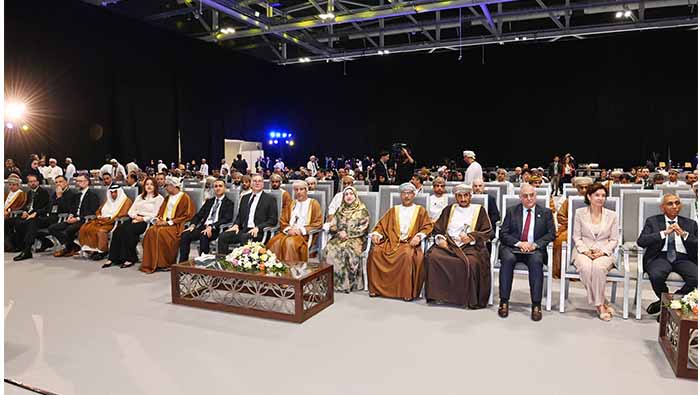

The 2025 Green Hydrogen Summit Oman (GHSO) kicked off this week with a resounding message: the Sultanate is moving decisively from planning to implementation in its ambitious journey to become a global hub for green hydrogen production. Under the theme “Bridging Gaps, Driving Action,” the summit underscored Oman’s commitment despite evolving international market conditions, highlighting a growing ecosystem designed for long-term success in the burgeoning clean energy sector. This year’s event signifies a pivotal moment, demonstrating that Oman isn’t just envisioning a hydrogen future—it’s actively building it.
Oman’s Transition to a Green Hydrogen Economy
Organized by the Ministry of Energy and Minerals in partnership with Hydrom, the GHSO served as a crucial update for industry stakeholders, confirming Oman’s strategic shift. Eng. Salim bin Nasser Al Aufi, Minister of Energy and Minerals, emphasized the nation’s dedication to bolstering energy security both domestically and internationally. He articulated a vision rooted in the responsible utilization of Oman’s natural resources and a commitment to creating substantial, enduring economic value throughout the entire hydrogen supply chain.
The Minister drew parallels to Oman’s past success with natural gas, illustrating a pattern of transforming challenges into opportunities. This historical context frames the current push towards renewables and, crucially, hydrogen fuel as a logical evolution. “We are addressing technical and financial challenges, building the infrastructure, and establishing national companies capable of leading this transition and enhancing Oman’s competitiveness,” he stated.
A Framework for Scalable Green Hydrogen Development
A key takeaway from the summit was the evolution of Oman’s green hydrogen framework into a comprehensive national program. Abdulaziz Al Shidhani, Managing Director of Hydrom, detailed how clear policies, structured land allocation, and well-defined investment mechanisms are interwoven to support rapid development.
Key Components of Oman’s Strategy
Less than three years after establishing this foundational structure, Oman is now in a stage of coordinated execution. This includes:
- Linking Projects: Integrating various green hydrogen initiatives to maximize efficiency and synergy.
- Infrastructure Development: Investing in the necessary infrastructure for production, storage, and transportation.
- Robust Regulation: Creating a stable and predictable regulatory environment to attract investment.
Currently, seven significant green hydrogen projects, collectively promising one million tonnes of annual production by 2030, are progressing through defined development stages. While two projects were mutually concluded due to market reassessments, these adjustments demonstrate a pragmatic approach to long-term growth.
Pioneering Projects: The ACME Duqm Project & Beyond
The ACME Duqm Project stands out as a landmark achievement – Oman’s first large-scale green hydrogen development to reach the construction phase. This phased project will ultimately produce over 150,000 tonnes of green hydrogen and 800,000 tonnes of green ammonia annually. With investment secured, equipment ordered, and building underway, ACME Duqm is tangible proof of Oman’s commitment.
However, Oman’s vision extends beyond individual projects. Al Shidhani highlighted the nation’s efforts to address the “competitive trilemma” of cost, execution, and market proximity, a challenge many other hydrogen-producing regions face. Oman is uniquely positioned to succeed in all three areas, leveraging its abundant renewable resources, strong governance, and strategic geographic location.
Building Domestic Demand & Future Auctions
Recognizing the importance of a complete value chain, Hydrom is also focusing on fostering domestic demand for green hydrogen. Initiatives are underway to explore industrial applications in sectors like green steel production, hydrogen-based fuels, and heavy mobility. A proposed double-sided auction mechanism aims to connect local producers with emerging industrial consumers, establishing transparent price discovery within the national market.
The third auction round, with over 130 registered companies, is a testament to continued interest in Oman’s potential. The government has also implemented $3.6 billion in incentive measures, reflecting lessons learned from previous rounds and aiming to enhance the financial viability of early-stage projects. These incentives, combined with the established regulatory framework and growing local supplier base, indicate a sector gaining momentum.
Sustaining Momentum and a Vision for the Future
Al Shidhani concluded by emphasizing that Oman is entering a phase of self-reinforcing progress. As projects move forward, infrastructure develops, and domestic demand grows, the entire system is becoming increasingly robust.
The GHSO 2025 brought together a diverse range of stakeholders – government officials, CEOs, energy leaders, international representatives, and institutions – to explore the latest advancements in hydrogen technology, business models, and regulatory frameworks. The accompanying exhibition showcased cutting-edge innovations across the hydrogen value chain, providing valuable networking and collaboration opportunities.
In conclusion, the Green Hydrogen Summit Oman 2025 wasn’t just a discussion forum; it was a demonstration of Oman’s tangible progress in building a leading green hydrogen economy. By balancing cost, execution, and market proximity, and by simultaneously developing both export capacity and domestic demand, Oman is positioning itself as a credible and sustainable force in the global energy transition. The country’s commitment, coupled with its proactive approach to addressing industry challenges, makes it a compelling destination for investment and a key player in shaping the future of clean energy.