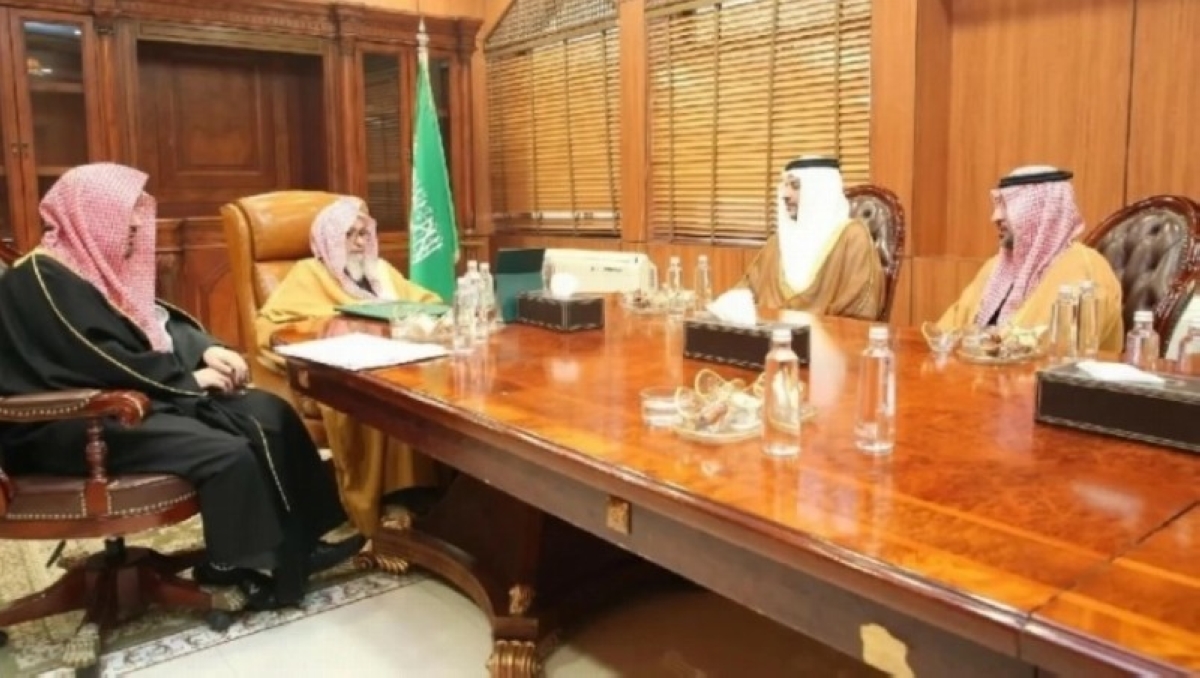

Saudi Arabia’s Grand Mufti Sheikh Saleh Al-Fawzan met with Eng. Saleh Al-Rasheed, CEO of the Royal Commission for Makkah and the Holy Sites, in Riyadh on Thursday. The meeting focused on the commission’s ongoing projects aimed at improving services for pilgrims and enhancing the overall experience during Hajj and Umrah. This discussion underscores the Kingdom’s continued commitment to facilitating religious tourism and supporting those undertaking the Islamic pilgrimage.
The meeting took place at the presidency headquarters of the General Presidency of Scientific Research and Ifta. Sheikh Al-Fawzan expressed his appreciation for the Royal Commission’s dedication and the significant attention given to pilgrim welfare by Saudi leadership. Eng. Al-Rasheed provided an overview of current initiatives and future plans for Makkah and the surrounding holy sites.
Enhancing the Pilgrim Experience: The Royal Commission’s Role
The Royal Commission for Makkah and the Holy Sites was established in 2017 to coordinate efforts between various government agencies involved in the management of the holy cities. This centralization aimed to streamline projects and improve the efficiency of services provided to millions of visitors annually. The commission’s mandate covers infrastructure development, transportation, public safety, and cultural preservation.
Infrastructure Projects and Modernization
Eng. Al-Rasheed reportedly detailed several key projects during the meeting. These include expansions to the Grand Mosque (Masjid al-Haram) and the Prophet’s Mosque (Masjid an-Nabawi), as well as improvements to transportation networks designed to ease congestion during peak seasons. According to previous statements by the commission, these projects are intended to accommodate a growing number of pilgrims while maintaining the sanctity of the holy sites.
Additionally, the commission is focused on implementing smart city technologies to enhance operational efficiency and improve the overall experience for visitors. This includes utilizing data analytics to optimize crowd management, improve security measures, and provide real-time information to pilgrims. The integration of technology is seen as crucial for managing the logistical challenges associated with large-scale religious gatherings.
Focus on Sustainable Development
Beyond infrastructure, the Royal Commission is also prioritizing sustainable development initiatives. These efforts aim to balance the needs of pilgrims with the preservation of Makkah’s historical and cultural heritage. The commission is reportedly investing in environmentally friendly technologies and promoting responsible tourism practices.
However, balancing modernization with the preservation of historical sites presents ongoing challenges. The commission must navigate complex issues related to urban planning, environmental impact, and the protection of culturally significant landmarks. The Saudi Vision 2030 plan emphasizes the importance of sustainable tourism and cultural preservation, guiding the commission’s long-term strategy.
Sheikh Fahd Al-Majed, Secretary General of the Council of Senior Scholars and Supervisor of the Office of the Grand Mufti, also attended the meeting, highlighting the religious authority’s involvement in overseeing the commission’s work. This collaboration ensures that all projects align with Islamic principles and values. The Council of Senior Scholars provides guidance on matters related to religious observance and the proper conduct of pilgrims.
The Kingdom has been steadily increasing its capacity to host pilgrims in recent years, with significant investments in infrastructure and services. This is partly driven by the Saudi government’s broader economic diversification goals, as religious tourism is a major contributor to the national economy. The Ministry of Tourism has identified religious tourism as a key sector for growth and is actively promoting Saudi Arabia as a destination for spiritual travel.
In contrast to previous years, the Hajj season in 2023 saw a return to pre-pandemic capacity, with over 1.8 million pilgrims performing the Hajj. This represented a significant increase from the limited numbers allowed in 2020 and 2021 due to COVID-19 restrictions. The successful management of the 2023 Hajj season demonstrated the effectiveness of the Royal Commission’s preparations and the Kingdom’s ability to handle large-scale events.
Looking ahead, the Royal Commission is expected to continue implementing its strategic plan, focusing on further enhancing the pilgrim experience and promoting sustainable development. The next major milestone will likely be the completion of several key infrastructure projects currently underway. Monitoring the commission’s progress and its impact on the holy sites will be crucial, as will assessing the long-term sustainability of its initiatives. Further details regarding specific project timelines and budgets are anticipated in upcoming reports from the commission and related government ministries.