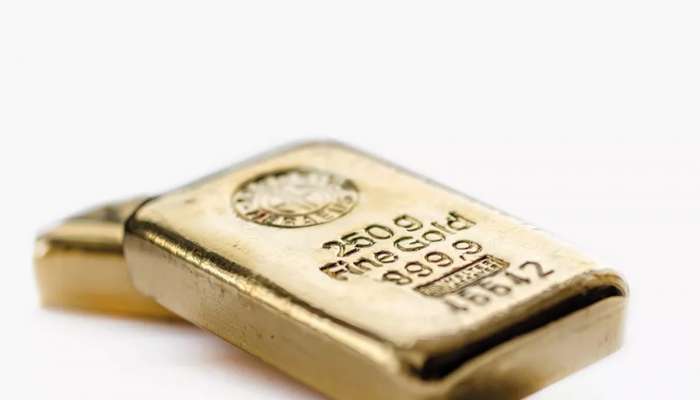

Deutsche Bank is predicting a significant surge in gold prices, potentially reaching close to $5,000 per ounce by 2026. This bullish forecast, outlined in a recent research report, stems from a confluence of factors including robust demand from central banks, constrained supply, and a stabilization of investor interest. The report signals a departure from historical norms, highlighting gold’s continued strength even against the backdrop of a strong US dollar.
Deutsche Bank Raises 2026 Gold Price Forecast
The bank has substantially upgraded its outlook for the precious metal. Previously forecasting $4,000 per ounce for 2026, the new prediction sits at $4,450/oz. More impressively, the report anticipates a trading range of $3,950 to $4,950 per ounce in 2026, bringing the upper limit remarkably close to the $5,000 milestone.
This represents a potential 14% premium over current December 2026 futures prices, indicating a considerable upward trajectory. Looking further ahead, the forecast for 2027 is even more optimistic, projecting gold prices to climb to $5,150 per ounce.
Factors Driving the Bullish Outlook
Several key elements are contributing to this positive forecast. Deutsche Bank identifies constructive market forces at play, including a settling of investor flows and technical indicators suggesting previous corrective phases have run their course. However, the most significant driver appears to be the escalating demand from the official sector.
Central Bank Demand Fuels Gold’s Ascent
Central banks globally are increasingly turning to gold as a safe haven asset and a means of diversifying their reserves. The report notes that official sector demand in real US dollar terms was the third highest on record in the third quarter of 2025. This trend, described as “inelastic demand,” is diverting gold supply away from traditional markets like jewelry.
This isn’t a fleeting interest. Deutsche Bank anticipates official sector gold demand to rise further, reaching 1,053 tonnes in 2026, a substantial increase from the 853 tonnes projected for 2025. Geopolitical uncertainties and a desire for financial independence are key motivators behind this increased appetite for gold investment.
Supply Constraints Add to the Pressure
While demand is surging, the supply side of the equation presents limitations. Global mine production is expected to see only modest growth, reaching 3,715 tonnes in 2026. This indicates a limited response from miners to the rising price of gold, potentially due to long lead times for bringing new mines into production or operational challenges.
Recycled gold supply, estimated at 1,470 tonnes in 2026, also remains below historical peaks. This combination of limited new supply and constrained recycling contributes to a tighter market, further supporting the upward pressure on gold prices. The limited supply, coupled with strong demand, creates a classic scenario for price appreciation.
ETF Demand and Historical Analysis
The report delves into the methodology behind the revised forecast, explaining how it quantifies the “excess performance” of gold. This involves measuring the pace of official demand against the 2011-2021 average and indexing it to a historical regression analysis of exchange-traded funds (ETFs) and gold prices.
This sophisticated approach suggests that the current drivers are not merely temporary fluctuations but represent a fundamental shift in the market dynamics. The role of ETFs, while stabilizing, remains a significant factor in overall demand, influencing price movements alongside central bank purchases. Understanding the interplay between these forces is crucial for investors navigating the precious metals market.
Implications for Investors and the Market
Deutsche Bank’s report paints a compelling picture of a gold market poised for continued strength. The prediction of gold prices nearing $5,000 per ounce in 2026 has significant implications for investors. It suggests that holding gold, whether physically or through investment vehicles like ETFs, could yield substantial returns.
However, the report also acknowledges the potential for volatility. The projected trading range of $3,950 to $4,950 highlights the inherent risks associated with any investment. Investors should carefully consider their risk tolerance and investment objectives before making any decisions.
In conclusion, the latest research from Deutsche Bank strongly suggests that gold is entering a new era of sustained price growth. Driven by robust central bank demand, constrained supply, and stabilizing investor flows, the outlook for the precious metals market is exceptionally bright. While caution is always advised, the potential for gold to reach – and even surpass – the $5,000 mark in the coming years is increasingly plausible, making it a compelling asset for consideration in a diversified portfolio.
Investors interested in learning more about gold and other precious metals should consult with a financial advisor and stay informed about market trends.