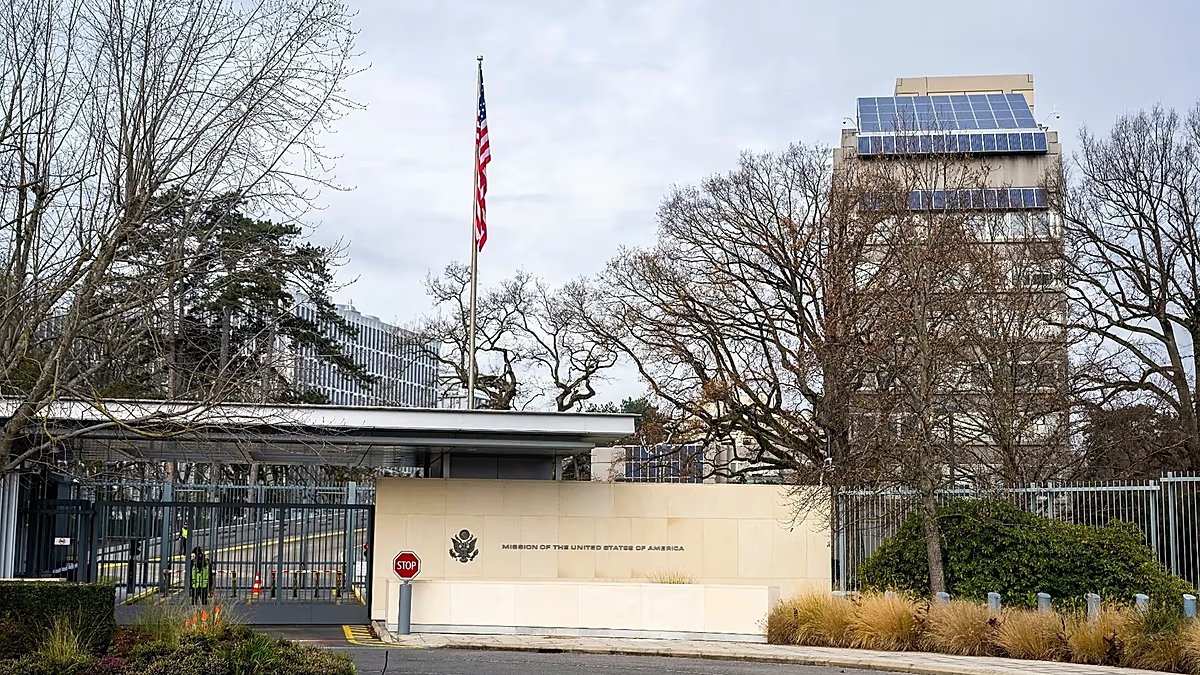

Geneva is hosting critical negotiations this week as delegations from the United States, Ukraine, and European allies gather to discuss a potential resolution to the ongoing conflict in Ukraine. The talks follow the unveiling of a 28-point peace plan backed by the US, which has drawn both support and sharp criticism for its proposals, including potential territorial concessions from Ukraine and limitations on its military size. The future of Ukraine and the broader European security landscape hang in the balance as discussions unfold.
US Secretary of State Marco Rubio and Trump’s special envoy Steve Witkoff are leading the American delegation, meeting with key Ukrainian officials such as Andriy Yermak, head of President Zelenskyy’s office, and Rustem Umerov, the national security secretary. Senior representatives from the European Union, including Bjoern Seibert and Pedro Lourtie, are also participating, alongside national security advisors from France, the United Kingdom, and Germany – collectively known as the E3.
Controversial US Peace Plan for Ukraine Faces Resistance
The 28-point peace plan, reportedly developed over a month by Rubio and Witkoff with input from both Ukrainian and Russian sources, has ignited a firestorm of debate. While the White House maintains the plan represents a US-authored framework, some senators have characterized it as largely reflecting Russian desires. This perception has fueled concerns among Ukraine’s allies about the fairness and viability of the proposed terms.
Former President Trump has publicly urged Ukraine to accept the plan swiftly, setting a deadline of late next week. This pressure has prompted a warning from President Zelenskyy, who stated his nation is facing “one of the most difficult moments in our history.” The Associated Press provides further coverage of the escalating diplomatic tensions.
EU Response and Concerns Over Territorial Integrity
The European Union, alongside Ukraine’s allies, has expressed reservations about the plan, describing it as a draft requiring “additional work.” However, the EU acknowledged the presence of “important elements” that could contribute to a just and lasting peace. A core principle remains firm: the EU unequivocally states that borders must not be altered through force, a direct response to potential territorial concessions suggested in the US plan.
The core disagreement centers around the potential for Ukraine to cede land to Russia, particularly in the eastern regions of Zaporizhia and Donetsk, part of the Donbas region. This proposal clashes with the stated commitment of many Western nations to support Ukraine’s sovereignty and territorial integrity.
Trump’s Diplomatic Push and Shifting Narratives
The unveiling of the peace plan marks a resurgence of the argument that Ukraine’s position on the battlefield is weakening and that a settlement favorable to Moscow is increasingly necessary. Trump has repeatedly suggested Zelenskyy needs to be realistic about Ukraine’s prospects.
While initially firm in his expectations for Ukraine’s acceptance, Trump later adopted a more conciliatory tone, stating his desire to “get to peace” and clarifying that the current proposal is not his final offer. He emphasized the need to end the conflict “one way or the other.”
Secretary Rubio defended the plan, asserting it was authored by the US and offered as a “strong framework” for negotiations. He acknowledged Russian input but maintained that the plan also incorporates perspectives from Ukraine. This clarification came after initial reports suggested the plan was heavily influenced by Moscow.
Meanwhile, the fighting continues intensely in eastern Ukraine, where Russian forces are attempting to gain further ground. Simultaneously, Ukraine has escalated its attacks on Russian territory, recently targeting a heat and power plant in the Moscow region with drones, causing significant damage and disrupting heating services for thousands. This escalation highlights the ongoing military dimension of the conflict even as diplomatic efforts proceed.
Kyiv has largely focused its long-range attacks on disrupting Russia’s logistical capabilities, targeting pipelines, oil refineries, and crude terminals. Russia continues its bombardment of Ukraine’s infrastructure, marking the fourth year of the bloodiest European conflict since World War Two.
The coming days will be crucial as negotiators attempt to bridge the significant gaps between the US-backed peace plan and the positions of Ukraine and its allies. The outcome of these talks will likely shape the trajectory of the war and the future of European security. Stay informed about developments in the Ukraine conflict and the ongoing diplomatic efforts as they unfold.